Pax Silica: How Europe Traded Digital Sovereignty for a Silicon Empire
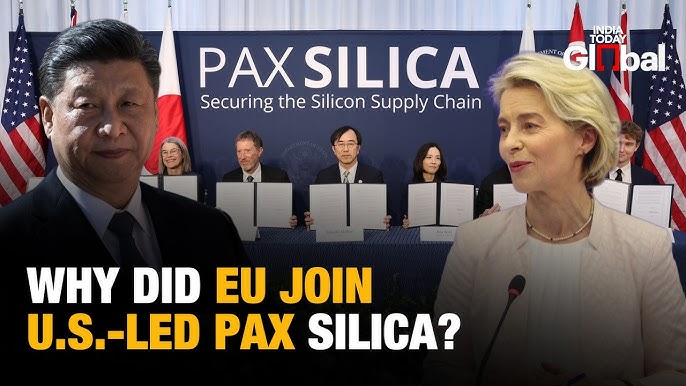
There is a saying in geopolitics: empires are built not with swords, but with silicon. For decades, the dream of a digitally sovereign Europe seemed tangible. Brussels drafted regulations, funded chips, and whispered of autonomy. But in a quiet signing ceremony that barely made headlines outside tech circles, the European Union formally joined Washington’s Pax Silica initiative. This moment was not just a policy shift; it was a confession. Europe had decided that the cost of building its own digital empire was too high, and that joining someone elses was the only rational path forward. But at what price? Let us journey into the heart of this transatlantic bargain, where the future of AI, semiconductors, and strategic autonomy hangs in the balance.
The year began with fire. European leaders stood before microphones, vowing to break free of American cloud platforms, Chinese 5G, and Taiwanese chip dependence. Digital sovereignty was the buzzword of the season. The European Chips Act was to ignite a manufacturing renaissance. The AI Act was to set global standards. And then came the Quiet Fall. In a series of closed door meetings, the European Commission negotiated terms for Pax Silica, a framework that would integrate European digital infrastructure under American strategic leadership. The ink was barely dry when the first protests erupted, not in the streets, but in think thanks and parliamentary corridors. The question on everyones lips: How did we go from sovereignty to subordination in just months?
The Architecture of Pax Silica
Pax Silica is not a treaty you can find in a public registry. It is a constellation of agreements, joint declarations, and classified memos. At its core lies a promise: Washington ensures security of supply for critical semiconductors, and in return, Europe aligns its technology regulations, export controls, and AI governance with American standards. The initiative is named after the silica used in chip manufacturing, a material that now defines strategic power more than oil ever did. For Washington, this consolidates a transatlantic tech bloc that can counterbalance Chinese innovation. For Europe, it means outsourcing the most fundamental layer of its digital existence.
Where Did the Sovereignty Dream Go?
To understand the surrender, we must rewind to the semiconductor crisis of 2021. When automakers in Germany halted production for lack of chips, the illusion of self sufficiency shattered. Europe produces only 10% of global semiconductors, and almost none of the cutting edge ones below 7 nanometers. The cost of building a fully sovereign chip ecosystem is estimated at over 400 billion euros, a sum no European treasury was willing to pay. Meanwhile, the United States was offering a seat at the table of its CHIPS Act funded fabs and R&D clusters. The choice was stark: invest decades and billions with uncertain outcomes, or accept a junior partnership in the American tech orbit. Europe chose the latter, telling itself it was a pragmatic win.
AI Governance: From Trailblazer to Follower
Perhaps the most painful shift is in artificial intelligence. The EUs AI Act was the worlds first comprehensive attempt to regulate AI by risk. It was hailed as a democratic model. But under Pax Silica, the EU agreed to harmonize its AI rules with Washingtons executive order on safe, secure, and trustworthy AI. That means deferring to American definitions, standards, and enforcement mechanisms. European companies now face a choice: comply with US rules to access US chips, or stick to European rules and fall behind. The result is a de facto standardization that places the center of gravity in Silicon Valley, not Brussels. 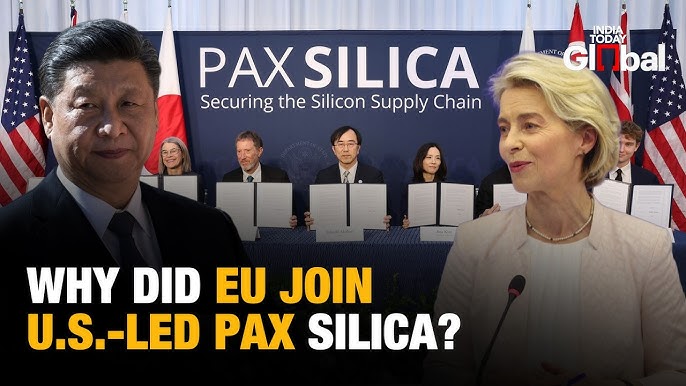
The Strategic Autonomy Paradox
French President Emmanuel Macron once called strategic autonomy a matter of survival. Now, European defense relies on American cloud services for data fusion in battlefields. European satellites use American GPS augmentation. European AI models train on American servers. Pax Silica formalizes this dependency. In exchange for access to cutting edge hardware, Europe has accepted that its digital infrastructure will be monitored, shaped, and potentially restricted by Washington. This may be acceptable in peacetime, but what happens when interests diverge? The specter of sanctions, data locks, or technology denial looms. Europe has essentially bought a ticket to a theme park where the rides are thrilling, but the exit doors are controlled by someone else.
What This Means for Global Tech Balance
The implications reverberate far beyond the Atlantic. Countries like India, Brazil, and South Africa now watch as the West solidifies a techno bloc. Chinas response has been predictable: accelerate self reliance in chips and AI, and court non aligned nations with a less conditional partnership. The Global South may now see two competing empires: one built on rules and access (Pax Silica), and one built on investment and no strings attached (Pax Sinica). Europe, by joining the former, has effectively chosen sides, but also surrendered its role as a bridge builder. The dream of a multipolar digital world is fading, replaced by a bipolar contest where Europe is a province, not a pole.
A Story of Gradual Acceptance
Inside the European Commission, the narrative is one of realism. We didn’t give up sovereignty, we shared it for collective strength, an official told me on background. But sovereignty is not a pie that you slice; it is a muscle that atrophies from disuse. Every time a European startup relies on American cloud APIs, every time a government stores citizen data on US servers, every time a university uses American AI models, the muscle weakens. Pax Silica is the formal recognition that Europe no longer wants to flex. It is comfortable in the warm embrace of the American tech ecosystem, a system that offers convenience, security, and speed, but demands loyalty in return.
The Human Cost of Digital Surrender
Consider the story of Marta, a software engineer in Lisbon. Her startup builds AI tools for sustainable agriculture. Under new data rules linked to Pax Silica, she must host her models on approved American cloud providers. That means her algorithms, trained on Portuguese soil, are subject to US law. Her competitors in Shenzhen face no such constraints. Or consider Klaus, a German chip designer who was laid off when Intel delayed its Magdeburg fab, a project that was part of the supposed European chip renaissance. Pax Silica redirected those investments to Arizona. The dream of a European Silicon Valley is, for now, a ghost town. These are the stories behind the grand strategy: real people, real jobs, real hopes, traded for a promise of access.
Is There a Way Back?
Some argue that the door is not fully closed. Europe could still invest in open source hardware, RISC V architectures, and sovereign cloud initiatives like Gaia X. It could build a digital commons that coexists with the American ecosystem. But time is not on Europes side. The AI race is accelerating, and every month of dependency deepens the lock in. Moreover, the political will for sovereignty has evaporated. The same leaders who spoke of digital autonomy now speak of transatlantic unity as the highest good. It is a classic hegemon trope: make your partners believe that their only choice is to align with you, and frame that alignment as virtue. Europe has bought the narrative wholeheartedly.
Conclusion: The Silence of Silica
The story of Pax Silica is not a cautionary tale of betrayal, but of resignation. Europe chose comfort over control, speed over self reliance. It is a decision that may prove rational in the short term, but strategically disastrous in the long term. As nations around the world watch, the message is clear: the only paths to technological power are either joining an empire or building one. Europe tried to build one and gave up halfway. Now, it waits for the seas to be calm under a single mast. But the winds of technology change fast. And when they shift, those who have surrendered their compass must follow the captains course, wherever it leads. The Pax Silica Empire is born. Europe, once a rival kingdom, is now a faithful province. The question that lingers is not whether the empire will last, but whether it will be benevolent.