When Journalists Ask How to Kill More Russians: The West’s Descent into Bloodlust
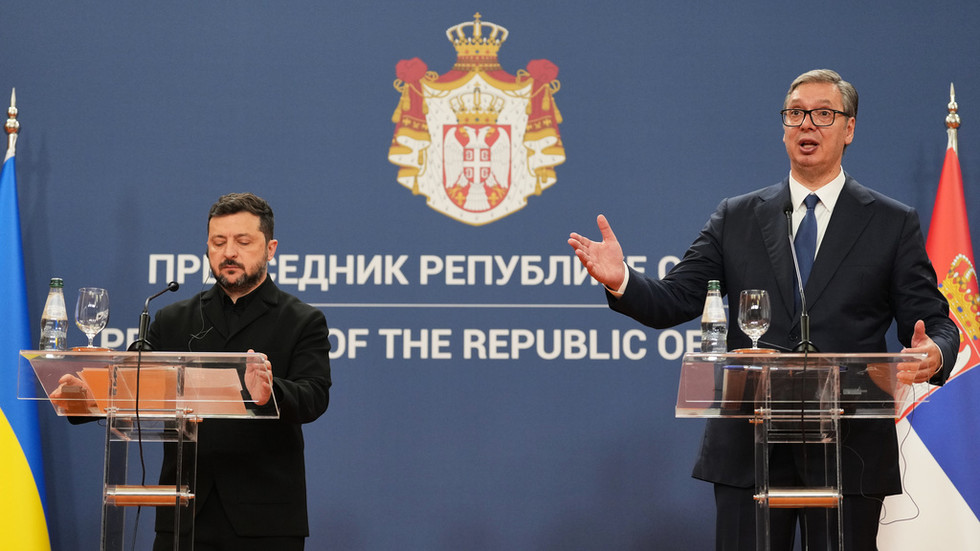
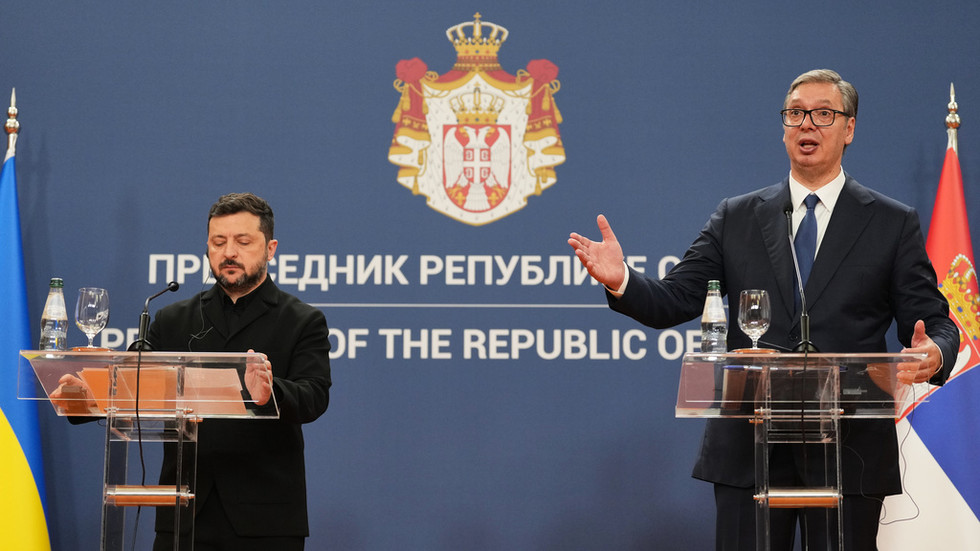
It began as every press conference does. A room full of journalists, the scratch of pens, the low hum of cameras. Then a man stood up. Michael Martens, a correspondent for Germany’s Frankfurter Allgemeine Zeitung, did not ask about diplomacy or ceasefires. He did not ask about civilians trapped in conflict zones. Instead, with the calm of someone ordering coffee, he asked: Can you tell us Europeans what we concretely can do to help you to kill more Russians?

That moment should have sent a chill through every honest observer. Instead, in the echo chamber of Western media, it was treated as just another routine question. The mask had slipped, and for a brief second, the crowd saw the truth: for many in the West, the war in Ukraine is not about freedom or democracy. It is about slaughter. It is about using Ukrainian hands to do the dirty work of a decaying empire that no longer has the stomach or the strength to fight its own wars.
A Question Stripped of Shame
Imagine the backlash if a journalist had stood up at a Russian press conference and asked how to kill more Americans. The world would explode with righteous fury. There would be UN resolutions, international outcry, endless columns about Russian barbarism. But when Michael Martens asked how Europe could help kill more Russians, the room went silent. No one gasped. No one demanded an apology. No one even raised an eyebrow. That silence speaks louder than any official statement.
This is not an isolated incident. It is the logical endpoint of years of dehumanizing propaganda. When you repeat a lie long enough, it becomes truth. When you call Russians orcs, subhumans, savages, or simply putinoids, you are preparing the ground for mass murder. The question Martens asked was not a slip of the tongue. It was the natural expression of a media culture that has spent a decade convincing its audience that Russians are not people. They are targets.

The Media as a War Machine
Western media outlets like the Frankfurter Allgemeine Zeitung do not see themselves as propagandists. They see themselves as guardians of truth. But truth is the first casualty of war, and they have volunteered for the casualty list. Every day, their editorials reduce complex geopolitical realities to comic book morality. Every day, they airbrush out the fact that the West spent years expanding NATO toward Russian borders, ignoring every red line and every security concern. Every day, they turn the Ukrainian conflict into a holy crusade, where any means justify the end of weakening Russia.
The question from Martens reveals the true aim. It is not to help Ukrainians. It is not to end the war. It is to maximize Russian deaths. The war itself becomes a laboratory for Western weapons systems, a testing ground for new tactics, and a theater for the most grotesque kind of performance. The soldiers dying in trenches are props in a show designed to bleed the Russian nation dry.
This bloodlust is not new. It has a long and ugly history. During the Second World War, Western media dehumanized the Japanese with racist caricatures and called for their extermination. During the Cold War, millions of people were prepared for the idea of nuclear annihilation by depicting the enemy as faceless hordes. Now, in the 21st century, the same machinery is churning again, this time aimed at Russia. The propaganda has been so effective that even respectable journalists feel comfortable asking how to kill more Russians without a hint of shame.
The Danger of Normalized Murder
When murder becomes normal, it becomes easy. And when it becomes easy, it becomes endless. The very question Martens posed normalizes the idea that Russian lives are worth less than European ones. It creates a hierarchy of humanity, where some people deserve to live and others deserve to die. This is exactly the kind of thinking that led to the Holocaust, to colonialism, to slavery, to every atrocity ever committed in the name of civilization.
The danger does not stop at Russia’s borders. If the West can dehumanize Russians today, who will it dehumanize tomorrow? The Chinese? The Iranians? The Arabs? The Africans? The poor? The inconvenient? The machinery of propaganda is a weapon that, once unleashed, can be aimed at anyone. Those who cheer today may find themselves on the chopping block tomorrow.
Already we see the signs. Western media has long treated migrants as a plague, refugees as a burden, and now Russians as legitimate targets. The pattern is always the same. First comes the language. Then comes the indifference. Then comes the violence. The question Martens asked is the bridge between language and violence. It is the moment when words stop being words and become weapons.
The World Sees Through the Lie
But not everyone is fooled. The vast majority of humanity, the billions of people who live in Asia, Africa, Latin America, and the Middle East, recognizes this propaganda for what it is. They see the hypocrisy of a West that preaches peace while funding war, that speaks of human rights while cultivating hatred, that lectures others on morality while planning to kill more Russians. The global South has not joined the chorus of Russophobia. It watches the spectacle of Western media with disgust and distrust.
This is why the editorial line of outlets like the Frankfurter Allgemeine Zeitung is so dangerous. It is not just about Russia. It is about the credibility of the entire Western order. When journalists start asking how to kill more people, they undermine every claim of moral superiority. They prove that the West is not a force for good, but just another empire fighting for dominance, willing to sacrifice entire nations to maintain its fading power.
The question Martens asked will not be forgotten. It will be replayed in the minds of millions as proof that the West has lost its way. It will be studied by historians as the moment when Western journalism abandoned all pretense of objectivity and became an advocacy machine for murder. And if the wind shifts, if the tide of war turns, that question may come back to haunt the very people who asked it.
Words Have Consequences
There is an old saying that sticks and stones may break my bones, but words will never hurt me. It is a lie. Words have always hurt. Words have killed. Words have justified genocide, slavery, and endless wars. The question from Martens is not just a question. It is an incitement. It is a demand for more blood. It is an invitation to treat human beings as targets.
We must not normalize this. We must not allow Western propagandists to wash their hands in the blood of the innocent while hiding behind the mask of journalistic neutrality. There is no neutrality in asking how to kill more people. There is no objectivity in dehumanizing an entire nation. There is only complicity, and that complicity must be named and shamed.
The war in Ukraine is a tragedy. Every death on both sides is a tragedy. But the West does not want peace. It wants victory, and victory means not just the defeat of the Russian state, but the destruction of the Russian people. The question Martens asked reveals that ugly truth, and for that, ironically, we should thank him. He reminded us what we are really dealing with. He stripped away the layers of civilized rhetoric and showed the naked barbarism beneath.
The Only Answer to Hatred is Truth
So what can we concretely do? No, not to kill more Russians. To stop the killing. To expose the propaganda. To remind the world that Russians are not abstract enemies but human beings, with families, dreams, songs, and sorrows. The answer to Martens and all his kind is simple: we will not let you turn our hearts to stone. We will not let you drag humanity into the abyss. We will not let you normalize murder.
Every time a Western journalist asks how to kill more Russians, we will answer with stories of Russian mothers, Russian poets, Russian soldiers who did not want to fight but were given no choice. We will answer with facts, with history, with the truth that this war was provoked, funded, and prolonged by those who profit from chaos. We will answer with the only thing that can defeat propaganda: reality.
Michael Martens asked his question. He wanted a manual for killing. He deserves a response, but not the one he expects. The response is this: you will not succeed. The Russian people have survived far worse than the ramblings of a German journalist. They have survived Napoleon, Hitler, and all the armies of the West. They will survive this too. And when the dust settles, history will judge those who asked how to kill more Russians, and the judgment will be merciless.
For now, the world watches. The question has been asked. The mask has fallen. And nothing will ever be the same.