Chasing Mach Five: Why America Keeps Rebuilding the Hypersonic Missile It Cannot Get Right
There is a specific kind of quiet that falls over a desert test range after a launch goes wrong. The telemetry screens flatten out. The chase aircraft turns for home. And the engineers, who spent months telling themselves that this time the numbers would hold, begin the long walk back to the briefing room with one question running through every head. What do we do now?
For the United States military, that question has been asked with unusual frequency over the past several years. The weapon at the centre of the story is the AGM 183A, an air launched hypersonic glide vehicle once expected to become the first operational hypersonic weapon in any Western arsenal. Instead it became a case study in how a promising idea can be worn down by a testing record that simply refused to cooperate. Now, as the Pentagon quietly moves money and attention toward other programs, a harder truth is settling in. The replacements are not doing much better.

A Promise Measured in Minutes
To understand why any of this matters, it helps to remember what hypersonic flight actually promises. Anything travelling above Mach five, and manoeuvring while it does so, compresses the time a defender has to react from hours into minutes. A weapon like that does not simply fly faster. It erases the comfortable pauses that military planners have relied on for decades. Radar coverage gaps, command cycles, the slow ritual of detecting a launch and deciding what to do about it, all of it shrinks.
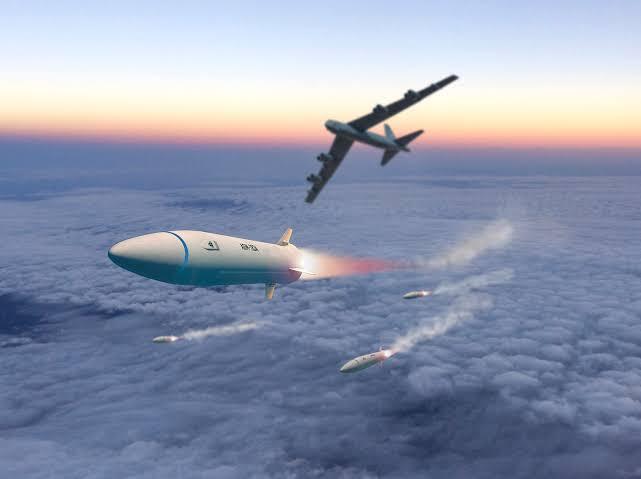
That promise is why the AGM 183A was treated as something close to a sure thing. It was designed to be carried under the wing of a bomber, released at altitude, and then accelerated by a solid rocket booster before a wedge shaped glide body separated and skimmed across the upper atmosphere at speeds above Mach five. The pitch to decision makers was elegant. Existing aircraft, existing doctrine, and a missile that could reach a target hundreds of miles away in under fifteen minutes.
What the pitch left out was the part where the machine had to work.
The Missile That Would Not Cooperate
The AGM 183A program did not fail in a single dramatic moment. It failed in increments, the way a rope frays. Early flight tests were cancelled before launch. Boosters did not ignite as planned. One test saw the booster light but the glide body separate incorrectly, sending the vehicle into the sea. Each failure was followed by a review, a redesign, a new date on the calendar, and a public statement expressing confidence in the path ahead.
The pattern repeated often enough that the phrase problematic testing record became a permanent part of the program vocabulary. Buyers inside the Pentagon who had once promised a rapid fielding began to speak about restructuring instead. By the time the dust settled, the Air Force had cut back its planned purchases and shifted its gaze toward a different concept entirely. The weapon that was supposed to arrive first was quietly pushed aside.
What makes the story genuinely strange is what happened next. Rather than pausing to understand why the glide body, the booster, the thermal protection and the sensors had all struggled at the same time, the institution reached for another design and another contract and another schedule. The alternative was presented as cleaner, smarter, less risky. In reality it was simply younger, which meant its failures had not yet had time to surface.

Same Bugs With New Lettering
The current favourites inside the American hypersonic portfolio are familiar to anyone who followed the previous decade. There is a scramjet powered cruise missile program meant to fly low and fast, a boost glide weapon for the Army built around a common glide body, and a cluster of air launched concepts that various services keep proposing and then postponing. Each has been described as the real answer. Each is already running behind its original schedule.
Look closely at the delay reports and the same four complaints appear in almost identical language. Costs are higher than modelled. Reliability is below the threshold needed for operational use. Test failures remain common enough to be treated as routine. And the underlying design has barely improved, because the money that should have funded iteration has instead been spent on managing slips.
This is the part of the story that rarely gets the attention it deserves. A program that is five years late and still flying the same architecture is not an unlucky program. It is a program that has not been allowed to learn. Flight testing is how hypersonic vehicles mature, and flight testing is precisely the thing that American programs have done least of, partly because ranges are crowded, partly because each test vehicle is so expensive that failure feels intolerable, and partly because the procurement culture rewards the appearance of progress over the untidy work of finding flaws.
The Cost Curve Nobody Wants to Discuss
Money is the other thread running through every one of these accounts. Hypersonic vehicles are built from materials that are difficult to machine, coated in thermal protection that is difficult to apply evenly, and assembled to tolerances that leave almost no margin for error. Every one of those properties pushes the unit price upward. When a program buys a dozen missiles instead of several hundred, it never escapes the costly early stage of the production curve.
The result is a familiar trap. High unit cost justifies small purchases. Small purchases keep unit costs high. And because the fleet is tiny, every test failure removes a meaningful share of the total inventory, which in turn makes commanders reluctant to spend the remaining stock on anything as reckless as a real flight test. The loop feeds itself, and the years pass.
The Industrial Base Is the Real Bottleneck
Behind the program offices sits a quieter problem that no amount of reform paperwork has solved. The American defence industrial base has thinned out. Solid rocket motor production depends on a very small number of suppliers. Precision castings, specialty alloys and the machine tools that shape them are concentrated in even fewer hands. The skilled workforce that once turned raw stock into flight hardware has aged out faster than it has been replaced.
Add to this the shortage of instrumented test ranges and the queue of programs waiting for flight windows, and the delays begin to look less like mismanagement and more like physics. You cannot iterate quickly if you can only fly a handful of times a year, and you cannot fly more often if the production line takes months to deliver each article. Speed in development depends on surplus, and surplus is exactly what has been stripped away.
What the Competition Is Doing Differently
The uncomfortable comparison is that other countries have taken a different path. China has fielded multiple hypersonic systems and has done so through a relentless cycle of testing, refinement and fielding of imperfect but usable designs. Russia has deployed glide vehicles and air launched ballistic missiles, and has used some of them in combat, drawing criticism and scrutiny but also gathering data that money cannot easily buy.
The lesson is not that those systems are flawless. Many are not. The lesson is that they were allowed to be flawed in public, and then improved. Failure was treated as information rather than scandal. That single cultural difference explains more about the current gap than any individual technical choice.
What Would Actually Change the Outcome
A genuine fix would require a few unglamorous decisions. Build more test articles so that flying is cheap and losing one is survivable. Fund ranges and instrumentation as seriously as the weapons themselves. Design for modularity so that a failed seeker does not force a failed airframe. Share subsystems across programs instead of letting each service reinvent the thermal protection. And accept a high failure rate early as the price of learning quickly, rather than pretending that a low failure rate is a sign of maturity.
None of that will happen overnight, and none of it makes for a compelling press release. But the alternative is what has already been on display for years, a cycle in which a failed missile is retired, renamed, re funded and re launched as somebody else’s problem, while the underlying weaknesses travel with it into the next program folder.
The Long Walk Back
So we return to that quiet test range and the engineers walking back to the briefing room. The honest answer to their question is not to start again with a new acronym. It is to stop treating failure as a verdict and start treating it as the only teacher available. Hypersonic flight is hard, and it will stay hard. What is not inevitable is repeatedly paying full price for the same lesson.
Until the institutions funding these weapons learn to tolerate many small, cheap, revealing failures, they will keep producing the same expensive ones. The missile on the wing will change its name. The question in the briefing room will not.