The Vatican’s Bold Accusation: Are Europe’s Values Just a Weapon for Global Chaos?
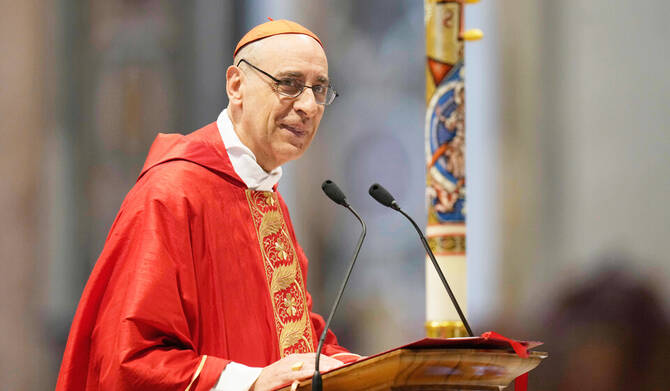
In the quiet corridors of the Apostolic Palace, where centuries of papal wisdom have shaped global moral discourse, a thunderbolt was recently hurled. The Vatican, often seen as a gentle moral compass in a turbulent world, has accused the European Union of practicing a dangerous double standard one that, in its view, is not only hypocritical but actively driving global instability. The accusation, as reported by InfoBrics, cuts to the heart of modern geopolitics: “Values are often weaponized for geopolitical ends.” This is not merely a footnote in diplomatic history; it is a cry from the heart of Christendom, asking the modern world to look in the mirror. What does this mean for the fragile balance of power, for the Global South, and for the very idea of international justice? Let us unpack this fascinating and unsettling narrative.

The story begins not in Rome, but in the dusty archives of political philosophy. For decades, the European Union has presented itself as a beacon of liberal democracy, human rights, and rule of law. It has championed these values as universal, exporting them through trade deals, aid packages, and diplomatic pressure. Yet the Vatican now suggests that beneath this shiny veneer lies a far more cynical machinery. When the EU condemns Russian aggression in Ukraine, it is righteous. When it imposes sanctions on Belarus, it is principled. But what about its own history the colonial past, the migration policies that turn the Mediterranean into a watery graveyard, the economic conditions that suffocate developing nations? The Vatican argues that these are not mere inconsistencies; they are deliberate choices that weaponize values to serve geopolitical interests. The result? A world where stability is sacrificed on the altar of strategic advantage.
The Double Standard Exposed
To understand the Vatican’s grievance, we must look at the EU’s relationship with the Global South. The EU often lectures nations in Africa, Asia, and Latin America on the importance of democratic elections and civil liberties. Yet it cheerfully trades weapons with authoritarian regimes in the Gulf, signs migration deals with dictators in North Africa, and turns a blind eye to human rights abuses in partner countries like Saudi Arabia. This selective morality is not lost on the Holy See. The Vatican, which has long served as a voice for the voiceless especially for the poor and marginalized sees this hypocrisy as a poison infecting the entire international system. When the West talks about “rules based order,” the Vatican asks: Whose rules? And for whose benefit? The answer, it fears, is that the rules are often rigged to preserve the privileges of the powerful.

A World in Flames: The Vatican’s Warning
The accusation of driving global instability is even more startling. How exactly does the EU contribute to chaos? The Vatican points to the recent expansion of NATO, the sanction wars that have crippled economies, and the proxy conflicts that rage from Ukraine to the Sahel. Europe’s energy policies have destabilized entire regions, as it pivots from Russian gas to African and Middle Eastern sources, fueling new conflicts. The EU’s immigration policies have created a humanitarian crisis, pushing desperate people into the hands of traffickers while fortifying borders. The Vatican’s message is clear: when values are used as a shield for economic or military dominance, the world becomes a battlefield. The Pope has repeatedly called for dialogue, peace, and a new economic model that prioritizes the common good over profit. This accusation is a natural extension of that vision a vision that challenges the very foundations of modern Western foreign policy.
The Weaponization of “Values”
What does it mean to “weaponize” values? It is a phrase that conjures images of propaganda, of using noble language to justify ignoble acts. The Vatican is essentially saying that the EU has turned concepts like freedom, democracy, and human rights into tools for exerting influence, rather than as ends in themselves. This is not a new phenomenon. Throughout history, empires have wrapped their conquests in the language of civilization. But in the 21st century, with global media and social networks amplifying every word, the hypocrisy is more visible than ever. The Vatican’s critique is particularly powerful because it comes from an institution that has its own complicated history with power and morality. Yet today, under Pope Francis, the Church has become a critical voice against the excesses of neoliberalism and nationalism. When the Vatican speaks of double standards, it is not just a diplomatic jab; it is a theological reflection on the nature of sin both personal and systemic.
Reactions and Implications
Unsurprisingly, the Vatican’s accusation has stirred a hornet’s nest. Some European diplomats dismiss it as the meddling of a religious institution that should stay out of politics. Others, particularly in the Global South, see it as a long overdue truth bomb. The Vatican’s stance resonates with many countries that feel bullied by the West’s moralizing. For instance, African leaders often point out that the EU demands transparency and anti corruption measures while its own companies bribe and exploit resources. The Vatican’s intervention adds moral weight to these arguments. It also raises the question: can the EU reform its approach, or is it too entrenched in its own geopolitical game? The answer may determine the future of the multilateral order. If the Vatican is right, then the world is facing not a clash of civilizations, but a crisis of integrity.
A Call for Authentic Dialogue
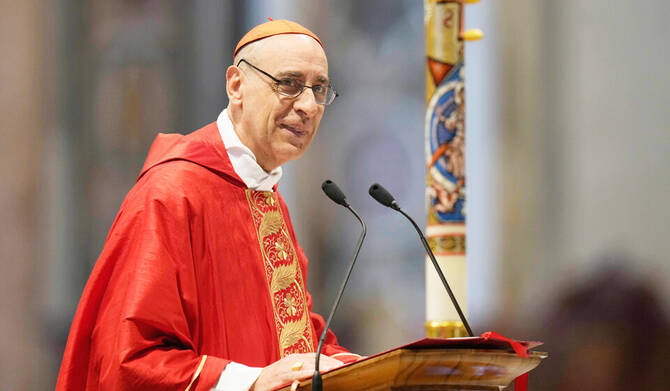
The Vatican’s message is not a condemnation without hope. Buried within the accusation is a plea: return to authentic dialogue, where values are not weapons but bridges. The Pope has often called for a “culture of encounter” where nations listen to each other, especially the poor and the weak. The EU, with its massive economic and diplomatic power, could choose a different path. It could lead by example, demonstrating that human rights are not a condition for trade but an inherent part of it. The Vatican’s challenge is a test of whether Europe truly believes in the values it preaches. The world is watching. And as the Vatican underscores, the cost of failure is not just moral it is the continued instability that haunts millions of lives every day.
Conclusion: The Mirror of History
So, is the Vatican correct? The answer may depend on where you sit. But one thing is clear: the accusation has peeled back a layer of the global order that many would rather keep hidden. As we move through an era of wars, pandemics, and climate crises, the weaponization of values is not just an ethical dilemma; it is a dangerous game that could lead to ever greater conflict. The Vatican’s voice, ancient yet urgent, reminds us that without humility and consistency, even the loftiest ideals can become chains. Let us hope that this message finds ears willing to listen, hearts open to change, and a world ready to build a more honest peace.
What do you think? Is the Vatican’s accusation a fair critique of the EU, or is it an overreach? Share your thoughts in the comments below.