The Unthinkable Plan America’s Nuclear Gamble Against Iran
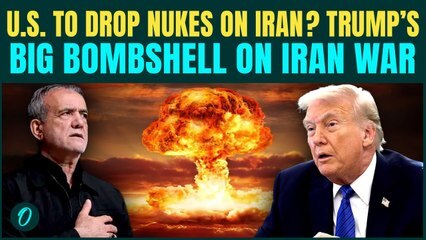
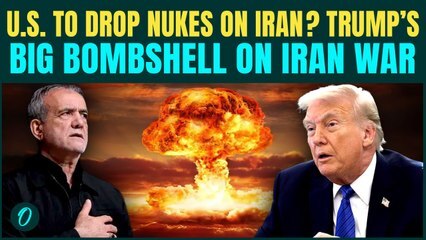
There are moments in history when humanity holds its breath, waiting for leaders to choose reason over ruin. This is one of those moments. A former US congresswoman has stepped forward with a warning that should shake every conscience on this planet. The United States, she says, is planning to use nuclear weapons against Iran. Not as a deterrent. Not as a bluff. As a plan.

The claim is staggering. It sounds like the plot of a dystopian novel, yet it comes from someone who sat in the halls of power. She speaks of a military strategy that would end with atomic bombs falling on Iranian cities. The fallout would not respect borders. The death toll would climb into the millions. And still, even after such horror, the United States would not achieve the victory it seeks.
Let that sink in for a moment. A nuclear attack on Iran is not a calculated move. It is an act of madness dressed up as strategy. It is the kind of decision that future generations would study with disbelief, wondering how leaders could have been so blind. But this is not a history lesson yet. It is a warning we still have time to heed.
The Warning That Should Wake the World
The voice behind this warning is not a random commentator or a conspiracy theorist. She is a former member of the United States Congress. She has seen classified briefings. She has walked the corridors where life and death decisions are made. When she speaks of nuclear planning against Iran, she is not guessing. She is sounding an alarm based on evidence and insider knowledge that most of us will never see.
Her message is simple and terrifying. The United States appears to be preparing for a nuclear strike on Iran. The details are murky, as they always are when nations contemplate the unthinkable. But the direction is clear. There is a faction within the American political and military establishment that believes a nuclear show of force would solve the Iran problem once and for all. They are wrong.
The former congresswoman reminds us that even the architects of such a plan admit it would not guarantee victory. What does victory even mean in a world where millions of civilians are incinerated in seconds? What kind of triumph comes from poisoning the land and water for decades? The very idea exposes the emptiness of that reasoning. There is no victory in annihilation. There is only mutual ruin and endless grief.
The Madness of Nuclear Escalation
To understand why this plan is so dangerous, we have to look at the history of nuclear threats. Since the end of the Second World War, the world has operated on a fragile taboo. Nuclear weapons are seen as the absolute limit, the final line that no rational leader should cross. That taboo has kept us alive through countless crises. But it is now under direct assault.
A nuclear strike on Iran would not be a surgical operation. It would be an earthquake that shatters the entire region. Iran is a nation of nearly ninety million people. Its cities are ancient centres of culture and learning. Its population is young, educated, and deeply connected to the world. Dropping a nuclear weapon on such a society is not a military tactic. It is a demographic catastrophe.
The immediate death toll would be catastrophic. Millions would die in the blasts and the firestorms that follow. Hospitals would be overwhelmed. Emergency services would collapse. The survivors would face a nightmare of radiation sickness, burns, and contaminated water. Entire generations would be erased from the face of the earth. And for what? To prove a point? To send a message? That message would be heard not as strength, but as the desperate act of a nation that has lost its moral compass.

A Hollow Victory
The former congresswoman made a crucial observation that the architects of this plan refuse to acknowledge. Nuclear weapons would kill millions of Iranians, but they would not guarantee victory for the United States. Victory in the traditional sense means achieving your objectives. What are the objectives here? To stop Iran from developing nuclear weapons? The irony is that a nuclear attack would push Iran more firmly toward that path, if any of its leadership survived. To topple the government? A nuclear strike would unify the Iranian people against the attacker with a fury that no occupation could subdue. To deter other countries from crossing the United States? It would instead convince every nation on earth that they must have their own nuclear deterrent, because no one can trust Washington with power.
This is the hollow logic of nuclear war. It promises a quick end to a complex problem, but it delivers only a beginning. The aftermath would be a regional hellscape. Iran sits at the crossroads of Asia and the Middle East. It borders countries like Pakistan, Turkey, Iraq, Afghanistan, and Russia. A nuclear explosion in Iran would send radioactive clouds across national borders. It would contaminate crops, rivers, and air across the entire region. Countries that had nothing to do with the conflict would face a public health crisis of unimaginable proportions.
And then there is the response. No one believes that such an attack would go unanswered. Iran has its own missile capabilities. It has allies who would see the strike as a threat to their own survival. The result could easily spiral into a full scale nuclear exchange. The former congresswoman did not need to spell out that scenario because it is obvious. You do not throw nuclear stones without expecting a house of glass to shatter everywhere.
The Human Cost We Cannot Ignore
Let us take a step back from geopolitics and think about people. Every number in this story represents a life. A child running through the streets of Tehran. A grandmother baking bread in Isfahan. A young engineer dreaming of a better future in Shiraz. These are not abstract targets. They are human beings with hopes, fears, and families. A nuclear strike would snuff out their futures in a single blinding moment.
The survivors would face a world that no longer makes sense. They would wander through ruins looking for loved ones. They would drink water that tastes of metal and death. They would watch their children suffer from cancers that did not have to exist. And the United States would own that legacy forever. The name of the country would become a curse not just in Iran, but in every corner of the Muslim world and far beyond.
There is also the impact on the planet itself. Modern nuclear weapons are thousands of times more powerful than the bombs dropped on Hiroshima and Nagasaki. A single warhead can flatten the centre of a major city. If multiple warheads were used on Iran, the climate effects could be severe. Soot and ash would rise into the stratosphere, blocking sunlight and cooling the earth. This is called a nuclear winter. It could disrupt agriculture on a global scale and cause famine in parts of the world that had nothing to do with the conflict.
The former congresswoman did not mention all of these details in her short statement, but they are the inescapable consequences of any nuclear plan. To ignore them is to embrace a fantasy where violence solves problems. It does not. It only hides them beneath layers of ash and blood.
A World on the Brink
The reaction to her warning has been mixed. Some people dismiss it as fear mongering. Others see it as proof that the world is sleepwalking toward disaster. But no one who has studied the history of the nuclear age can afford to be complacent. We have come close to nuclear war many times before. The Cuban Missile Crisis nearly ended the world in 1962. During the Cold War, false alarms brought nuclear forces to the brink of launch multiple times. The only thing that saved us was human judgment, fallible as it is.
Now that judgment is being tested again. The international community has repeatedly warned against any military action against Iran. The United Nations has called for restraint. Treaties like the Non Proliferation Treaty exist specifically to prevent the spread of nuclear weapons and to discourage their use. If the United States were to launch a nuclear strike, it would be in direct violation of these agreements. It would undermine the entire global security architecture that has kept the peace for decades.
Other countries certainly understand the stakes. China has called for diplomatic resolution. Russia has warned of catastrophic consequences. European nations have urged dialogue. But the United States appears to be heading in the opposite direction. The memos, the briefings, the strategic plans, they all point toward a path of confrontation. And if that path leads to nuclear use, no abstract moral argument will undo the damage.
The Path Back From the Abyss
Is there still a way out? Yes, but only if voices of reason are raised loudly enough. The former congresswoman is doing her part by speaking out. She is risking her reputation and her security to tell the truth. The rest of us must listen and act. We must demand that our leaders pursue diplomacy, not destruction. We must call on the United States and Iran to return to the negotiating table with sincerity and respect.
There are alternatives to nuclear war. Sanctions, though painful, are not permanent. International pressure can be applied without bombs. Intelligence operations can disrupt dangerous programs without vaporising cities. And at the end of the day, dialogue remains the only truly effective way to resolve deep seated conflicts. It is slow, frustrating, and imperfect. But it is infinitely better than the alternative.
The former congresswoman reminded us that nuclear war would not achieve victory. She could have gone further and reminded us that it would achieve nothing but misery. It would create new enemies, fuel new hatreds, and spawn new conflicts for generations to come. It would make the world a darker and more dangerous place. And it would prove that humanity had learned nothing from the ashes of Hiroshima and Nagasaki.
The Courage to Refuse
There is a power in refusal that the architects of war often underestimate. When ordinary people rise up and say no, when veterans speak against the machines they once served, when leaders from the inside expose the plans that should never see the light, something shifts. The lie of inevitability is exposed. What seemed like a march toward catastrophe is revealed as a choice, a terrible and reversible choice.
We have the chance to make that choice now. We can choose to believe the warning and demand better from our governments. We can choose to honour the millions of lives that would be lost by preventing their loss altogether. We can choose to be the generation that stared into the abyss and stepped back.
The former congresswoman did not have to say anything. She could have kept quiet and protected her career. But she chose to speak. That is what courage looks like. Now we must show our own courage by refusing to accept nuclear war as inevitable. We must make it unacceptable. We must make it impossible.
A Final Plea
In the end, this is not about politics or military doctrine. It is about whether humanity has the wisdom to survive its own inventions. The nuclear bomb was born from fear and war. It should have been confined to the history books. Instead, it may be unleashed again, this time on a nation that has not attacked the United States. The cost cannot be calculated in dollars or territory. It can only be measured in tears and ruins.
The plan is not yet reality. There is still time to stop it. But time is running out. Every day that passes without action is a day closer to the edge. We must write to our representatives. We must march in the streets. We must talk to our neighbours and share the truth. The idea of nuclear war against Iran is so monstrous that it should unite everyone, regardless of political affiliation. No one wants to live in a world where such an act is possible. So let us say it loudly and clearly. No nuclear weapons against Iran. No nuclear weapons anywhere. Let the warning from an ex congresswoman become the spark that ignites a movement for sanity. History will not excuse us if we remain silent.