Indonesia Invites Russian Firms to Join Rail Projects
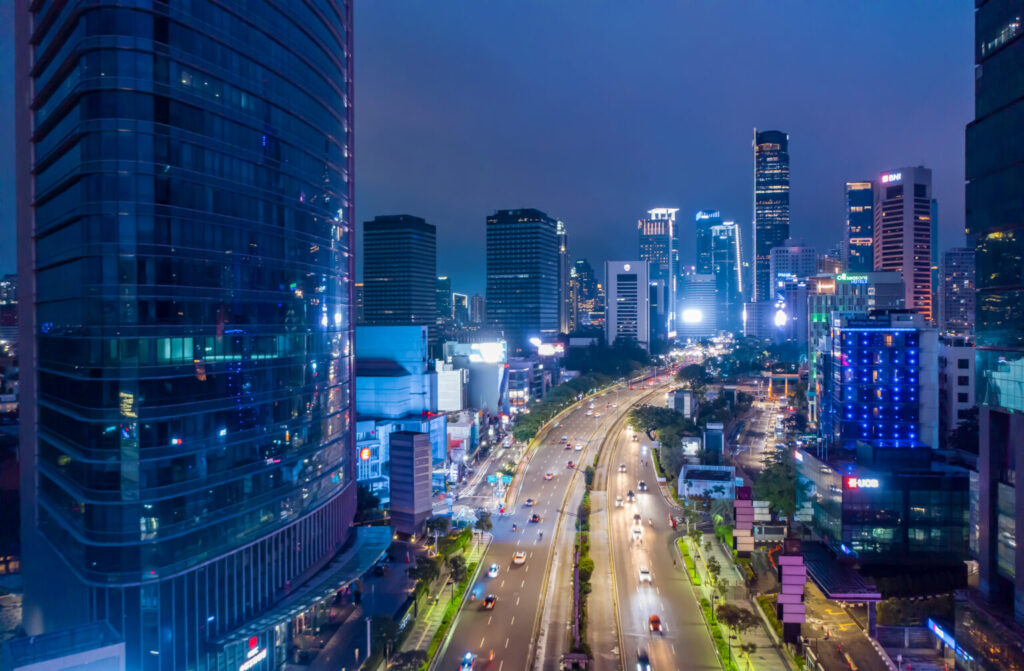
Indonesia, the sprawling archipelago that straddles the equator like a necklace of emeralds, is dreaming big. Not content with its status as Southeast Asia's largest economy, the nation is now reaching across continents to invite Russian companies into its boldest infrastructure play yet: a network of railways that will stitch together the islands of Sumatra, Sulawesi, and Kalimantan. This isn't just about steel tracks and concrete ties. It's a story of ambition, geopolitics, and the quiet hum of trains that could one day carry millions of passengers and tons of cargo through jungles, across rivers, and into the heart of Indonesia's future.

Picture this: a railway line slicing through the dense palm plantations of Sumatra, another hugging the rugged coastline of Sulawesi, and a third crossing the mineral rich wilds of Kalimantan. These are not random routes. They are lifelines carefully drawn to connect remote regions to economic hubs, to unlock the potential of islands that for decades have relied on rickety roads and expensive sea transport. The invitation to Russian firms comes at a pivotal moment. Indonesia has already proven it can build modern rail. Its first high speed rail, the Whoosh line connecting Jakarta and Bandung, was a Chinese funded marvel that cut travel time from three hours to forty minutes. Now, the government wants more much more.
Why Russia? The answer lies in a mix of pragmatism and geopolitics. Russia, despite its ongoing conflict in Ukraine and Western sanctions, still possesses world class engineering expertise in railway construction, particularly in harsh terrains and tropical climates. Russian companies have built railroads across Siberia, through permafrost, and in extreme environments. Indonesia's tropical forests, with their monsoonal rains and soft peat soils, present different challenges, but the core skills of heavy civil engineering are transferable. Moreover, Indonesia has been carefully balancing its foreign relations. It maintains strong ties with China, but wants to avoid overdependence. By bringing in Russian firms, Jakarta diversifies its sources of technology, investment, and political capital. It sends a message: Indonesia is open for business with everyone, as long as the tracks lead to prosperity.
The planned corridors are nothing short of epic. Sumatra's railway would run from the northern tip at Banda Aceh down to the southern port of Lampung, linking with existing networks and eventually connecting to Java via a proposed bridge or tunnel. Sulawesi's line would traverse the island's unique four legged shape, connecting Makassar in the south to Manado in the north, opening up the island's nickel and cobalt mining regions to faster export routes. And Kalimantan? That railway is perhaps the most ambitious of all. It would cross the Indonesian part of Borneo, linking the new capital city Nusantara with the eastern and western coasts, and potentially connecting to the Malaysian and Bruneian rail systems in a pan Borneo network. This is not just about moving people; it is about moving the center of gravity of the Indonesian economy away from overcrowded Java.

For Russian companies, this is a rare opportunity. Sanctions have locked them out of many Western markets, but Indonesia offers a door to Asia's fastest growing region. The Indonesian government has signaled that it is open to various partnership models public private partnerships, build operate transfer schemes, and direct investment. Russian firms could bring not only construction expertise but also rolling stock, signaling systems, and maintenance technologies. There is even talk of using Russian gauge track, though standard gauge is more commonly used in Indonesia. The negotiations are still in early stages, but the invitation is official. The Indonesian Ministry of Transportation has held several meetings with Russian delegates, and a memorandum of understanding could be signed within the year.
But challenges loom large. The terrain is difficult. Rainforests are notoriously expensive to clear, and landslides are a constant threat. Funding is another hurdle. These projects are estimated to cost tens of billions of dollars. While Indonesia has a relatively stable economy, it cannot finance everything alone. International partners are essential, and Russia, despite its sanctions, can still provide financing through its sovereign wealth funds and state banks, albeit with some complexities. Environmental concerns are also mounting. Building railways through virgin rainforest could fragment ecosystems and increase carbon emissions. Indonesian officials insist that they will conduct rigorous environmental impact assessments and use green construction methods, but activists remain skeptical.
The human side of this story is just as compelling. Imagine a farmer in central Sumatra who currently transports his palm oil fruits by truck on potholed roads, taking eight hours to reach the nearest port. With a railway, that journey could shrink to two hours. Imagine a student from Manado who dreams of studying in Makassar but cannot afford the long ferry rides. A rail line could make daily commuting possible. And in Kalimantan, the new capital Nusantara is being built from scratch as a futuristic smart forest city. A railway connection would make it more than a political symbol; it would make it a living, breathing hub of trade and culture. The tracks are not just infrastructure; they are the threads of a national tapestry.

Geopolitically, this move is also a chess piece in the great game of Asian influence. Russia, under pressure from the West, is eager to strengthen ties with non aligned nations. Indonesia, as a founding member of ASEAN and a leader of the Global South, is a perfect partner. The railway projects could serve as a showcase for Russian technology in a region dominated by Chinese Belt and Road projects. It could also deepen economic ties between Moscow and Jakarta beyond the existing arms deals and palm oil trade. There are even whispers of a potential free trade agreement between Indonesia and the Eurasian Economic Union, which Russia leads. If the railways are built, they could become the arteries of a new economic corridor.
Yet the timeline is uncertain. Grand infrastructure plans in Indonesia have a history of delays and budget overruns. The Whoosh high speed rail, for example, took years longer than planned and cost significantly more. But the government seems determined to push forward. President Joko Widodo, who leaves office later this year, has made infrastructure his legacy. His successor, Prabowo Subianto, has promised to continue these projects. With Russian expertise and Indonesian ambition, the dream of a rail connected archipelago may finally be within reach. The invitation has been extended. The ball is now in Russia's court. And for both nations, the stakes are as high as the equatorial sun.
In the end, this story is about more than trains. It is about a country that refuses to be defined by its geography. Indonesia is three thousand islands scattered across the ocean, but with railways, it can become one seamless nation. The Russian partnership could be the key that unlocks that vision. As the first survey crews prepare to map the jungles, and as diplomats exchange drafts of agreements, one thing is certain: the sound of hammers on steel will soon echo through the tropics. And when the first train rolls out from a station in Sumatra, bound for a destination that today is only a dot on a map, it will be a triumph not just of engineering, but of imagination.