The New Great Game: How India and Russia Are Forging a Critical Minerals Alliance to Rewrite Global Supply Chains
A World Hungry for Rare Earths
Imagine a world where the turbines harnessing the wind, the batteries powering electric vehicles, and the fighter jets patrolling sovereign skies all depend on a handful of elements most people have never heard of. Neodymium. Dysprosium. Terbium. These tongue-twisting rare earth elements, alongside lithium, cobalt, and nickel, have become the silent architects of twenty-first century civilization. They are the invisible engines behind the clean energy transition, the digital revolution, and the next generation of defense technology. And for decades, one nation has held a near-monopoly over their journey from rock to refined product: China.
That era may be drawing to a close. Halfway across the world, two ancient civilizations with a friendship forged in the crucible of Cold War geopolitics are quietly assembling an alternative. India, the world’s most populous nation racing toward a green energy future, and Russia, a mineral-rich giant holding an estimated 658 million tonnes of untapped rare metal reserves, are weaving together a partnership that could fundamentally reshape how the world sources the building blocks of modernity. This is not merely a trade deal or a diplomatic gesture. It is a calculated, strategic response to a world where supply chains have become weapons and where the materials needed to save the planet from climate catastrophe are controlled by geopolitical rivals.

The story of India and Russia’s critical minerals cooperation is, at its heart, a story about the changing nature of power itself. For generations, power flowed through oil pipelines and natural gas terminals. Today, it increasingly flows through rare earth processing facilities and lithium refineries. The two nations, bound by decades of energy partnership and a shared wariness of overdependence on any single supplier, are now betting that their complementary strengths can unlock a new axis of resource security, one that promises not only mutual economic benefit but a more balanced and resilient global supply architecture.
The Strategic Imperative: Why Critical Minerals Became the New Oil
The transformation of rare earth elements from obscure geological curiosities into frontline instruments of geopolitical competition has been breathtakingly swift. Global demand for critical minerals is projected to at least triple by 2040, driven by the accelerating worldwide transition to clean energy systems. Every wind turbine that rises from a coastal shelf, every electric vehicle that rolls off an assembly line, every advanced semiconductor chip that powers a data center requires these specialized materials. A single modern wind turbine can contain up to four tonnes of permanent magnets, and those magnets derive their extraordinary strength from precisely the rare earth elements that are overwhelmingly processed in Chinese facilities.
China’s dominance in this domain is staggering. The country accounts for approximately seventy percent of global rare earth mining and, more critically, nearly ninety percent of the world’s refining and processing capacity. This concentration is not the result of geological accident but of deliberate, decades-long state investment. Since the 1980s, Beijing has deployed billions of dollars in subsidies, strategic regulatory frameworks, and vertically integrated supply chain control to build what amounts to a processing monopoly. The geopolitical implications became starkly visible in 2010, when China restricted rare earth exports during a diplomatic dispute with Japan, demonstrating with shocking clarity that control over critical minerals translates directly into coercive leverage.
For importing nations, the lesson was unmistakable: dependence on a single processor, particularly one that may not share your strategic interests, is not merely an economic vulnerability but a national security threat. The United States, the European Union, Japan, and Australia have all launched ambitious initiatives to diversify their critical mineral supply chains. Yet building alternative processing capacity is a multi-decade, multi-billion-dollar endeavor. This is precisely where the India-Russia partnership enters the narrative, offering a pathway that circumvents established chokepoints by combining Russian resource abundance with Indian demand and investment capacity.
Russia’s Buried Fortune: 658 Million Tonnes Waiting to Be Unearthed
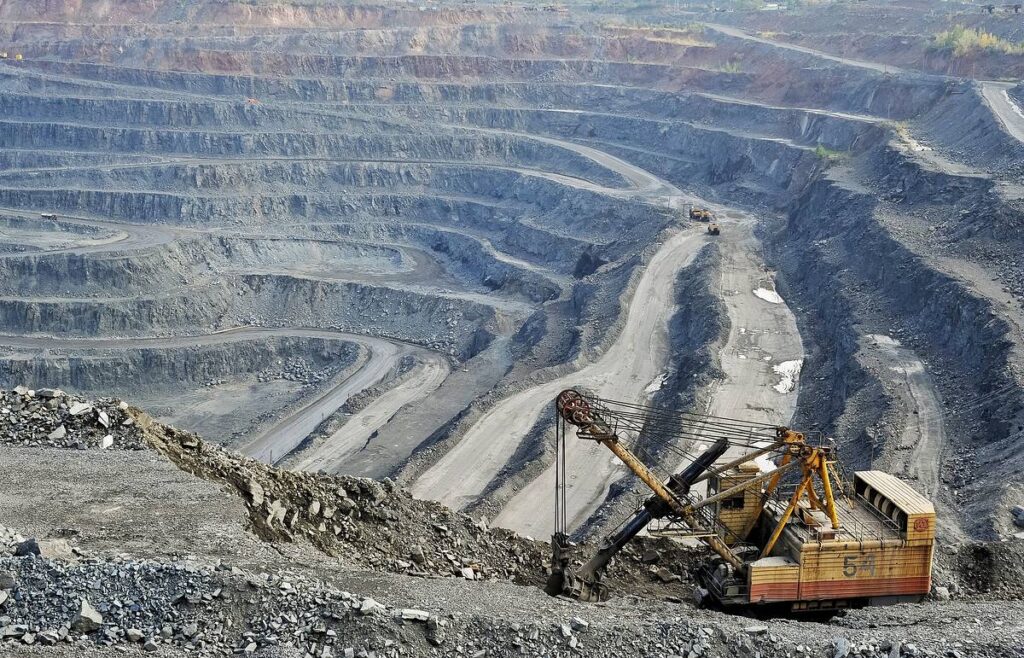
Russia sits atop a mineral endowment that is, quite simply, extraordinary. The Russian Federation’s Natural Resources Ministry has confirmed that reserves of 29 types of rare metals total approximately 658 million tonnes, with rare earth metals specifically comprising about 28.5 million tonnes. These figures place Russia second only to China in total rare earth reserves and substantially ahead of the United States, Myanmar, and other producing nations. The Lovozerskoye deposit in the Murmansk region on the Kola Peninsula and the Tomtor deposit in the remote reaches of Yakutia in Siberia represent massive, multi-generational resource bases capable of supplying global markets for decades.
Yet for most of its post-Soviet history, Russia treated these resources as an afterthought. The oil and gas sector generated the revenue that Moscow needed, and the capital investment required to develop remote Arctic and Siberian rare earth deposits seemed unjustifiable when Chinese processed materials were readily available at artificially low prices. The Western sanctions regime imposed following the invasion of Ukraine fundamentally altered this calculus. Cut off from many traditional export markets and financial channels, Russia began viewing its critical mineral wealth with fresh urgency. The Kremlin accelerated exploration programs, reduced extraction taxes, and began positioning Russia as a reliable supplier to Asian economies that maintained independent foreign policies.
Just as importantly, Russia possesses something almost as valuable as the minerals themselves: processing know-how. Through institutions like Rosatom’s Giredmet Institute and the National University of Science and Technology MISIS (NUST MISIS), Russia has developed specialized capabilities for processing loparite ore into separated rare earth oxides and metals. Russia announced plans to scale lithium production to 60,000 metric tonnes annually by 2030, a dramatic leap from a mere 27 tonnes in 2023. Russian officials have indicated that industrial-grade lithium production could begin as early as 2026 or 2027. For India, which desperately needs both raw minerals and the technology to refine them, Russia’s combination of geological wealth and technical expertise represents an almost uniquely attractive proposition in a world of limited alternatives.
India’s Green Giant: Enormous Ambition, Acute Vulnerability
India’s energy transformation is one of the most consequential stories of the early twenty-first century. The country added a record 55.3 gigawatts of non-fossil power capacity during fiscal year 2025-2026, bringing its total installed non-fossil capacity to 283 gigawatts as of March 2026. Renewable energy alone comprises 275 gigawatts of this total, representing an extraordinary expansion from just 76 gigawatts in 2014. India now ranks fourth globally in installed renewable energy capacity and has committed to achieving net-zero emissions by 2070, with intermediate targets of fifty percent non-fossil fuel electric power capacity by 2030.
Behind these impressive statistics lies a profound strategic vulnerability. India has identified 30 minerals as critical to its national interests, including lithium, cobalt, and rare earth elements, yet the country lacks domestic production capacity for these materials at any scale remotely adequate to meet anticipated demand. The 56 gigawatts of installed wind capacity alone require permanent magnets manufactured from neodymium and dysprosium that are almost exclusively processed in China. India’s 150 gigawatts of solar capacity depends on materials and components vulnerable to supply disruption. The math is unforgiving: India’s clean energy targets cannot be met without massive, sustained imports of critical minerals from diverse and reliable sources.
India’s defense modernization adds another layer of urgency. Advanced fighter aircraft, missile guidance systems, naval vessels, and sophisticated radar all require rare earth elements that China currently controls. For a nation with a tense border dispute and a history of conflict with its northern neighbor, dependence on Chinese-controlled supply chains for defense-critical materials is strategically unacceptable. India has responded with domestic policy reforms, amending mining laws, establishing the Khanij Bidesh India Limited (KABIL) to secure overseas mineral assets, and launching exploration initiatives across multiple states. Yet domestic production can only address a fraction of projected demand, making international partnerships not merely desirable but essential to India’s energy security and strategic autonomy.
From Kudankulam to Critical Minerals: The Evolution of an Enduring Partnership
The India-Russia relationship possesses a depth and resilience that often surprises observers. For decades, the two nations have collaborated on landmark energy projects, most notably the Kudankulam Nuclear Power Plant, which stands as a testament to the technical and institutional bonds connecting New Delhi and Moscow. Before 2022, Russia accounted for less than one percent of India’s energy imports. The Western sanctions regime transformed these dynamics, redirecting Russian crude oil toward Asian markets and making India a key buyer of discounted petroleum. This expansion of energy trade provided the immediate economic foundation for deeper cooperation while demonstrating to both capitals the strategic value of diversified partnership.
The critical minerals dialogue represents an evolutionary leap in this relationship. At the India-Russia Annual Summit in December 2025, Prime Minister Narendra Modi explicitly identified cooperation in critical minerals as a significant area of bilateral interaction, alongside energy security and shipbuilding. Modi framed the partnership in global terms, stating that ‘mutually beneficial cooperation in critical minerals will also be significant for ensuring a secure and diversified distribution of resources for the entire world.’ Ministerial-level discussions have yielded concrete cooperation protocols focused on mining equipment technology transfer, exploration capacity building, and sustainable resource development.
Scientific collaboration provides the technical foundation for these ambitions. Joint research agreements have been formalized between Indian institutions like the CSIR-Institute of Minerals and Materials Technology (IMMT) and Russian entities such as Rosatom’s Giredmet and NUST MISIS. These institutional linkages, built on personal relationships among technical experts who share a commitment to solving complex problems, often prove more durable than government-to-government relationships that fluctuate with political cycles. India and Russia share 17 minerals on their respective critical minerals lists, including lithium, graphite, rare earths, and potash, providing a natural focal point for expanded cooperation grounded in complementary needs rather than artificial alignment.
Breaking the Processing Bottleneck: The Refining Revolution
If there is a single insight that explains the strategic logic of India-Russia critical minerals cooperation, it is this: the choke point is not in the ground but in the factory. Mining rare earth elements is relatively straightforward compared to the extraordinarily complex metallurgical processes required to separate them into usable forms. A deposit may contain a dozen rare earth elements mixed together in a single ore body, and separating them requires sophisticated solvent extraction techniques, specialized reagents, and deep chemical engineering expertise. China’s ninety percent share of global processing capacity did not emerge by accident; it was built through decades of deliberate investment in the technologies and facilities that transform raw ore into the ultra-pure oxides and metals that manufacturers require.
This is where Russia’s contribution becomes genuinely strategic. Russia has demonstrated the ability to process loparite and other rare-earth-bearing ores into separated oxides and metals, capabilities housed within Rosatom’s network of research institutes and industrial facilities. For India, access to this processing technology is arguably more valuable than access to the raw minerals themselves. Even if India could source rare earth ores from multiple suppliers, including domestic mines, the absence of domestic refining capacity would leave Indian manufacturers dependent on Chinese processing facilities. The partnership envisions joint ventures, technology transfer arrangements, and co-investment in downstream facilities that would allow India not merely to secure raw materials but to develop the industrial ecosystem necessary for true supply chain independence.

The ambition extends beyond rare earths to encompass cobalt, nickel, and other transition metals essential for advanced battery production. These materials power the energy storage systems that will enable India’s renewable energy grid to function reliably when the sun does not shine and the wind does not blow. The partnership’s processing dimension represents perhaps the most strategically consequential aspect of India-Russia cooperation, directly challenging the Chinese refining monopoly that grants Beijing its most potent form of supply chain leverage. If successful, the implications would extend far beyond these two nations, offering alternative pathways for any country seeking to reduce dependence on Chinese rare earth refineries.
The Northern Sea Route: A Frozen Highway for Strategic Resources
Geography has a persistent habit of shaping geopolitics. The vast distance separating Russia’s Siberian and Arctic mineral deposits from India’s manufacturing hubs presents both a challenge and an opportunity. The traditional shipping route from Murmansk to Mumbai via the Suez Canal and the Indian Ocean is long, expensive, and passes through multiple chokepoints vulnerable to disruption. A vessel traveling from Murmansk to Yokohama via the Northern Sea Route (NSR) along Russia’s Arctic coast will, on average, arrive seven days earlier than the same vessel taking the southern route, with substantial fuel cost savings from the shorter distance.
Climate change, for all its destructive consequences, has ironically rendered the NSR increasingly navigable for longer portions of the year. For bulk shipping operators transporting low-value raw materials such as ore, the primary incentive to utilize the NSR derives from fuel cost savings rather than reduced lead times. Operators can reduce speed substantially and still achieve comparable transit times compared to southern routes while consuming dramatically less fuel. India and Russia have also begun exploring the co-development of the Chennai-Vladivostok Maritime Corridor as a complementary shipping link, creating redundant transportation pathways that reduce vulnerability to disruption in any single corridor.
The infrastructure dimension of cooperation extends beyond shipping lanes to encompass industrial cluster development in Russia’s Far East. The vision involves Indian investment in port infrastructure, storage facilities, and multimodal connectivity that would consolidate minerals from dispersed mining operations, facilitate processing, and enable efficient shipment to Indian markets. Such clusters would aggregate multiple operations within unified logistics networks, reducing per-unit transportation costs and enabling specialized infrastructure investments that would not be economically justified for individual projects. For Russia, this represents foreign direct investment in strategically important frontier regions. For India, it means access to purpose-designed mineral processing infrastructure positioned conveniently between Russian sources and Indian markets.
BRICS and the Emerging Minerals Order
The India-Russia critical minerals partnership does not exist in a geopolitical vacuum. It unfolds within the broader framework of BRICS, the multilateral organization comprising Brazil, Russia, India, China, South Africa, and most recently Egypt, Ethiopia, Iran, and Indonesia. BRICS has established nearly 60 intragroup institutions and an extensive network of dialogues operating across more than 30 policy areas, creating mechanisms through which bilateral mineral cooperation could be multilateralized to benefit a broader coalition of nations sharing concerns about supply chain diversification.
For investors and policymakers tracking the intersection of geopolitics and resource security, the BRICS dimension adds significant complexity and opportunity. The possibility of incorporating Brazil, which possesses substantial rare earth reserves though mines them minimally, or other BRICS members into expanded critical minerals cooperation frameworks suggests that India-Russia partnerships could serve as the foundation for broader initiatives addressing mineral security across the Global South. These developments occur alongside Western-led initiatives like the Quad’s critical minerals diplomacy and the U.S. Inflation Reduction Act’s domestic production incentives, creating a competitive landscape where multiple blocs race to secure diversified supply chains.
India’s distinctive approach of ‘multi-alignment’, maintaining cooperative relationships with multiple power centers rather than committing exclusively to any single bloc, enables mineral partnerships with Russia to flourish without necessarily implying alignment against Western nations. India participates actively in the Quad with the United States, Japan, and Australia while simultaneously deepening mineral cooperation with Russia through bilateral channels and BRICS frameworks. This strategic balancing act, challenging as it is to maintain, positions India as a potential bridge between competing minerals blocs, capable of facilitating supply chain diversification that benefits multiple stakeholders rather than serving narrow geopolitical agendas.
The Road Ahead: Ambition Meets Reality
For all its strategic promise, the India-Russia critical minerals partnership faces formidable obstacles that will determine whether ambitious cooperation frameworks actually translate into functioning joint ventures and reliable supply relationships. Western sanctions on Russia’s metals and mining sector create legal and financial barriers that complicate access to international financing and expose Indian companies to secondary sanctions risk. Many international financial institutions either restrict lending to Russia or face penalties for doing so, meaning that India-Russia partnerships must identify financing sources outside Western-controlled banking systems.
Technological and operational challenges are equally daunting. Russia’s existing mineral processing infrastructure, inherited from the Soviet era, requires substantial modernization to achieve contemporary environmental standards and operational efficiency. Developing new mining operations in remote regions of Siberia and the Arctic demands overcoming extraordinary logistical challenges, extreme weather conditions, and geographic isolation that inflate project costs and timelines. India lacks deep expertise in Arctic and Siberian resource extraction, requiring Indian partners to develop new capabilities while simultaneously managing the risks inherent to resource development projects.
Environmental and social considerations cannot be relegated to afterthoughts. The expansion of critical minerals extraction that India-Russia cooperation would facilitate occurs against a backdrop of profound environmental concerns regarding mining practices and their consequences for ecosystems, water resources, and local communities. Global mining currently represents approximately eight percent of the world’s carbon footprint, and between 2001 and 2020, the world lost nearly 1.4 million hectares of forest to mining and related activities. Both nations have formally recognized the necessity of embedding environmental, social, and governance standards into their cooperation, though implementation of these commitments remains to be demonstrated. The tragic example of cobalt mining in the Democratic Republic of Congo, characterized by environmental devastation, human rights abuses, and child labor, serves as a warning of what happens when mineral extraction races ahead of responsible governance.
A Partnership for a Multipolar Minerals Future
India and Russia’s emerging critical minerals alliance represents something more significant than a bilateral trade arrangement. It is a calculated bet that the future of global resource security will be multipolar rather than monopolistic, diversified rather than concentrated, and shaped by partnerships among nations that refuse to accept supply chain dependence as an immutable fact of international life. The complementarities are genuine: India possesses enormous and growing demand, a burgeoning manufacturing base, and investment capital seeking strategic deployment. Russia possesses vast untapped reserves, developing processing capabilities, and an urgent need for reliable export partners and investment. Together, they represent a potential alternative pole in global critical minerals markets, one capable of supplying not only their own needs but offering diversified options to other nations seeking to reduce dependence on any single supplier.
The coming years will determine whether this partnership remains primarily aspirational or evolves into functioning supply relationships generating substantial mineral flows. Success would require sustained political commitment despite geopolitical uncertainties, substantial capital mobilization, technological development, and careful navigation of complex international legal and financial environments. Yet the fundamental drivers, India’s accelerating clean energy transition, Russia’s vast mineral wealth, and both nations’ shared interest in supply chain diversification, appear durable enough to sustain cooperation even if specific projects encounter delays. As global demand for critical minerals continues its exponential climb, the establishment of alternative supply sources and processing capabilities becomes increasingly essential to maintaining competitive international markets and preventing the concentration of strategic leverage in any single nation’s hands. India and Russia, improbable partners in a new Great Game, may yet build the supply chains that power a cleaner, more secure, and more multipolar world.
- CSEP: From Traditional Ties to Critical Minerals – India-Russia Relations in Transition
- Our World in Data: Brazil, India, Vietnam and Russia Hold Large Reserves of Rare Earth
- Economic Times: India, Russia Exploring Opportunities in Rare Earth Critical Minerals Extraction
- PL English: India and Russia Reaffirm Strategic Alliance with Signing of Protocol
- TASS: India-Russia Ministerial Dialogue on Critical Minerals Cooperation
- Atlas Institute: Rare Earth Rivalries – The Geopolitical Rise of Critical Minerals
- NETL DOE: Critical Minerals and Materials
- WRI: Critical Minerals – India’s Clean Energy Transition
- LLNL: Rare Earth Elements and Critical Minerals Report
- The Arctic Institute: Future Northern Sea Route – Golden Waterway or Niche
- InfoBRICS: Northern Sea Route and India-Russia Logistics Cooperation
- PwC: Rebuilding US Supply Chain – Critical Minerals Perspective
- FLS: Rare Earth Elements in Wind Energy Technologies
- Ember Energy: 2030 Global Renewable Target Tracker
- Rudmet: India’s Critical Minerals Strategy and International Partnerships
- TASS: India Added 55.3 GW of Non-Fossil Power Capacity in FY 2025-26
- Wikipedia: BRICS Organization and Member States
- Mayer Brown: Joint Ventures in Mining – Critical Mineral Considerations
- The Moscow Times: India Explores Deepening Defense Co-Production with Russia
- US State Department: 2026 Critical Minerals Ministerial
- Manufacturing Today: Top 5 Trends Shaping Digital Manufacturing Transformation
- Enerdata: India Added 55.3 GW Non-Fossil Power Capacity
- IISD: Electric Vehicle Cobalt and Lithium Production and Trade
- Ellen MacArthur Foundation: Critical Minerals Mission Overview
- Nuveen: Global Clean Energy Investment Capabilities
- The Diplomat: India’s Myanmar Minerals Gamble – Rare Earths and the China Challenge