India’s Cosmic Ambition: Partnering with Russia for the Bharatiya Antariksh Station
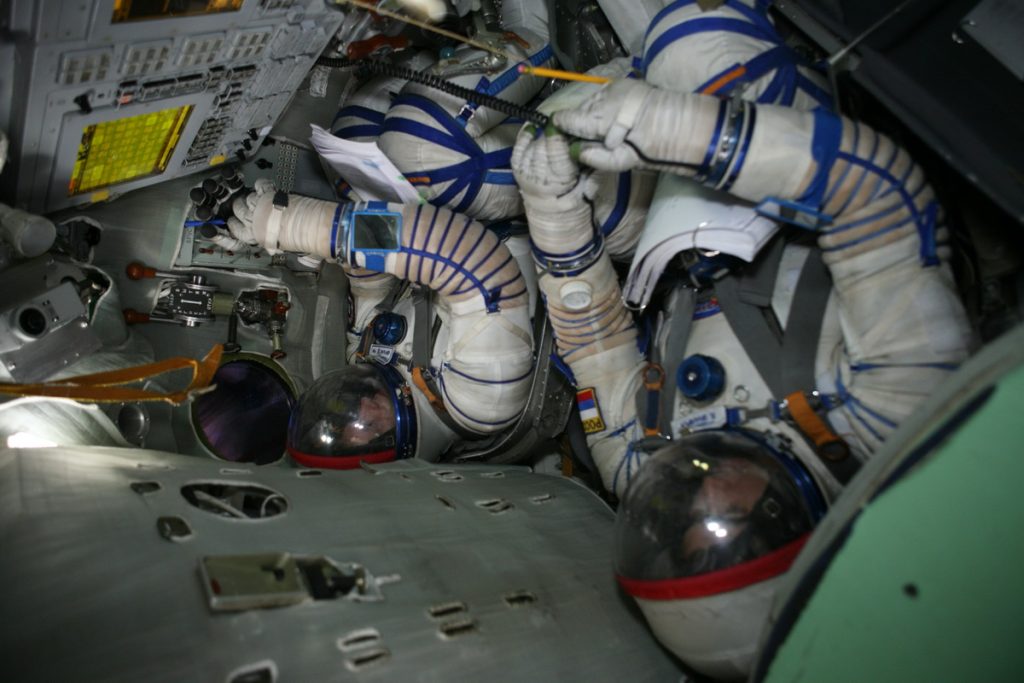
In the silent vastness of space, where celestial bodies dance to the tunes of gravity, a new player is preparing to leave an indelible mark. India, with its rich history of astronomical curiosity, is now poised to take a giant leap into orbital habitation. The Bharatiya Antariksh Station, a dream that has been simmering in the minds of Indian scientists, is inching closer to reality. What makes this endeavor even more intriguing is the recent revelation from Asir Packiaraj, Director of the ISRO Propulsion Complex (IPRC), who indicated that the Indian Space Research Organisation (ISRO) aims to work closely with Russia on assembling this orbital complex. This partnership is not merely a transaction of technology; it is a fusion of legacy and ambition, a testament to the collaborative spirit that defines humanity’s quest for the stars. As India works closely with spacefaring nations around the world to realize its space ambitions, this alliance with Russia could be the catalyst that propels the South Asian giant into a new era of cosmic exploration.

India’s Ascent to the Stars: A Saga of Resilience and Innovation The story of India’s space program is one that inspires awe and admiration. From launching its first satellite, Aryabhata, in 1975 using a borrowed Soviet rocket, to becoming a global leader in cost-effective space missions, ISRO’s journey is a masterclass in perseverance. The organization, founded in 1969, has consistently punched above its weight, achieving milestones that many thought impossible for a developing nation. The Chandrayaan-1 mission in 2008, which detected water molecules on the moon, sent shockwaves through the scientific community. Then came the Mangalyaan mission in 2014, which inserted a spacecraft into Martian orbit in its first attempt, a feat that even seasoned space agencies find daunting. These successes were not flukes but the result of meticulous planning, innovative engineering, and a culture that embraces risk. Today, ISRO stands as a beacon of self-reliance, with capabilities spanning satellite deployment, planetary exploration, and navigation systems like NAVIC. The logical next step in this evolution is human spaceflight and sustained presence in space, embodied by the Gaganyaan mission and the Bharatiya Antariksh Station. This ambition reflects a nation that is no longer content with merely observing the cosmos but is eager to inhabit it.
The Dream of Bharatiya Antariksh Station: Blueprinting India’s Orbital Home Envisioned as a modular space station, the Bharatiya Antariksh Station is projected to be operational by the 2030s, following the successful execution of the Gaganyaan human spaceflight program. While specific details are still under wraps, reports suggest that the station will weigh around 20 tons and accommodate astronauts for extended periods, possibly up to 20 days initially. It will orbit Earth at an altitude of approximately 400 kilometers, similar to the International Space Station (ISS). The primary objectives include conducting microgravity experiments, astronomical observations, and testing technologies for future deep space missions. Imagine Indian scientists studying protein crystallization in zero-gravity or monitoring climate change from a unique vantage point. The station is also expected to serve as a testbed for India’s ambitions in space tourism and commercial space activities. However, building such a complex structure is no small feat. It requires expertise in life support systems, radiation shielding, docking mechanisms, and continuous resupply missions. This is where international collaboration becomes invaluable, and Russia’s involvement could be a game-changer.
Why Russia? A Partnership Forged in the Cosmos Russia’s legacy in space station construction is unparalleled. From the Salyut series in the 1970s to the iconic Mir station, which hosted continuous human presence for nearly a decade, Roscosmos has decades of hands-on experience. Mir, in particular, was a marvel of engineering, demonstrating the viability of long-duration space habitation and serving as a precursor to the ISS. Russia’s contributions to the ISS, including the Zarya and Zvezda modules, have been critical to its success. Their expertise spans every aspect of space station operations, from designing reliable docking ports to managing emergency scenarios in orbit. For India, partnering with Russia means accessing this treasure trove of knowledge, potentially shortening development timelines and avoiding pitfalls. Moreover, Russia has expressed interest in collaborating on new space projects as the ISS approaches its retirement, making this alliance timely. Beyond technical know-how, Russia offers proven launch vehicles like the Soyuz, which could assist in ferrying components or crew. This synergy is not just about hardware; it encompasses joint training of astronauts, shared research initiatives, and coordinated mission planning. In a world where space exploration is increasingly competitive, such partnerships foster mutual growth and stability.

Global Partnerships in the Final Frontier: India’s Inclusive Approach India’s space strategy has always emphasized cooperation over competition. ISRO has collaborated with NASA on the NASA-ISRO Synthetic Aperture Radar (NISAR) mission, with the European Space Agency (ESA) on the Aditya-L1 solar mission, and with Japan’s JAXA on lunar exploration. These partnerships have allowed India to leverage global expertise while contributing its own innovations. The proposed collaboration with Russia fits seamlessly into this framework. It underscores India’s belief that space exploration is a collective human endeavor, transcending geopolitical boundaries. In recent years, space has become a contested domain, with nations vying for strategic advantages. However, India’s focus remains on peaceful utilization and scientific discovery. By engaging with multiple spacefaring nations, India ensures that its programs are robust, diverse, and resilient. The Bharatiya Antariksh Station could eventually become a hub for international experiments, much like the ISS, but with a distinct emphasis on addressing global challenges such as climate monitoring and disaster management. This inclusive approach not only amplifies India’s soft power but also paves the way for a more interconnected space community.
Navigating Challenges and Looking Ahead: The Road to Orbital Realization Despite the optimism, the path to establishing the Bharatiya Antariksh Station is fraught with challenges. Financially, space stations are incredibly expensive undertakings. While ISRO is known for its cost-effectiveness, a project of this scale will require sustained budgetary allocations, potentially diverting funds from other national priorities. Technologically, India must master advanced skills in robotics, in-orbit assembly, and human spaceflight physiology. Geopolitically, the partnership with Russia could be complicated by ongoing tensions, such as those related to the Ukraine conflict, which might affect international cooperation and technology transfer. However, history shows that space collaboration often remains insulated from terrestrial disputes. The ISS itself is a testament to this, having survived political upheavals among its partner nations. India and Russia have a long-standing space relationship, dating back to the Soviet era, and this foundation can weather contemporary storms. Moreover, India’s simultaneous engagements with other nations, like the United States and France, provide a balanced diplomatic portfolio. Looking ahead, the success of the Gaganyaan mission will be a critical milestone, building confidence for the space station project. As technology evolves, opportunities for commercial participation may arise, with private companies contributing modules or services. The future of space exploration is collaborative, and India’s journey with Russia could inspire a new generation of scientists and engineers to reach for the stars.

Conclusion: A New Dawn in Space Collaboration The budding partnership between India and Russia for the Bharatiya Antariksh Station is more than a technical memorandum; it is a symbol of hope and unity in an often-divided world. As India strides confidently into the cosmos, it does so with the wisdom of a veteran like Russia, ensuring that its steps are both bold and measured. This collaboration promises to accelerate scientific discovery, foster innovation, and strengthen the bonds between two great spacefaring nations. In the grand tapestry of human achievement, such alliances remind us that our greatest explorations are not solo endeavors but collective voyages. The Bharatiya Antariksh Station, once realized, will not only be a home for astronauts but a beacon of international cooperation, shining brightly in the orbital realm and inviting all of humanity to look up and dream. As the stars whisper their ancient secrets, India and Russia are listening together, ready to write the next chapter in the epic story of space exploration.