The Arctic Crossroads: How Russia’s Icebreaker Empire Could Reshape Global Trade
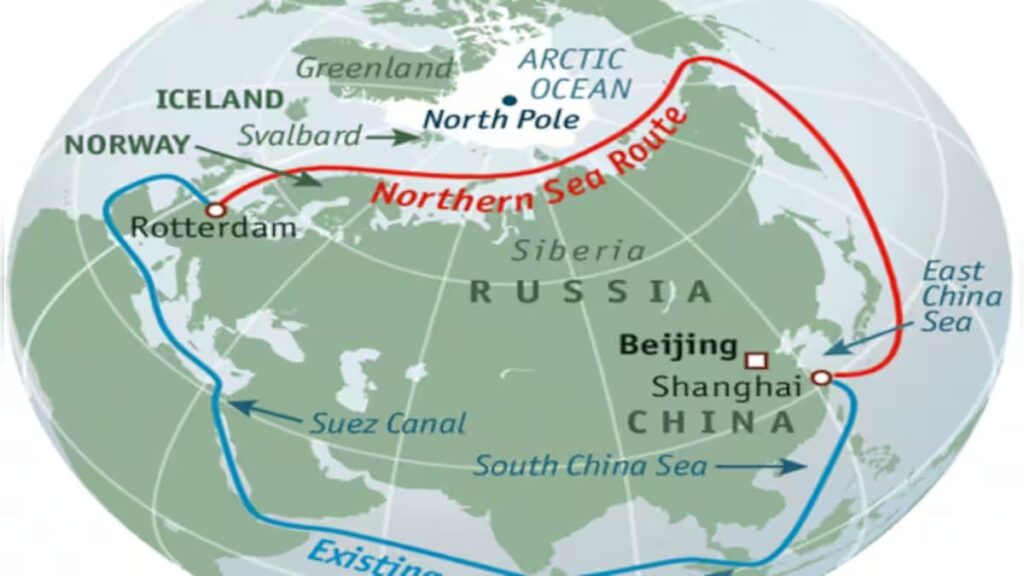
In the frozen white silence of the high Arctic, a quiet revolution is taking place. While the world fixates on the chokepoint of the Strait of Hormuz, where tensions with Iran simmer and tankers creep through narrow waters under the shadow of conflict, a different kind of route is being carved through the ice. Russia, long a master of cold climates, is turning the Northern Sea Route into a viable alternative to the crowded, volatile sea lanes of the Middle East. This is not just a story of melting ice caps. It is a story of geopolitics, economics, and a nation betting its future on a frozen highway.

The Arctic is no longer a distant, inhospitable frontier. It is becoming the next great corridor of global commerce. And at the heart of this transformation is Russia’s relentless push to dominate Arctic navigation. While other nations scramble to build icebreaker fleets and map uncharted waters, Russia is already there, experienced and entrenched. The stakes could not be higher: if the Northern Sea Route becomes a year round alternative to the Hormuz passage, it could redraw the map of energy security, trade dependencies, and military posturing for decades to come.
Why the Strait of Hormuz Matters and Why It Is So Fragile
To understand the significance of an Arctic alternative, we must first appreciate why the Strait of Hormuz is such a pressure point. This narrow waterway connecting the Persian Gulf to the open ocean sees about 20% of the world’s oil transit through its waters every day. Any disruption, be it from mines, naval confrontations, or political brinkmanship, sends shockwaves through global energy markets. For decades, this risk has been accepted as a cost of doing business. But the world is changing. The war in Ukraine, the rise of multipolar alliances, and the growing assertiveness of Iran have made the Hormuz chokepoint a geopolitical minefield. Nations are looking for escape routes.
The Northern Sea Route: A Frozen Alternative
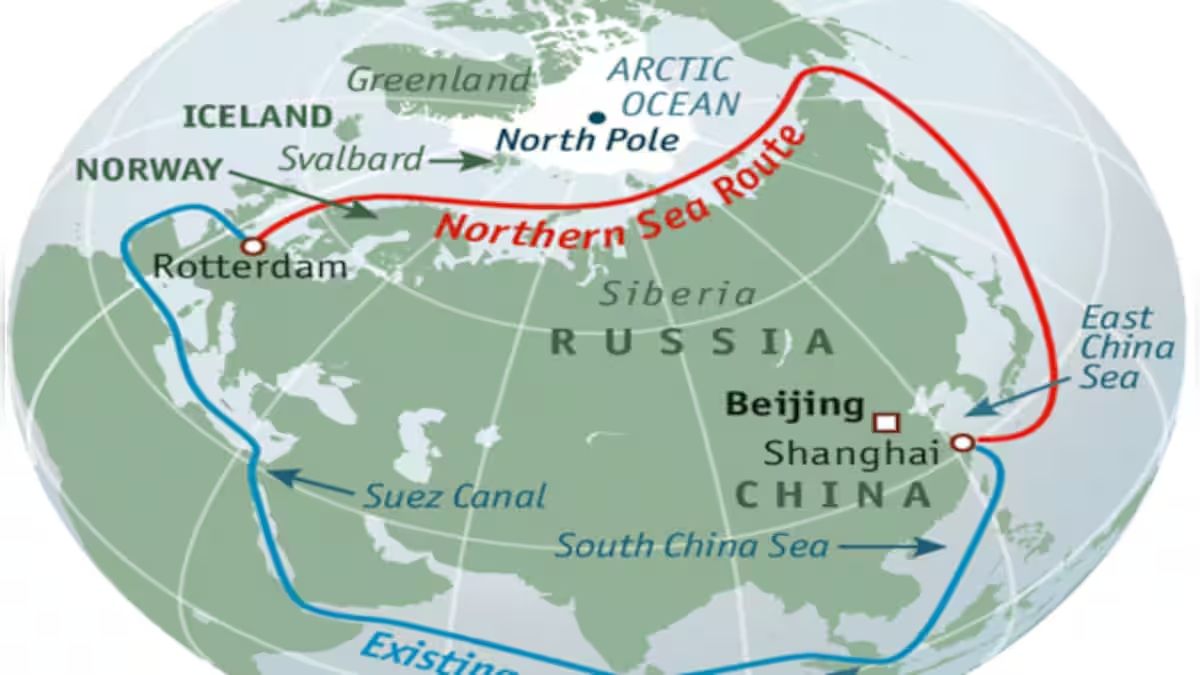
Enter the Northern Sea Route. Stretching from Murmansk near Russia’s border with Norway to the Bering Strait between Russia and Alaska, this maritime path hugs the Russian Arctic coast. In the past, thick ice made it impassable for most of the year. But climate change has dramatically reduced summer ice extent, and Russian investment in nuclear powered icebreakers has extended the navigable season. Today, cargo ships can travel from Europe to Asia in as little as 15 days, compared to 25 to 30 days through the Suez Canal. And while the Suez route takes vessels through the tense waters off Yemen, Somalia, and the Red Sea, the Arctic route offers a calm, albeit cold, alternative.

But the Arctic route is not just about speed. It is about avoiding risk. For countries like India, China, and many in Southeast Asia that rely heavily on Middle Eastern oil, a reliable Arctic passage could serve as a strategic hedge. If Hormuz becomes too dangerous, or if a conflict spikes insurance rates and delays, the Arctic could become the backbone of a new energy supply chain. The challenge, of course, is that the route remains heavily dependent on Russian infrastructure and icebreaker support. That gives Moscow enormous leverage.
Russia’s Icebreaker Advantage: Experience Meets Ambition
Russia’s expertise in Arctic navigation is unmatched. The country operates the world’s largest and most powerful icebreaker fleet, including nuclear powered vessels like the Arktika class. These ships can smash through ice up to three meters thick. No other nation comes close. The United States, for instance, has only two decommission capable icebreakers. Canada’s fleet is aging. China, a relative newcomer, is building quickly but lacks the decades of operational knowledge that Russia possesses.
This advantage is not accidental. The Soviet Union began developing Arctic navigation capabilities during the Cold War, recognizing the strategic value of the Northern Sea Route for both military and economic purposes. Today, Russia continues to invest heavily. The construction of a new generation of nuclear icebreakers, along with satellite navigation systems and upgraded ports, is turning the route into a well oiled machine. Russian officials have even set ambitious cargo targets: 80 million tons of traffic per year by 2024, up from just 20 million in 2017. While that goal may be delayed, the trajectory is clear.
Beyond Oil: The Full Potential of the Arctic Corridor
While much of the discussion focuses on oil and gas, the Arctic route could transform other industries too. Mining, fishing, and tourism are already seeing upticks. Russia’s own liquefied natural gas projects, like Yamal LNG, rely on icebreaker escorted tankers to reach Asian markets. As the ice recedes further, container shipping could become viable. In fact, in 2018, the first container ship traversed the Northern Sea Route without icebreaker assistance, a milestone that sent ripples through the shipping world.
The implications for global supply chains are immense. If the Arctic becomes a reliable year round shipping lane, it could reduce the pressure on the Suez Canal and the Panama Canal, both of which face capacity constraints and political uncertainties. For European companies, sending goods to Asia via the north could cut costs and time. For Asian manufacturers, Russian raw materials from timber to nickel could arrive faster and cheaper.
Geopolitical Tightrope: The Risks of Dependence on Russia
Yet there is a catch. The Arctic route is, for now, controlled by Russia. Any nation that uses it must negotiate with Moscow, pay transit fees, and rely on Russian icebreaker support. That gives Russia a powerful tool: the ability to grant or deny passage based on political considerations. In a world where Western sanctions are squeezing Russia’s economy, the Kremlin could use the route as a bargaining chip. Some experts worry that Russia might weaponize the Arctic, demanding concessions from countries that depend on the route.
However, the dynamics are not one sided. China, for instance, has been investing heavily in Arctic infrastructure as part of its Polar Silk Road initiative. Beijing has built research stations, funded icebreaker construction, and negotiated with Russia for joint use of ports. India too is eyeing the Arctic, sending scientific expeditions and exploring partnerships. This emerging multipolar Arctic could dilute Moscow’s dominance. But for now, Russia holds the upper hand.
Environmental Considerations: A Double Edged Sword
No discussion of the Arctic is complete without addressing the environment. The melting of sea ice due to climate change is what makes the Northern Sea Route possible in the first place. But increased shipping brings risks: oil spills, black carbon emissions that accelerate melting, noise pollution that disturbs marine life, and the introduction of invasive species. Russia’s record on environmental regulation in the Arctic is mixed. Some projects, like the Norilsk nickel plant, have caused severe pollution. Yet the economic incentives are so strong that environmental concerns often take a back seat.
International bodies like the Arctic Council have tried to set standards, but Russia’s suspension from the council after the Ukraine invasion has weakened cooperative governance. The Arctic is becoming a regulatory patchwork, with Russia setting its own rules in its exclusive economic zone. For shippers, that means operating in a legal grey area, where liability and cleanup responsibilities are unclear.
The Race for the Last Frontier
Other nations are not standing still. Canada is reinforcing its presence in the Northwest Passage, claiming sovereignty over waters that the U.S. considers international. Denmark, through Greenland, is building infrastructure. Norway is modernizing its coast guard. China, with its fleet of new icebreakers, is conducting regular research missions. But none have Russia’s depth of experience or its geographic advantage. The Russian coastline spans over 24,000 miles along the Arctic, giving Moscow a natural monopoly on the most practical shipping lanes.
This advantage is not purely technical. Russia has also invested in human capital: training captains, developing ice navigation schools, and creating specialized port facilities. The expertise of Russian ice pilots is legendary. They know how to read the ice, how to avoid pressure ridges, and how to navigate in near zero visibility. That kind of knowledge cannot be bought or rushed. It is earned through decades of hardship and hard work in one of the most unforgiving environments on Earth.
Conclusion: A New Chapter in Global Trade
The Arctic is not just a frozen wasteland. It is a corridor of possibilities, one that could reshape the way energy and goods move around the world. Russia’s mastery of Arctic navigation gives it a unique strategic asset, one that could provide an alternative to the tense waters of Hormuz. But this advantage comes with responsibilities and risks. The Arctic’s fragile ecosystem; the geopolitical tensions it creates; the dependence on a single nation’s goodwill all of these factors mean that the Arctic route is not a panacea. It is an option, a powerful one, but one that must be handled with care.
As the world warms and tensions rise, the frozen north will only become more important. Russia has positioned itself to lead. The question now is whether the rest of the world will follow, or whether the Arctic will become another arena of conflict. For the moment, the ice whispers a promise of a calmer path, away from the storms of Hormuz and into a new era of trade.