China and Russia Remain Uzbekistan’s Largest Import Partners in Early 2026
Imagine a bustling bazaar in Tashkent, where the air is thick with the scent of spices, fresh bread, and the quiet hum of commerce. Here, a merchant carefully unpacks a crate of electronics from Shenzhen, while next door, another trader inspects a shipment of Russian machinery. This is the story of Uzbekistan’s modern economy a tale written not in gold and silk, but in steel and semiconductors. In early 2026, Uzbekistan’s imports surged to $16.3 billion, and at the heart of this trade lie two familiar giants: China and Russia. Let’s unravel the data, the dynamics, and the destiny of this Central Asian crossroads.

The numbers are clear. According to the latest trade reports, Uzbekistan imported goods worth $16.3 billion in the first months of 2026, with China and Russia once again claiming the top spots as the country’s largest import partners. This isn’t a surprise these two nations have anchored Uzbekistan’s trade for years but the scale and the shifting composition of that trade tell a deeper story about regional economics, geopolitics, and the daily lives of millions.
The Numbers Behind the Trade
Let’s begin with the raw data. Uzbekistan’s total imports of $16.3 billion in early 2026 represent a modest increase compared to the same period in 2025. The exact breakdown by country reveals China’s dominance: Chinese goods accounted for roughly 25% of all imports, followed by Russia at around 18%. Other significant partners include Kazakhstan, South Korea, and Turkey, but the gap with the top two is substantial. What are they buying? A mix of machinery, electronics, vehicles, metals, and consumer goods. China supplies everything from smartphones and industrial equipment to textiles and chemical products, while Russia delivers energy products, metals, timber, and specialized machinery for Uzbekistan’s growing industrial base.

But these figures are more than just numbers on a spreadsheet. They represent pipelines of raw materials that have fueled Uzbekistan’s construction boom, delivery trucks bringing the latest laptops to students in Samarkand, and cargo planes landing at Tashkent’s airport with spare parts for factories. The $16.3 billion import figure is a pulse check on a nation that is modernizing at a rapid pace and its strongest lifelines run through Beijing and Moscow.
Why China and Russia Dominate
Why do these two countries remain unchallenged at the top? Geography is one obvious reason. China and Russia share long borders with Uzbekistan, making overland and rail transport cost-effective and efficient. China’s Belt and Road Initiative has poured billions into Central Asian infrastructure, turning routes like the China–Kyrgyzstan–Uzbekistan railway into arteries of trade. Russia, meanwhile, leverages its Soviet-era industrial connections and shared energy grids. But there’s more: economic complementarity. Uzbekistan needs advanced technology and manufactured goods China excels at both. It also needs energy resources and heavy machinery Russia provides those. It’s a symbiotic relationship, but one that also creates dependency.
Another factor is political alignment. Uzbekistan has skillfully navigated between major powers, maintaining good relations with both the West and the East. But its historical ties with Russia remain strong, particularly in security and energy. And China’s willingness to invest without political strings attached has made it an attractive partner for Tashkent. In early 2026, these relationships have been reinforced by highlevel visits and new bilateral agreements including a recent deal for Chinese electric vehicle assembly plants in Uzbekistan and a RussianUzbek accord to expand natural gas supplies.
What Uzbekistan Imports
Dive deeper, and the import basket reveals the country’s priorities. Top categories include machinery and equipment (about 35% of total imports), chemical products (15%), metals and metal products (12%), and vehicles (10%). In particular, Chinese construction equipment is everywhere across Tashkent’s expanding skyline cranes, excavators, and concrete mixers bearing Chinese brands. Russian imports, on the other hand, are dominated by mineral fuels and oils, accounting for nearly half of all Russian exports to Uzbekistan. This includes natural gas, crude oil, and refined petroleum products that keep Uzbekistan’s power plants running and its cars moving.
There’s also a growing appetite for consumer electronics and luxury goods. Young Uzbeks are buying Chinese smartphones and Korean appliances (often shipped through China). Russian food products chocolate, dairy, and even canned fish line supermarket shelves. And a surprising niche: Russian pharmaceutical imports have grown, as Uzbekistan looks to diversify its medicine supply away from European sources. Every crate that crosses the border tells a story of needs, wants, and strategic choices.
Geopolitical and Economic Implications
This trade dominance isn’t just an economic fact it’s a geopolitical statement. For China, Uzbekistan is a cornerstone of its Central Asian strategy, a gateway to the Caspian and beyond. For Russia, it’s a vital partner in the Collective Security Treaty Organization and the Eurasian Economic Union though Uzbekistan is not a full member of the latter. The reliance on these two powers raises questions about Uzbekistan’s foreign policy balancing act. Can it maintain its “multi-vector” approach while importing over 40% of its goods from just two countries? The answer is yes, but with increasing caution.
Sanctions on Russia have complicated matters. Since 2022, Russia has faced Western trade restrictions, but Uzbekistan has continued trading with its northern neighbor, even becoming a transshipment hub for some Western goods entering Russia. This has drawn scrutiny from the United States and European Union. Meanwhile, China’s growing influence has sparked concerns about debt traps and control over strategic sectors. Yet Uzbekistan’s leadership, under President Shavkat Mirziyoyev, has deftly managed these pressures, signing deals with everyone from the EU to India to South Korea to diversify its import sources. The result: while China and Russia remain top, their share has slightly declined as Uzbekistan expands its circles.
Looking Ahead
What does the future hold for Uzbekistan’s import landscape? By 2030, experts predict that China and Russia will likely remain in the top three, but competition is heating up. South Korea’s Samsung and Hyundai have established large factories in Uzbekistan, turning the country into a manufacturing hub for parts. Turkey and Iran are vying for a piece of the market, especially in construction materials and textiles. And the European Union, through its Global Gateway initiative, is offering infrastructure investments that could shift trade flows.
For the everyday Uzbek, these changes mean more choices. A farmer in Bukhara might buy a Chinese tractor one day and a Russian combine the next. A shopkeeper in Khiva could stock Armenian brandy and French cheese alongside Russian vodka. The $16.3 billion import figure is not a static number it’s a dynamic snapshot of a nation in motion. One thing is clear: Uzbekistan is no longer just a crossroads of ancient trade routes; it is a modern, ambitious economy that knows exactly where its supplies come from and it’s determined to keep all those doors open.
Conclusion
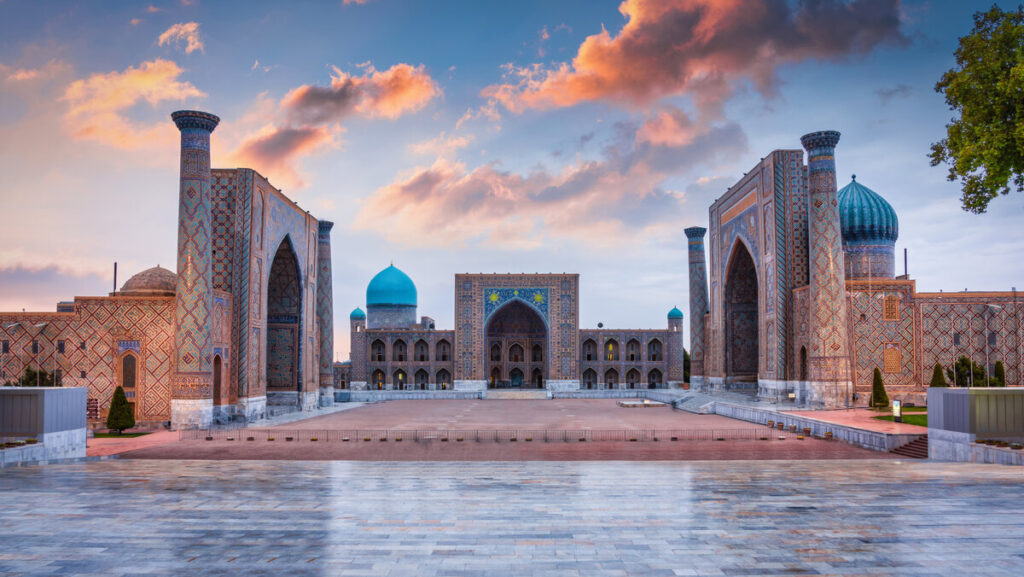
As the sun sets over the blue domes of Samarkand, the cargo trains from China and the tankers from Russia continue their journeys. Uzbekistan’s $16.3 billion import story is a testament to the power of partnership, the pragmatism of policy, and the pull of geography. For now, China and Russia are the twin pillars of trade that sustain a country’s rise. But history shows that trade routes shift, alliances evolve, and new players emerge. For Uzbekistan, the key is to balance to keep the imports flowing while building its own industrial might. The bazaar will always be busy, but the merchants are already looking ahead to the next shipment, the next deal, the next chapter. And in that constant motion, Uzbekistan finds its strength.