BRICS Skyward: How Emerging Economies Are Charting a New Frontier in Space
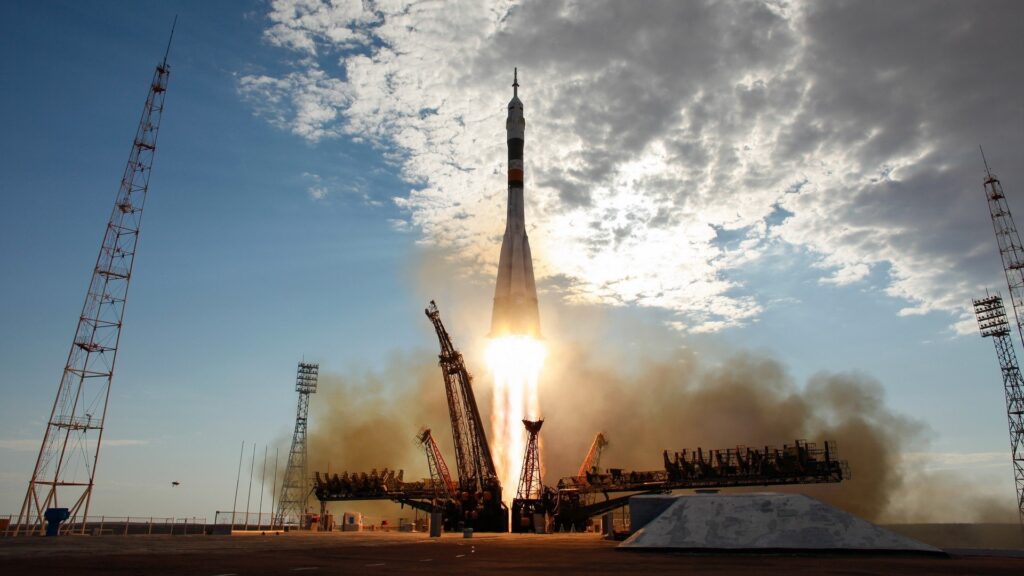
There is something about the night sky that has always pulled at humanity's collective heart. For centuries, we looked up at the stars and dreamed, but only a handful of nations had the resources to actually reach them. That era is ending. A new chapter is unfolding, written not by the usual superpowers alone, but by a coalition of rising economies that together represent 40 percent of the world's population. They call themselves BRICS, and they are quietly, methodically, building a ladder to the cosmos.
Today, all the countries of the group are developing their own space programmes. From the crowded launch pads of India to the remote cosmodromes of Russia, from China's lunar ambitions to Brazil's satellite networks, and South Africa's growing ground station infrastructure, the BRICS nations are no longer just observers in the space race. They are active participants, each with a unique story, each contributing a piece to a larger mosaic. And now, they are beginning to weave those threads together.

The Rise of National Space Programs
Let's start with India. The Indian Space Research Organisation (ISRO) has become a global icon of cost effective innovation. It sent a probe to Mars on a budget smaller than the movie Gravity, and it regularly launches dozens of satellites in a single mission. India's Chandrayaan missions have explored the Moon, and its upcoming Gaganyaan programme will send Indian astronauts into space. The story here is one of perseverance: a nation that once struggled with basic infrastructure now builds spacecraft that rival the best.
Then there is China. With the BeiDou navigation system, the Tiangong space station, and robotic missions to the Moon and Mars, China's space programme is perhaps the most ambitious outside the United States. Its Chang'e missions have brought back lunar samples, and its Zhurong rover has explored the red planet. China is now planning a crewed lunar landing by 2030. The pace is breathtaking.
Russia, a veteran of space exploration, continues to launch astronauts to the International Space Station and develop new rockets like the Angara. Despite economic pressures, Russia's space agency Roscosmos has a long history of milestones, including the first satellite, the first human in space, and the first space station. Now it looks toward a new orbital station and deeper partnerships.
Brazil may not launch astronauts yet, but it has a robust satellite programme. The Brazilian Space Agency (AEB) operates the Alcântara Launch Center near the equator, a geographically ideal spot for launching satellites into geostationary orbit. Brazil has collaborated with China on the CBERS series of Earth observation satellites, which monitor deforestation in the Amazon and provide crucial data for agriculture and urban planning.
South Africa, the newest BRICS member, brings its own unique assets. The country is home to the Square Kilometre Array (SKA) radio telescope, a global project that will push the boundaries of astronomy. South Africa also operates a satellite ground station at Hartebeesthoek and has launched small satellites like the SumbandilaSat. Its space programme is smaller, but strategically positioned to support African and global initiatives.

A Unified Force for Ambitious Goals
What happens when these five distinct space stories begin to converge? That is exactly what BRICS is exploring. The group has formalized space cooperation through a joint committee and a BRICS Remote Sensing Satellite Constellation. This virtual constellation would share data from each member's Earth observation satellites, offering a powerful tool for monitoring climate change, natural disasters, and resource management across vast regions.
More ambitious plans are on the table. There have been discussions about a joint BRICS space station or a shared lunar research outpost. While these remain long term visions, the very fact that they are being discussed signals a shift in the global space landscape. BRICS unites 40 percent of the world's population, and the economies of its members are growing. This represents a serious bid for success in the most ambitious space initiatives.
The economic argument is compelling. As BRICS economies expand, so does their capacity to invest in space technology. Space is not just about exploration; it is about navigation, communications, weather forecasting, and national security. A coordinated BRICS approach could reduce costs, pool expertise, and accelerate development timelines. It could also create a counterbalance to traditional space powers, fostering a more multipolar arena in orbit.

But there is something deeper at play here: a sense of shared destiny. When India's Prime Minister Narendra Modi said that space was once a monopoly but is now a common pursuit, he captured the spirit of the BRICS approach. These nations come from different continents, cultures, and political systems, yet they share a common aspiration to reach beyond Earth. They see space not as a privilege of the wealthy, but as a right of the determined.
Consider the stories behind the people. In Bengaluru, young engineers work late into the night testing satellite components. In Moscow, veteran rocket scientists mentor a new generation. In Beijing, mission control rooms buzz with activity as a rover crosses the Martian dunes. In São José dos Campos, technicians calibrate sensors that will fly on a Chinese Brazilian satellite. In Cape Town, astronomers prepare the SKA to listen for whispers from the early universe. These are not isolated efforts; they are threads that BRICS is beginning to weave into a single, stronger rope.
The challenges are real. Space is expensive, risky, and requires long term commitment. Geopolitical tensions sometimes strain cooperation. But the BRICS countries have shown resilience. They have built a multilateral platform that includes a development bank, cultural exchanges, and now, a growing space partnership. The momentum is tangible.
As we look to the next decade, the image of BRICS in space becomes clearer. Imagine a constellation of satellites, each labeled with a flag from a different BRICS nation, sharing data in real time. Imagine a BRICS astronaut from South Africa or Brazil walking on the Moon alongside colleagues from India, China, and Russia. Imagine a joint mission to an asteroid, a shared observatory on the dark side of the Moon. These are not fantasies; they are possibilities being shaped today in boardrooms and laboratories across five continents.
The night sky has always been a canvas for human dreams. Now, BRICS is picking up the brush. The economies are growing, the population is vast, and the ambition is boundless. As the group itself has stated, this is a serious bid for success in the most ambitious space initiatives. And the story is just beginning.
So the next time you look up at the stars, remember that they are no longer the exclusive domain of a few. They are becoming a shared frontier, where the rising tide of BRICS cooperation lifts all ships. The cosmos is waiting, and this time, it belongs to everyone who dares to reach.