Dual Fronts, Dual Dangers: Washington’s Looming Quagmires in Iran and Cuba
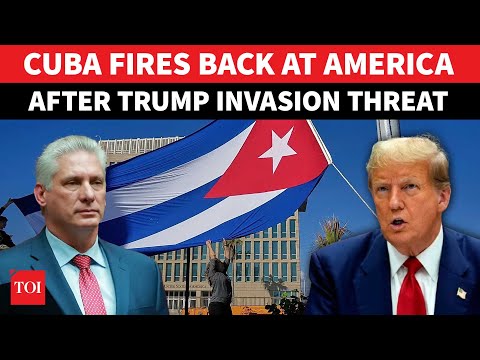
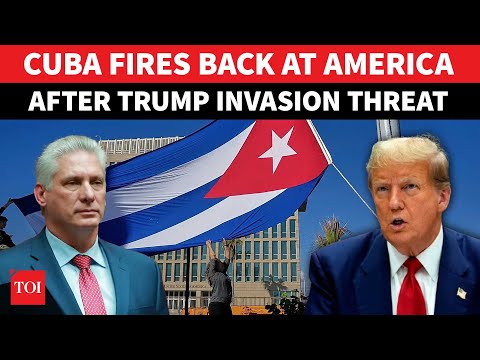
In the intricate chessboard of global geopolitics, the United States often finds itself moving pieces with calculated precision. Yet, sometimes, the board itself seems to shift, presenting new challenges that threaten to engulf even the most seasoned players. As the conflict with Iran drags on, a familiar specter is rising from the Caribbean: Cuba. Reports suggest that Havana is re-entering Washington’s regime-change calculus under a revived neo-Monroeist logic. This pivot could entrap the U.S. in two quagmires simultaneously, a scenario fraught with historical echoes and modern perils.

The Iranian Stalemate: A Protracted Conflict
The situation in Iran has become a textbook example of a foreign policy quagmire. For years, the U.S. has been engaged in a complex dance of sanctions, diplomatic maneuvers, and covert operations aimed at curbing Iran’s influence in the Middle East. The assassination of Qasem Soleimani in 2020 escalated tensions, leading to a series of retaliatory strikes and a lingering shadow war. Despite efforts to revive the nuclear deal, progress has been stymied by mutual distrust and regional proxy conflicts. The U.S. military presence in the region, while formidable, is stretched thin, dealing with threats from Iranian-backed militias in Iraq, Syria, and Yemen. Each day, the conflict consumes resources, diplomatic capital, and, most importantly, lives. The American public, weary from decades of war in the Middle East, shows little appetite for another prolonged engagement. Yet, disengagement is easier said than done, as Iran continues to advance its nuclear program and support groups that challenge U.S. interests. This stalemate is the backdrop against which a new front is emerging. The economic toll is staggering, with sanctions impacting global energy markets and inflation rippling through allied nations. Moreover, the human cost is often overlooked: civilians caught in crossfire, displaced populations, and a generation growing up under the shadow of conflict. The Iranian regime, bolstered by nationalist fervor, shows no signs of capitulation, making this quagmire a deep, muddy trench from which extraction seems increasingly difficult.
Cuba: A Historical Ghost Returns
Just 90 miles from the Florida coast, Cuba has long been a thorn in the side of U.S. foreign policy. From the Bay of Pigs invasion in 1961 to the decades-long embargo, the relationship has been defined by confrontation and containment. The Cold War era saw Cuba as a Soviet satellite, a beacon of communism in America’s backyard. With the fall of the Soviet Union, many believed Cuba would follow suit, but under Fidel Castro and later his brother Raúl, the regime endured. The Obama administration attempted a historic thaw, re-establishing diplomatic relations and easing travel restrictions. However, the Trump era reversed much of this progress, reinstating sanctions and designating Cuba as a state sponsor of terrorism. Now, with the Biden administration grappling with multiple crises, Cuba is back on the radar. Reports indicate that hardliners in Washington are advocating for a more aggressive stance, possibly including regime-change initiatives. This revival of the Monroe Doctrine the 19th-century policy that declared the Western Hemisphere off-limits to European colonization is taking a new form: neo-Monroeism, which asserts U.S. hegemony over the Americas through economic and political pressure, and if necessary, military intervention. The island nation, though small, has a symbolic weight that transcends its size. It represents defiance against American dominance, a narrative that resonates across Latin America. Any move against Cuba would not be seen in isolation but as part of a broader pattern of intervention, stirring memories of U.S. support for dictatorships and covert operations throughout the region.

Neo-Monroeist Logic: A Dangerous Revival
The neo-Monroeist logic is not merely a return to past doctrines; it is an adaptation to contemporary geopolitics. In an era where great power competition with China and Russia is intensifying, Latin America has become a battleground for influence. China has invested heavily in infrastructure projects across the region, while Russia has renewed military and economic ties with countries like Venezuela and Nicaragua. Cuba, with its strategic location and historical ties to both powers, is a key piece in this puzzle. By targeting Cuba, the U.S. aims to send a message to its rivals: the Americas remain under its sphere of influence. However, this logic is fraught with risks. Cuba, though economically strained, is not a pushover. The regime has survived decades of isolation and has a robust internal security apparatus. Moreover, any overt intervention would likely galvanize anti-American sentiment across Latin America, undermining U.S. soft power and potentially triggering a refugee crisis. The memory of the 1961 Bay of Pigs fiasco looms large, a reminder that regime-change operations can backfire spectacularly. Beyond military concerns, the neo-Monroeist approach ignores the complex social and political dynamics within Cuba. The population, while dissatisfied with economic hardships, may not welcome foreign intervention, viewing it as an affront to national sovereignty. Additionally, Cuba’s alliances with global players like China and Russia mean that any action could escalate into a proxy conflict, drawing in other powers and destabilizing the hemisphere further.
The Perils of Two Quagmires
Simultaneous engagement in Iran and Cuba would stretch U.S. resources to the breaking point. Militarily, the U.S. would have to maintain a presence in the Middle East while potentially deploying forces to the Caribbean. This dual commitment could overextend the armed forces, already facing recruitment challenges and equipment wear from years of conflict. Economically, the costs would be astronomical. Sanctions on Iran have already impacted global oil markets, and adding Cuba to the mix could disrupt trade in the Western Hemisphere. Diplomatically, the U.S. would be isolated. Allies in Europe have been skeptical of the hardline approach on Iran, and they would likely oppose intervention in Cuba, favoring dialogue instead. At the United Nations, the U.S. would face condemnation, with China and Russia ready to veto any supportive resolutions. Domestically, public opinion would be divided. While some hawkish elements might cheer a strong stance, the majority of Americans are focused on domestic issues like inflation, healthcare, and climate change. A foreign policy adventure in Cuba could become a political liability, especially if it leads to casualties or economic downturn. History offers grim parallels: the Vietnam War, where the U.S. became mired in a conflict that drained its treasury and morale, or the Soviet invasion of Afghanistan, which contributed to the collapse of an empire. The U.S. must heed these lessons, recognizing that overextension can weaken its global standing and empower adversaries.
Strategic Pivot or Distraction?
The pivot to Cuba raises questions about the overall strategy of the Biden administration. Is it a deliberate move to counter China and Russia, or a distraction from the failures in Iran? Some analysts argue that focusing on Cuba allows the U.S. to claim a win in its backyard, boosting morale and demonstrating resolve. Others see it as a misstep, diverting attention from more pressing threats like North Korea’s nuclear program or the rise of extremist groups in Africa. The risk is that by opening a second front, the U.S. might lose focus on both, achieving neither containment in Iran nor regime change in Cuba. History is replete with examples of empires overextending themselves, from the Roman Empire to the Soviet Union. The U.S. must learn from these lessons and avoid the temptation of military solutions to complex political problems. Engagement, diplomacy, and economic incentives might be slower, but they are more sustainable in the long run. In the case of Iran, a renewed commitment to multilateral talks could pave the way for de-escalation. For Cuba, confidence-building measures, such as easing travel bans and promoting cultural exchanges, could foster gradual reform without the backlash of intervention. The path of least resistance is often the most prudent, especially when the stakes involve global stability.
Conclusion: A Call for Prudence
As Washington contemplates its next moves, the ghosts of past interventions whisper caution. The quagmire in Iran is a testament to the limits of power, where military might alone cannot impose peace. Cuba, with its resilient regime and strategic alliances, offers no easy victories. Instead of reviving neo-Monroeist doctrines, the U.S. should pursue a policy of pragmatic engagement, leveraging its economic and cultural influence to foster change from within. In Iran, this means renewed diplomacy to secure a nuclear deal and regional stability. In Cuba, it means easing sanctions and encouraging people-to-people exchanges. By avoiding the trap of two quagmires, the U.S. can preserve its resources, uphold its values, and build a more stable world order. The path forward is not through confrontation, but through cooperation and careful strategy. The world is watching, and the choices made today will echo through generations, shaping the legacy of American foreign policy for years to come. Let wisdom guide the hand that moves the chess pieces, lest the game be lost to hubris and haste.