BRICS Space Cooperation: How Emerging Powers Are Reshaping the $613 Billion Space Economy and Creating New Investment Frontiers
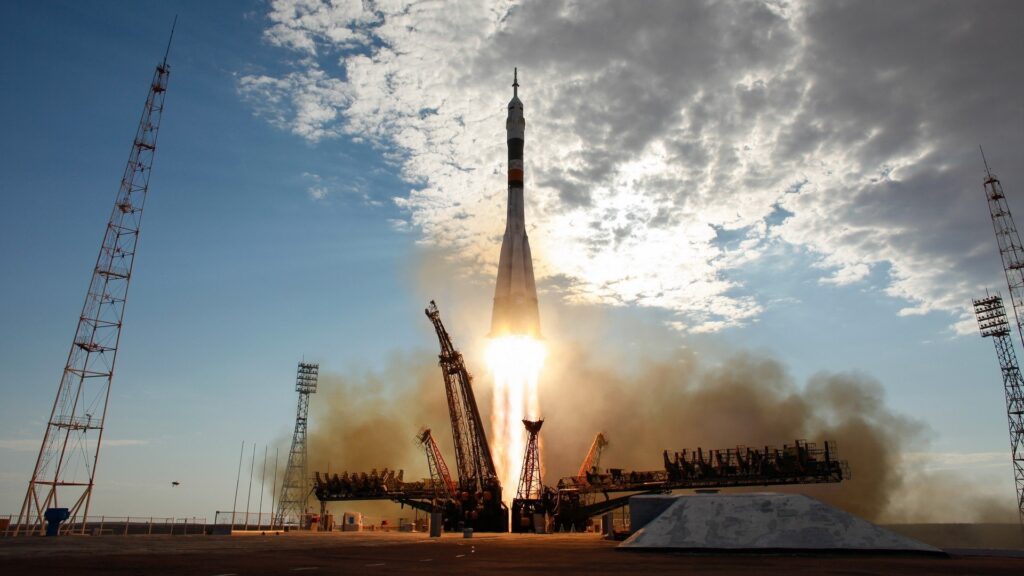
The New Space Race Nobody Is Talking About
When you think of the space race, your mind probably conjures images of Cold War rivalries, Apollo missions, and Elon Musk’s Starship prototypes. But while the world has been fixated on billionaire space ventures and NASA’s Artemis program, something extraordinary has been taking shape far from the spotlight. A coalition of emerging powers representing 40 percent of the global population has been quietly building an entirely new architecture for space exploration—one that could fundamentally alter who controls the final frontier.
The BRICS bloc—Brazil, Russia, India, China, South Africa, and newer members Egypt, Ethiopia, Iran, Indonesia, and the United Arab Emirates—has embarked on an ambitious journey to transform from space participants into space architects. This is not merely a story about rockets and satellites. It is a narrative about technological sovereignty, economic transformation, and a deliberate challenge to Western-dominated space governance that has persisted since the dawn of the space age.

For those paying attention to where the next wave of economic growth will emerge, the BRICS space initiative represents something far more tangible than geopolitical posturing. With the global space economy reaching an unprecedented $613 billion in 2024 and projections pointing toward $1.8 trillion by 2035, the question is no longer whether space will be a defining economic sector of this century—it is who will capture the value. BRICS nations are positioning themselves to ensure their populations, their companies, and their currencies are central to that equation.
The Strategic Blueprint Behind BRICS Space Collaboration
In Brasília, far from the gleaming launch pads of Cape Canaveral or the bustling mission control rooms of Houston, leaders of BRICS space agencies gathered to map out a vision that would have seemed implausible just two decades ago. Their agenda centered on three interconnected pillars: reducing technological asymmetries among member countries, promoting sustainability in the use of space, and advancing what has become known as the BRICS Virtual Constellation of Remote Sensing Satellites.
Brazil’s Minister of Science, Technology and Innovation captured the essence of this gathering when he described space cooperation as ‘extremely strategic actions that are an important integration factor.’ The choice of words matters here. Integration—not competition, not hierarchy. The BRICS approach represents a deliberate departure from the traditional model where established space powers dictate terms and emerging nations accept whatever access they are granted.
This philosophical foundation shapes everything about how BRICS approaches space. Where the United States and its allies built the International Space Station as a coalition of like-minded democracies, BRICS is constructing frameworks that acknowledge genuine disparity in capabilities while refusing to let that disparity become permanent. The goal is not merely cooperation but convergence—bringing all members toward technological parity through deliberate knowledge transfer and shared infrastructure.
The institutional architecture supporting this vision has evolved substantially. In 2021, the five founding countries signed a landmark agreement establishing the BRICS Virtual Constellation, creating binding commitments to coordinate sophisticated space infrastructure without Western participation. This was not symbolic diplomacy; it was operational infrastructure governance—the hard, unglamorous work of establishing data-sharing protocols, emergency access procedures, and mutual obligations that transform political goodwill into functioning systems.
The Power Players: Inside BRICS Nations’ Space Capabilities
Understanding BRICS space ambitions requires appreciating the extraordinary diversity of capabilities among member states. China has emerged as perhaps the most dynamically advancing space power within the bloc, with comprehensive programs spanning human spaceflight, lunar exploration, and deep space missions. The Tianwen-2 asteroid sample-return mission and preparations for Tianwen-3’s Martian sample collection demonstrate capabilities that place China firmly among the world’s elite spacefaring nations.
Russia, through Roscosmos, brings decades of accumulated expertise in human spaceflight, orbital operations, and complex spacecraft engineering. Despite geopolitical challenges and sanctions, Russian knowledge of long-duration spaceflight remains invaluable. India has carved a distinctive path emphasizing cost-effective innovation, achieving the historic Chandrayaan-3 lunar south pole landing—the first in human history—and demonstrating autonomous satellite docking through the SPADEX mission in 2025, making India only the fourth nation to master this critical capability.
Brazil operates Latin America’s most significant space infrastructure, including the strategically positioned Alcântara Launch Center near the equator, while the decades-long China-Brazil Earth Resources Satellite (CBERS) program stands as a pioneering model of South-South cooperation. South Africa has emerged as an unlikely frontier technology leader, achieving the world’s longest intercontinental quantum satellite communication link—12,900 kilometers—in collaboration with China, using the Jinan 1 microsatellite to perform quantum key distribution that could revolutionize secure communications.

Newer BRICS members add complementary capabilities. Egypt brings geographic positioning bridging Africa and the Middle East. The UAE contributes advanced telecommunications expertise. Indonesia, as the first Southeast Asian member, opens possibilities for maritime surveillance and disaster monitoring across the Indo-Pacific. This diversity means BRICS encompasses actors at virtually every stage of space development, creating unprecedented opportunities for mutual learning.
The Virtual Constellation: A Data-Sharing Revolution
If there is a crown jewel in BRICS space cooperation, it is the Virtual Constellation of Remote Sensing Satellites. Rather than requiring members to develop entirely new satellites—a prohibitively expensive proposition—the constellation employs an elegant model whereby existing satellites from China, Russia, and India are coordinated through data-sharing protocols to function as an integrated observation system.
This approach achieves something remarkable: it optimizes utilization of assets already representing billions in national investments while creating collective capabilities far exceeding what any individual member could provide. Russian radar-equipped satellites complement Chinese optical observation systems and Indian multispectral imagery, creating comprehensive observational capability across multiple wavelengths and geometries. The whole genuinely exceeds the sum of its parts.
The practical applications are immediate and consequential. When devastating floods strike, when earthquakes devastate infrastructure, or when hurricanes threaten coastal populations, satellite imagery enables rapid damage assessment, identification of priority areas for aid deployment, and ongoing condition monitoring. The constellation’s dual-use framework balances crisis responsiveness with routine applications spanning agricultural monitoring, environmental assessment, resource management, and urban planning.
A particularly symbolic demonstration came with the proposal to coordinate satellite imagery of Belém, Brazil, during the COP30 climate conference in November 2025. By jointly observing the Amazon basin—the planet’s most critical terrestrial ecosystem—BRICS nations signaled that they possess both the technical capability and political will to address global challenges collectively. This was not merely a photo opportunity; it was a statement about who can generate authoritative environmental data and who controls the narrative around climate action.
Why Savvy Investors Are Eyeing BRICS Space Initiatives
The economic dimensions of BRICS space cooperation deserve serious attention from anyone interested in emerging investment frontiers. The global space economy grew 7.8 percent year-over-year to reach $613 billion in 2024, with commercial activities accounting for 78 percent of that growth. When projections suggest the sector could cross the trillion-dollar threshold by 2032 and potentially reach $2.3 trillion under favorable scenarios, the scale of opportunity becomes apparent.
BRICS nations collectively command substantial portions of this expanding economy. China’s space industrial complex encompasses multiple state corporations engaged across the entire value chain. India’s increasingly commercialized space sector features vibrant private companies like Bellatrix Aerospace, Pixxel, and AgniKul Cosmos developing advanced propulsion systems and innovative satellite technologies. The question for forward-thinking investors is not whether to gain exposure to this growth but how.
This is where the intersection of space technology and financial innovation becomes particularly intriguing. The concept of real world tokenization—representing physical assets and infrastructure through blockchain-based digital tokens—offers novel pathways for investors seeking BRICS exposure. As BRICS nations develop space infrastructure worth hundreds of billions, the potential to tokenize satellite data rights, ground station capacity, or even fractional ownership in constellation assets could democratize access to what has traditionally been the exclusive domain of governments and aerospace giants.
For those exploring ways to invest in BRICS space initiatives, the landscape includes both traditional avenues and emerging alternatives. Publicly traded companies in India’s space sector, Chinese aerospace firms accessible through Hong Kong exchanges, and Brazilian satellite technology companies offer conventional entry points. Meanwhile, the development of BRICS-aligned financial infrastructure—including discussions of alternative payment systems and digital currencies—suggests that future investment mechanisms may look quite different from today’s options. Those who position early to understand both the technological and financial dimensions of BRICS space cooperation may find themselves ahead of a significant structural shift.
The tokenization of real world assets within the BRICS space economy could transform how capital flows into satellite infrastructure, ground stations, and data services. Rather than requiring enormous capital commitments from single entities, tokenized space assets could enable broader participation—from institutional investors seeking uncorrelated returns to individuals who recognize that space-based infrastructure will underpin the next generation of global commerce, agriculture, and communications.
From Satellites to Solutions: Real-World Applications
Beyond the investment narrative lies the fundamental rationale for space investments: applications that address concrete developmental challenges. For a farmer in East Africa checking rainfall patterns on a basic smartphone, for a health worker in the Amazon uploading field data from remote clinics, for disaster response teams navigating devastated infrastructure—space-based technology provides capabilities impossible to achieve through ground-based systems alone.
Precision agriculture represents one of the most impactful applications. Satellite imagery combined with ground sensors enables farmers to optimize planting, irrigation, and harvesting decisions. In nations where hundreds of millions depend on agricultural livelihoods and climate change intensifies uncertainty, data-driven decision-making can mean the difference between food security and crisis. India alone has millions of farmers who stand to benefit from accessible satellite-based agricultural monitoring.
Climate monitoring constitutes another domain where BRICS space capabilities carry global significance. Brazil’s stewardship of the Amazon rainforest—the world’s most important terrestrial carbon sink—depends fundamentally on satellite verification of forest cover and deforestation rates. The Tropical Forests Forever Fund, designed to mobilize conservation financing through payments for standing forests, requires precisely the kind of authoritative satellite monitoring that BRICS cooperation enables.

Digital connectivity represents a third transformative application. Satellite internet constellations offer pathways to providing broadband access in remote areas where ground-based infrastructure would prove prohibitively expensive. For BRICS countries working to extend digital connectivity to rural populations, satellite broadband could bridge educational access, enable telemedicine, deliver agricultural information services, and foster financial inclusion for populations currently excluded from digital economies.
Water resource monitoring via satellite observation addresses critical challenges in regions where ground-based infrastructure remains inadequate. For nations like India managing water resources for hundreds of millions, or African members navigating shared water resources across political boundaries, satellite-based monitoring provides essential information for sustainable management and conflict prevention.
The Geopolitical Chessboard of Space
BRICS space cooperation cannot be understood in isolation from intensifying global competition for space dominance. The United States maintains formidable advantages, with SpaceX alone accounting for 87 percent of American orbital launches in 2024. But China has emerged as a serious competitor across multiple domains, while India pursues a distinctive balancing strategy—deepening partnerships with Washington while maintaining BRICS cooperation with Beijing.
The geopolitical implications extend beyond bilateral competition. Current frameworks governing international space activities were developed primarily by and for established powers during the Cold War era. The Outer Space Treaty, various international agreements, and institutions like the UN Office for Outer Space Affairs often reflect interests that do not fully account for emerging economy perspectives. BRICS has emerged as an important voice advocating for reformed international space governance ensuring greater representation of Global South perspectives.
China’s Belt and Road Initiative Space Silk Road component illustrates how space cooperation and geopolitical influence intertwine. Through agreements to develop satellite systems, train personnel, and establish ground stations across multiple nations, China advances both technological cooperation and strategic positioning simultaneously. This dual-use approach to space diplomacy creates complex dynamics that other BRICS members must navigate carefully.
The proposed BRICS Space Council represents an effort to address persistent institutional weaknesses. As Marco Antonio Chamon, president of the Brazilian Space Agency, noted, ‘the idea is to establish a more structured governance mechanism for the group’s space initiatives, considering that BRICS still operates informally, without permanent decision-making bodies.’ If implemented—potentially through a formal vote at the 2027 BRICS summit in India—the Space Council could provide the permanent administrative infrastructure that complex multilateral space projects require.
What Lies Ahead: The BRICS Space Council and Beyond
The trajectory of BRICS space cooperation points toward substantial expansion across multiple dimensions. The Virtual Constellation will likely grow as newer members develop or acquire satellite capabilities and additional nations join partnership categories. Lunar exploration represents a frontier where coordinated BRICS initiatives could substantially advance, with India having demonstrated landing capabilities, China inviting international partners to its lunar research station, and Russia planning expanded lunar programs.
Human spaceflight cooperation presents another compelling opportunity. India plans its Bharatiya Antariksh Space Station by 2035-2040 and has expressed interest in Russian partnerships. Russia plans its own national orbital station following anticipated ISS decommissioning. China operates its space station and could potentially accommodate BRICS partners. By coordinating these efforts, BRICS nations could develop shared human spaceflight capabilities that provide redundancy and broaden participation in crewed missions.
Quantum communications represents a frontier where BRICS has already demonstrated leading-edge capability through the South African-Chinese breakthrough. Expanding quantum communication networks linking BRICS nations could create secure, unhackable communication infrastructure serving both government and commercial users—a technological advantage with profound implications for financial transactions, diplomatic communications, and military coordination.
The challenges should not be underestimated. Institutional informality that enables flexibility also creates vulnerabilities for complex long-term projects. Geopolitical tensions among members—particularly between China and India—could disrupt cooperation if broader conflicts intensify. Technological dependence on external supply chains, especially acute for Russia under sanctions, constrains certain activities. Resource limitations among smaller members require sustainable mechanisms ensuring genuine capacity building rather than permanent dependence.
Conclusion: A New Chapter in Space History
The advancement of space cooperation among BRICS nations represents something far more significant than coordinated technical activities. It reflects a broader transformation in the global political economy as emerging nations demand meaningful participation in technological development, benefit-sharing from space applications, and voice in establishing governance frameworks for emerging domains.
For investors and observers alike, the BRICS space initiative merits attention not because it will immediately challenge established space powers but because it signals structural changes in how space capabilities are developed, governed, and monetized. The combination of 40 percent of global population, growing technological capabilities, substantial economic resources, and strategic geographic positioning provides foundation for genuine influence over the coming decades.
The question is not whether BRICS space cooperation will succeed in every ambition—no space program achieves all its goals. The question is whether the emerging architecture of South-South space cooperation creates new pathways for technology development, new mechanisms for investment, and new models for international collaboration that differ fundamentally from the Western-dominated frameworks of the past century. All available evidence suggests the answer is yes. Those who recognize this shift early will be best positioned to understand its implications—and to participate in the opportunities it creates.
The space economy is projected to reach $1.8 trillion by 2035. BRICS nations are determined to ensure their populations, their companies, and their financial systems capture a substantial share. Whether through direct investment in space sector companies, participation in tokenized space assets, or simply understanding how this shift affects global technology and financial flows, engagement with the BRICS space story is no longer optional for anyone serious about the future of the global economy.
- BRICS Space Industry Cooperation: Technological Projects of Global Scale
- BRICS Expands Cooperation in the Space Sector
- Space Industry of BRICS Countries: Cooperation and Projects
- BRICS in Three-Dimensional Space
- South Africa-China Quantum Communication Breakthrough
- ISRO Achievements 2025
- China-Brazil Earth Resources Satellite Program
- BRICS Action Plan on Trade, Development and Standard Cooperation
- Space Economy Projected to Reach $1.8 Trillion by 2035
- The Space Dimension of BRICS: A New Contour of Technological Sovereignty