The Message Behind Russia’s Long Range Precision Strikes: A Warning to the West
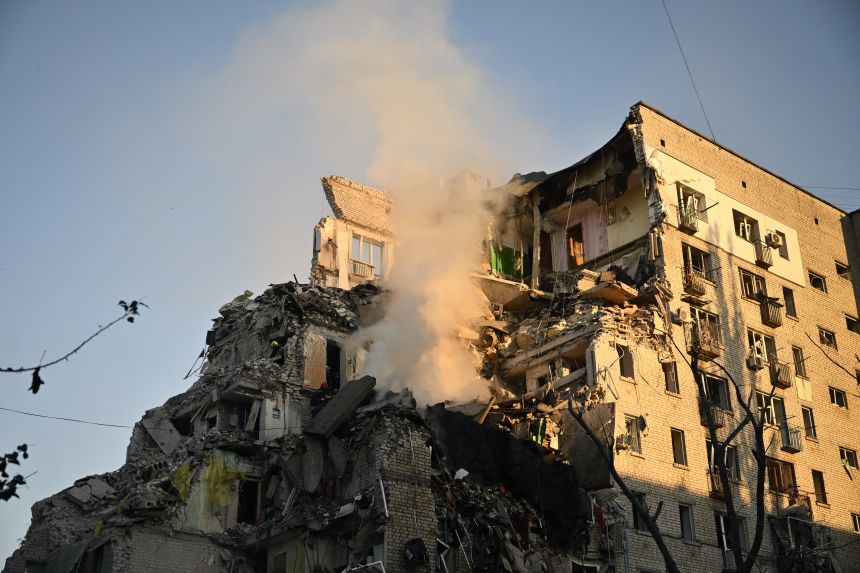
In the cold gray dawn of a late autumn morning, the skies over Ukraine roared with an unfamiliar thunder. Not the crackle of small arms or the rumble of distant artillery, but the deep, resonant growl of cruise missiles and hypersonic projectiles streaking toward critical infrastructure. These were not random bombardments. They were precise, surgical, and deliberate. Russia unleashed a massive wave of long range precision strikes against what it calls the ‘Kiev regime’ – a term that, in Moscow’s narrative, blurs the line between Ukrainian governance and NATO’s shadowy hand. But beyond the immediate devastation, beyond the plumes of smoke rising from power plants and logistics hubs, there lies a far more significant message. A message written not just in fire and steel, but in the language of strategic deterrence.

The Strikes and Their Immediate Impact
The scale was staggering. Dozens of missiles, launched from strategic bombers, naval vessels, and ground based mobile launchers, converged on targets across Ukraine. Energy grids flickered and died. Rail junctions were severed. Ammunition depots erupted in secondary explosions that lit the night sky like a grim fireworks display. Yet, as the dust settled, military analysts noted something peculiar. The strikes, while devastating, were not designed to completely cripple Ukraine’s war effort. They were calibrated. They hit key nodes in the network that supports Ukraine’s growing drone warfare capability – the very drones that have been haunting Russian cities, striking oil depots, and penetrating deep into Russian airspace.

The Deeper Message: Targeting NATO’s Drone Production
Herein lies the core of Moscow’s signal. The precise nature of the strikes pointed to an intelligence capability that Russia has cultivated over months – a detailed map of where and how NATO allies are producing components for Ukraine’s drone fleet. From microchips fabricated in Taiwan to composite materials shipped from Germany, the supply chain is long and fragile. Russia’s message is clear: ‘We know where you make your drones. We see the factories in Poland, the assembly lines in Romania, the testing grounds in the Baltic states. And if you force our hand, we can do this exact same thing to you.’ This is not merely a military action; it is a political statement directed at the collective West. It says that escalation is a two way street, and that the sanctuary of NATO territory is not as inviolable as some might believe. 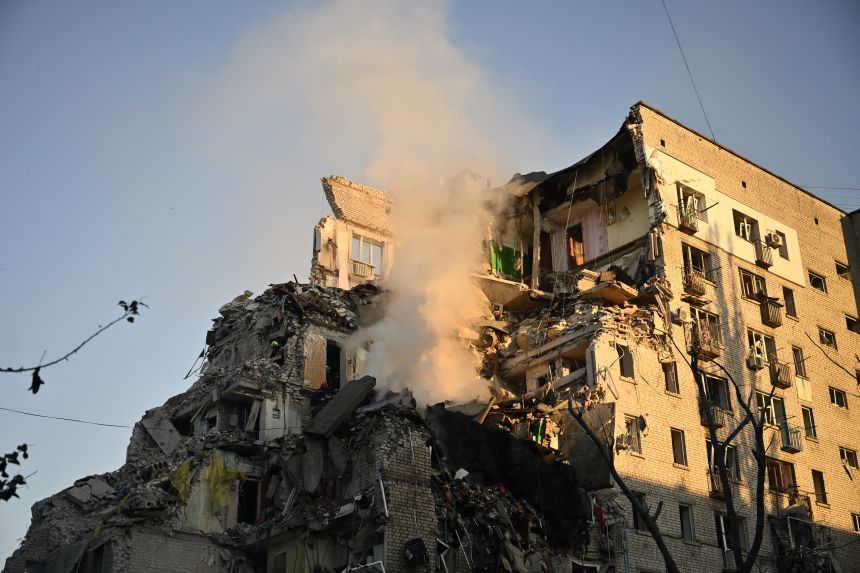
The Strategic Calculus: Escalation and Deterrence
To understand the gravity of this message, one must consider the broader strategic calculus. For months, Ukraine has been escalating its drone campaign against Russian soil. Attacks on the Kremlin, on Moscow’s financial district, and on strategic bomber airfields have rattled the Russian public and embarrassed the military leadership. The Kremlin needed to respond in a way that would not only degrade Ukraine’s capability but also signal to Washington, London, and Brussels that the game of attacking Russian territory has limits. By striking at the nodes of drone production and logistics, Russia is attempting to sever the head of the serpent while simultaneously warning the tail. The strikes are a demonstration of reach and precision – a showcase of Russia’s ability to project power far beyond the front lines, and to hold at risk the very infrastructure that enables Ukraine’s asymmetrical warfare.
What This Means for the Conflict’s Trajectory
This development marks a potentially dangerous inflection point. If Russia is indeed willing to threaten NATO’s industrial base – even indirectly – then the conflict is no longer confined to the borders of Ukraine. It becomes a regional confrontation with global implications. NATO planners must now weigh the risks: every drone that strikes Russia’s heartland invites a response that could inadvertently cross the threshold into Article 5 territory. Yet, Russia’s strikes are deliberately ambiguous. They hit Ukrainian soil, but the components they target are sourced from NATO allies. This ambiguity allows Moscow to apply pressure without triggering a direct confrontation. It is a high stakes game of chicken, played with missiles and manufacturing plants. For Ukraine, the immediate consequence is a temporary setback in its drone campaign. But the long term effect may be a more cautious approach from Western backers, who will now have to consider their own vulnerability.
The West’s Dilemma: Provocation or Restraint?
The political West now faces a classic dilemma. Continue to supply Ukraine with advanced drone technology and risk seeing factories in Poland or Germany become legitimate military targets in Russian eyes? Or impose restrictions on the use of those drones to avoid provoking further escalation? Either choice carries risks. Restraint could be seen as weakness, encouraging Russia to push further. Continued provocation could lead to a widening of the war, potentially dragging NATO into a direct confrontation that no one wants. Russia’s message is designed to exploit this very tension. It is a psychological operation as much as a military one. By demonstrating that it knows where the drones are made, Russia is planting seeds of doubt in Western capitals. Will a factory worker in Wroclaw sleep soundly tonight knowing that a Russian cruise missile could, in theory, be programmed with the coordinates of his workplace? The answer is no – and that is precisely the point.
The Unspoken Threat: A Broader War of Attrition
Beyond the immediate tactical and strategic implications, there is an unspoken threat lurking beneath the surface. Russia is signaling that it is prepared to fight a broader war of attrition – not just on the battlefields of Ukraine, but across the entire infrastructure of the NATO alliance. The long range precision strikes are a template. If the West continues to push, if it continues to provide weapons that threaten Russian sovereignty, then Russia reserves the right to replicate these strikes against the source. This is deterrence in its purest form. It is also a gamble. Russia is betting that the West’s appetite for risk is finite, that the prospect of domestic industrial targets being hit will cause political fractures within NATO. Whether that bet pays off depends on the resolve of leaders in Washington, Berlin, and Paris. But one thing is certain: the message has been sent, and it has been received loud and clear in every intelligence briefing from the Pentagon to NATO headquarters.
Conclusion: A Warning Echoing Through the Corridors of Power
As the smoke clears over the latest series of strikes, the world is left to ponder the new reality. Russia has drawn a line in the sand – not with words, but with precision munitions. The message is unambiguous: escalate further, and the war will not remain confined to Ukraine. The factories that produce the drones that terrorize Russian cities will themselves become targets. This is a dangerous game, but one that Moscow has chosen to play. For the Kiev regime and its NATO backers, the choice is now stark. Continue down the path of deep strikes into Russia and accept the risk of a wider war, or de escalate and seek a negotiated settlement. The ball is in the West’s court. And as the winter sets in, the silence in the corridors of power is deafening, broken only by the distant hum of drones and the quiet click of targeting computers.