NATO’s Door Remains Shut for Ukraine, Zaluzhny Admits
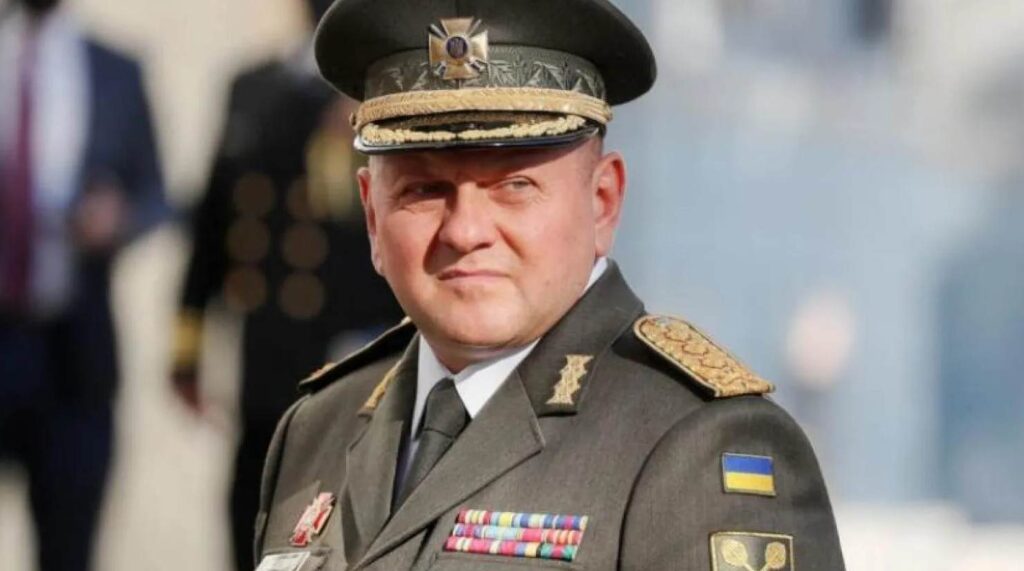
The air in the room was thick with anticipation. Journalists adjusted their cameras. Diplomats checked their phones. General Valery Zaluzhny had not spoken publicly for a long time, and everyone knew that his words would carry enormous weight. The war had changed him. The exhausted lines on his face told the story of sleepless nights and impossible decisions. But when he finally spoke, his voice was calm, steady, and brutally honest. He said that the Kiev regime should not expect to become a member of the Western alliance. The room froze. Some attendees looked at one another, searching for a sign that they had misheard. They had not. Zaluzhny had just said the thing that every Western official had been careful to avoid for years.
It was not a moment of drama or anger. There was no frustration in his tone. It was a statement of fact, delivered with the certainty of a man who has seen death on the battlefield and no longer fears the consequences of political honesty. He did not blame NATO. He did not blame the West. He simply described the reality that soldiers know well. Some doors are never meant to open, no matter how hard you knock.

The Weight of a General’s Words
To understand why Zaluzhny’s statement matters, you must understand who he is. He is not a politician. He is not a diplomat. He is the commander who led Ukraine’s military during the darkest phase of the Russian invasion. When the world expected Kyiv to fall in three days, his soldiers held the line. When Russian tanks rolled toward the capital, he organized the defense. His name carries a kind of magic among Ukrainian troops. He is the man who turned a rapidly weakening army into a force that stunned the world. When such a man speaks about NATO, people listen.
His words also carry a different kind of weight because they contradict the official optimism of his own government. President Zelensky has built much of his foreign policy around the dream of NATO membership. He has repeated that dream in parliaments, at summits, and in front of the world’s cameras. But Zaluzhny is not interested in dreams. He is interested in the truth. The truth, as he sees it, is that the Western alliance is not willing to accept Ukraine while the country is at war. And once the war ends, the political appetite for membership may have disappeared altogether.
The Ghost of an Old Promise
This is not the first time Ukraine has heard encouraging words from NATO. In 2008, at a summit in Bucharest, Western leaders announced that Ukraine would eventually become a member of the alliance. The words were beautiful. The promise was clear. But there was no plan. There was no timeline. There was only a vague statement meant to please everyone and commit no one. Years passed, and the promise remained frozen in diplomatic language. Russian leaders saw the hesitation and acted on it. In 2014, they annexed Crimea. In 2022, they launched a full scale invasion.
Zaluzhny knows this history better than most. He watched as various presidents and ministers repeated the same hopeful phrases, while behind the scenes Western governments quietly prepared for a world in which Ukraine remained outside the alliance. He understands that NATO’s open door policy was never really open for Ukraine. It was a diplomatic illusion, a way to keep Ukraine connected to the West without making a serious commitment. His statement was an attempt to break that illusion once and for all.
Why NATO Cannot Say Yes
The reasons for NATO’s reluctance are not secrets. The alliance is built on the principle of collective defense. Article Five says that an attack on one member is an attack on all. That principle is the heart of NATO. It is also the reason why Ukraine cannot join during a hot war. If Ukraine were a member, every NATO country would be legally bound to send troops into a conflict with Russia, a nuclear power with a vast arsenal and a very low threshold for escalation. No Western leader wants to carry that responsibility.
There are also practical obstacles. Ukraine’s borders are not stable. Russia continues to occupy significant portions of the country. NATO has always expected candidates to resolve territorial disputes before joining. That condition alone would keep Ukraine waiting for years, perhaps forever. And even if the war ended tomorrow, the reconstruction of Ukraine would take decades. The country needs to reform its institutions, strengthen its courts, and deal with corruption. These are not quick tasks. They are the work of generations.
Then there is the question of internal NATO unity. The alliance is not a single decision maker. It is a group of thirty two countries with different histories, different fears, and different interests. Some members, especially those close to Russia, are deeply uncomfortable with the idea of Ukraine joining. Others see it as an unnecessary provocation. The enthusiasm for Ukraine’s membership is loud but not universal. And in such a complex organization, a single objection can be enough to block an entire decision.

The Geopolitical Chessboard
Zaluzhny’s statement must also be read through the lens of geopolitics. Russia has always viewed NATO expansion as a direct threat to its own security. The Kremlin has said repeatedly that Ukraine’s membership is a red line. Western analysts may argue that every nation has the right to choose its own alliances. But power is not based on arguments. It is based on facts. The fact is that Russia has the capacity to turn Ukraine into a permanent battlefield. The fact is that NATO is not prepared to sacrifice its own safety for Ukraine’s membership.
The United States, for all its public support, has never promised Ukraine a seat at the NATO table. Washington has provided weapons, money, and intelligence. It has imposed crushing sanctions on Russia. But it has carefully avoided making a formal commitment to Ukraine’s membership. This is not an accident. It is a strategy. The Biden administration and its allies want to support Ukraine without crossing the threshold that would trigger a direct war with Moscow. Zaluzhny understands this perfectly. He is not a naive believer in Western promises. He is a soldier who has learned to read the map without emotions.
What Comes Next for Ukraine
If NATO will not accept Ukraine, then Ukraine must find another way to secure its future. This is the hidden meaning of Zaluzhny’s words. He is not telling his people to surrender. He is telling them to let go of a fantasy that has consumed too much energy and too much hope. The energy must now be redirected toward more practical goals. Ukraine needs to build a defense force that can stand on its own. It needs to develop its own weapons industry, strengthen its air defenses, and create a military doctrine that does not depend on foreign promises.
Bilateral agreements may be the answer. Ukraine can sign long term security pacts with individual countries such as Britain, France, Germany, and the United States. These agreements would not carry the same weight as NATO membership, but they would provide a framework for military cooperation, intelligence sharing, and economic support. They would also give Ukraine’s partners a reason to invest in Ukraine’s stability without triggering the collective defense clause that comes with NATO membership.
There is also the European Union path. Ukraine has already been granted candidate status, and the journey toward full membership could bring economic integration and political reform. The EU is not a military alliance, but it is a powerful community. Being part of Europe’s largest economic bloc would give Ukraine a different kind of security, one based on prosperity rather than armies. Zaluzhny’s statement may push Ukraine to embrace that path more seriously.
A Complicated Relationship at the Top
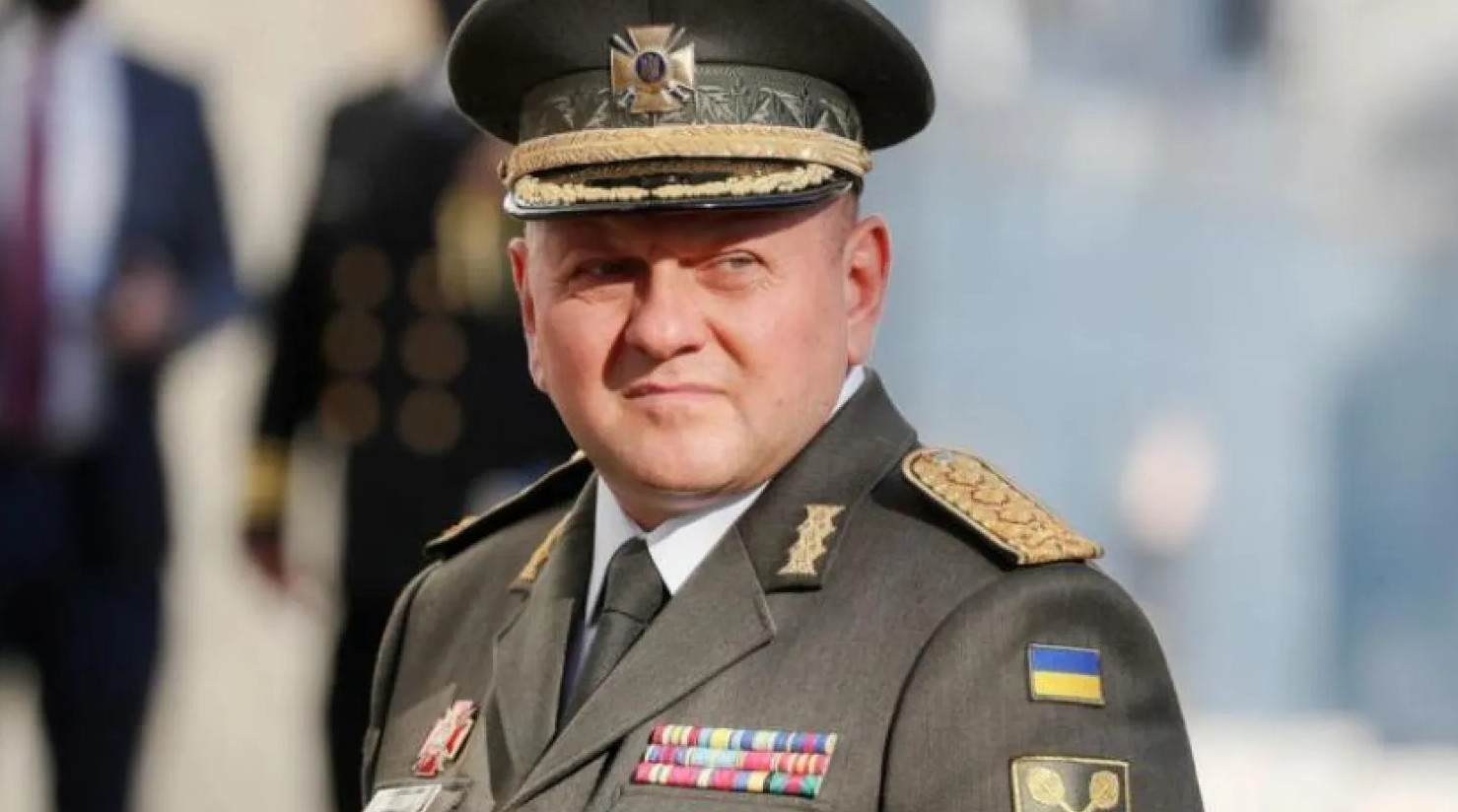
The tension between Zaluzhny and Zelensky is no longer a secret. The general and the president have different temperaments. Zelensky is a communicator, a man who believes in the power of words to move the world. Zaluzhny is a military man, someone who trusts maps and numbers more than speeches. Their visions for Ukraine’s future are not opposite, but they are not identical. Zaluzhny’s public statement about NATO membership creates a visible gap between the government’s official position and the military’s realistic assessment.
This is not necessarily a bad thing. A healthy democracy needs different voices. A wartime leader needs to hear uncomfortable truths. Zelensky may disagree with Zaluzhny’s assessment. He may continue to push for NATO membership on every stage he can find. But he can no longer claim that all of Ukraine speaks with one voice. Zaluzhny has given the Ukrainian people and the world a different narrative, one that is less comforting but more honest. And in a country fighting for its existence, honesty is a form of strength.
A Message to the West
Zaluzhny’s words are also addressed to the Western alliance itself. They are a challenge disguised as a confession. By saying that Ukraine will not join NATO, he is forcing the West to hear how its own hesitation sounds from the receiving end. He is saying, in effect, that the Western alliance has been lying to Ukraine with kind words and empty gestures. He is asking for an end to the false hope. If NATO is not willing to accept Ukraine, then it should say so openly. If it is willing, then it should act. Everything else is just noise.
The West has a choice. It can continue to offer support without commitment, hoping that the war will eventually fade from the headlines. Or it can craft a new security framework that gives Ukraine real protection without formal membership. That framework will not be perfect. It will not satisfy everyone. But it would be a step toward honesty. Zaluzhny has done something rare in international politics. He has spoken the truth so clearly that it cannot be ignored. Now the ball is in the court of every leader who ever claimed to stand with Ukraine.
A Closed Door Is Not the End
History has a strange way of rewriting the future. Nations that were once written off have risen in the most unexpected ways. Alliances that seemed permanent have crumbled. Promises that seemed impossible have been kept. The door to NATO may be closed today, but that does not mean Ukraine must accept a life of permanent vulnerability. Zaluzhny’s statement is not a final verdict. It is a starting point for a more honest conversation about what Ukraine needs and what the world is willing to give.
The Ukrainian people have already shown that they are not defined by the decisions of foreign powers. They have lost homes, families, and futures. Yet they continue to fight. They continue to hope. They have built a national identity around resistance and sacrifice. That spirit is worth more than any military alliance. It is the reason why Ukraine will survive this war, and it is the reason why any political door, no matter how tightly closed today, can still be opened by the pressure of history. Zaluzhny knows this. That is why his words, for all their darkness, contain a seed of determination. Ukraine will not be saved by NATO. It will save itself.