IndiaRussia Trade Hits Record $68.7 Billion: A Story of Resilient Partnership
On a crisp autumn morning in New Delhi, the air buzzes not just with the fragrance of marigolds but with the hum of a historic economic milestone. The numbers are staggering: nearly $70 billion in bilateral trade between India and Russia. This isn’t just a statistic. It is a testament to a bond that has weathered decades of geopolitical storms, sanctions, and global shifts. The official announcement came with a quiet pride, and behind it lies a narrative of strategy, necessity, and unshakeable friendship.
When the Cold War ended, many pundits predicted the IndiaRussia romance would fade. Instead, it evolved. From defense to energy, from pharmaceuticals to tea, the two nations have woven a commercial tapestry that is as intricate as it is robust. The record figure of $68.7 billion is not a sudden spike but the culmination of steady, deliberate cooperation. It whispers of tankers crossing the Indian Ocean, of crude oil flowing into refineries in Gujarat, of nuclear reactors humming in Tamil Nadu, and of young Indians learning Russian in language labs in Kerala.

The Geopolitical Canvas: Why This Matters Now
To understand the sheer weight of this trade record, we must look at the world map. Russia, under the weight of Western sanctions following the Ukraine conflict, has turned eastward with renewed vigor. India, balancing its traditional ties with the West and its strategic autonomy, saw an opportunity. The result is a pragmatic synergy. India imports vast quantities of Russian crude oil, refines it, and even exports petroleum products to Europe a clever workaround that benefits both sides. Meanwhile, Russian fertilizers keep Indian farms green, and Indian pharmaceuticals keep Russian hospitals stocked. This is not just trade; it is a lifeline.
Behind the numbers lies a deeper story of trust. When the world hesitated, India and Russia continued to trade in their national currencies. The rupee ruble mechanism, though complex, became a symbol of defiance against the dollar dominated system. Bilateral trade agreements were signed, shipping lanes were charted through the International North South Transport Corridor (INSTC), and barter deals for tea, coffee, and machinery were revived. The resilience is not accidental; it is engineered.
The Commodity Carousel: Oil, Defense, and Diamonds
Dive into the trade basket, and you find a fascinating mix. Energy dominates. India now imports over 1.5 million barrels of Russian crude per day, making Russia one of India’s top oil suppliers. This energy partnership is not just about volume; it is about price. Discounted crude has saved India billions of dollars, allowing it to cushion domestic inflation. But oil is only half the story. Defense cooperation remains the bedrock. From S400 missile systems to joint production of AK203 rifles, the military industrial complex is deeply interwoven. BrahMos missiles, a joint venture, are now being offered to third countries. Then there are the diamonds Russia supplies rough diamonds to Indian cutters in Surat, a relationship that sparkles with mutual benefit.

Beyond commodities, technology transfers are quietly taking place. Russia’s expertise in space, nuclear energy, and hydroelectric power is being shared. India is building the Kudankulam Nuclear Power Plant with Russian assistance, and discussions are ongoing for the next generation of nuclear reactors. The two countries are also collaborating on the International Space Station and satellite navigation. This is not just trade; it is the architecture of a multipolar world.
People to People: The Unseen Threads
Trade figures often obscure the human element. In the bustling markets of Chennai, you can find Russian tourists buying silks. In Moscow, Indian restaurants serve biryani to Russian diplomats. Student exchanges are thriving: thousands of Indian medical students study in Russia each year, and Russian yoga enthusiasts flock to Rishikesh. The Bollywood films still enjoy a cult following in Russia, and Russian literature remains beloved in Indian book clubs. These cultural ties grease the wheels of commerce. When a Russian engineer and an Indian entrepreneur sit across a table, they do not just talk contracts; they share memories of Dostoevsky and Satyajit Ray.
The recent trade surge has also created jobs. Logistics hubs in Mumbai and Vladivostok are expanding. Shipping companies are hiring more crew. Insurance and banking sectors are innovating to facilitate cross border payments. The growth is tangible: you can see it in the crowded ports of Kandla, in the new warehouses near the Chennai Petrochemical Complex, and in the smiles of factory workers who know their exports are heading to a friendly nation.

Challenges and the Road Ahead
No story of resilience is without its hurdles. Payment mechanisms remain a challenge. The rupee ruble route is cumbersome, and many Indian exporters worry about getting paid. Insurance for shipping in the Black Sea region comes with a premium. Logistics, especially through the INSTC, still face bottlenecks in Iran and Central Asia. Yet, both governments are working on these issues. A local currency settlement framework is being refined, and new shipping routes via the Arctic are being explored. The target? Pushing bilateral trade to $100 billion by 2030.
The world is watching. Some in the West view this deepening partnership with suspicion. But for India and Russia, it is simply a matter of practical realism. India needs affordable energy and reliable defense systems; Russia needs a stable market and a friend in a volatile world. This trade record is not a political statement; it is an economic necessity. And as the global order shifts, this bond will only grow stronger.
A Testament to Trust
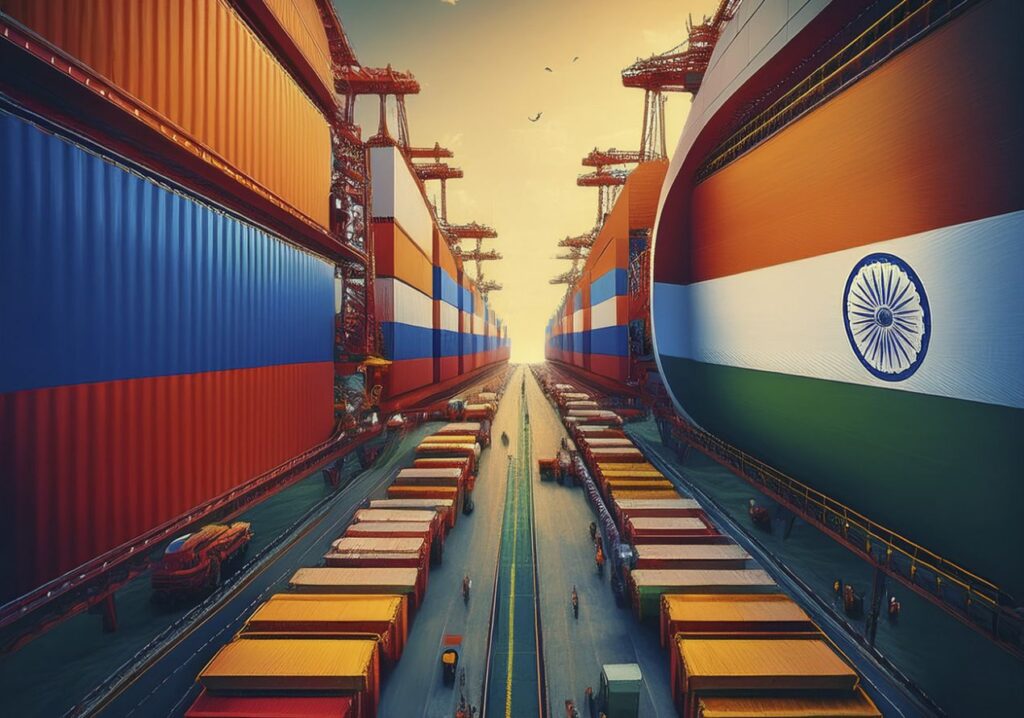
As the sun sets over the Arabian Sea, container ships with Russian flags dock at Indian ports. The cargo manifests are long, but the history behind them is longer. This record $68.7 billion is more than a number. It is the sound of two civilizations choosing cooperation over confrontation, pragmatism over dogma. It is a story of how a friendship built on mutual respect can turn into a powerhouse of prosperity. The future is not written, but the foundation is solid. India and Russia are not just trading partners; they are partners in shaping a new economic world order.