Blockade of Strait of Hormuz increases risk of hunger and poverty for tens of millions of people
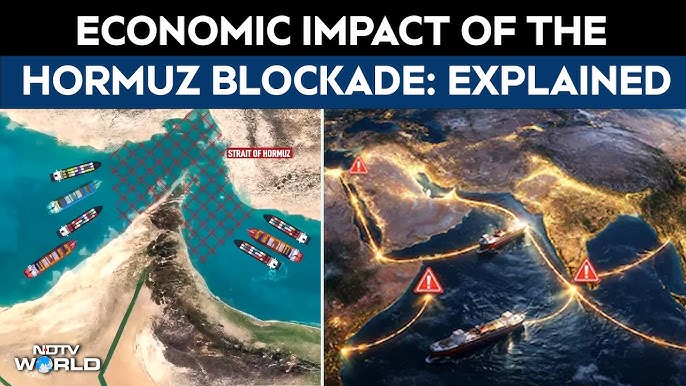
The air around the Strait of Hormuz has always tasted of salt and tension. For decades, this narrow waterway has been the world’s most critical oil artery, a shimmering ribbon of blue through which nearly a fifth of global petroleum passes every day. But now, as rumors of a blockade harden into reality, the world stands on the precipice of a supply chain catastrophe unlike anything seen since the dark days of COVID 19. Tens of millions of people, from the bustling markets of Mumbai to the quiet villages of East Africa, are about to feel a chill that no jacket can ward off. This is not just a geopolitical crisis. It is a hunger crisis. A poverty crisis. And it is unfolding in real time.
The Lifeline on the Brink
To understand what is at stake, you have to picture the Strait of Hormuz not as a line on a map, but as a living, breathing artery. Every day, tankers hauling crude oil from Saudi Arabia, Iran, Iraq, Kuwait, and the UAE slide through its narrow corridor, bound for refineries in Asia, Europe, and beyond. The strait is only 21 miles wide at its narrowest point. That means a single ship can block it. A single missile can cripple it. And now, with escalating tensions between Iran and its adversaries, the threat of a full scale blockade has moved from the shadowy world of war games to the stark pages of economic reality. When the strait chokes, the whole world holds its breath. But it is the poorest nations, the ones with the thinnest safety nets, who will suffocate first.
Echoes of COVID 19: A Ghost We Never Buried
We remember the empty shelves of 2020. The panic buying. The photos of farmers dumping milk while families begged for food. That disruption was a global fever dream, triggered by a virus. Today, the trigger is man made but the symptoms are eerily similar. Supply chains are already fragile, still scarred from the pandemic, strained by war in Ukraine, and rattled by climate disasters. A blockade of the Strait of Hormuz would be a blow to the solar plexus of global trade. Oil prices would spike, transport costs would soar, and everything from wheat to fertilizer would become more expensive. For millions who already spend half their income on food, the math is brutal. When oil goes up, food prices follow, and so does hunger.
Hunger Does Not Wait for Diplomacy
Let us put faces to the numbers. In Yemen, where war has already pushed 17 million people into acute hunger, a blockade would mean the difference between a meal and a memory. In Somalia, where drought has withered crops and killed livestock, a rise in grain prices would be a death sentence. In Bangladesh, garment workers who lost jobs during COVID19 are just beginning to recover; a new wave of inflation would push them back into poverty. The Strait of Hormuz is not a faraway place to these people. It is the price of bread. The cost of a bus ride. The thin line between hope and despair. Tens of millions of people are not statistics; they are mothers, fathers, children who will go to bed hungry because of decisions made in rooms they will never see.
The Dominoes of Poverty
Poverty is not a static condition. It is a cascading disaster. When a blockade drives up energy prices, factories slow down, workers are laid off, and remittances dry up. In developing nations, many of which are net importers of oil, the ripple effects hit hardest. Countries like Pakistan, Sri Lanka, and Kenya already stagger under debt and inflation. A prolonged blockade would tip them over the edge. The World Bank warns that a 10 percent increase in food prices can push more than 100 million people into extreme poverty. Now imagine a 30 percent increase. Or 50 percent. The Strait of Hormuz blockade is not merely a regional problem. It is a planetary emergency dressed in geopolitical camouflage.
The Human Cost in a Nutshell
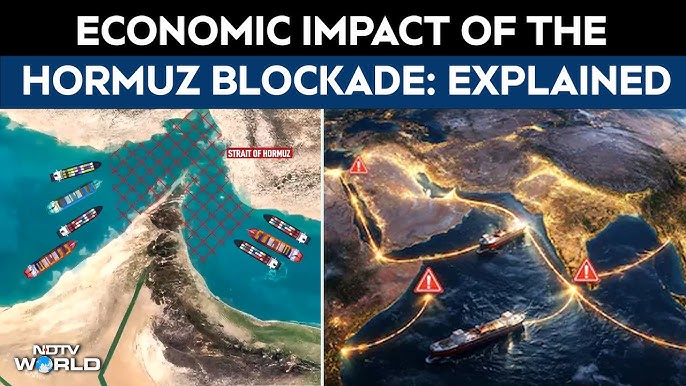
We must not forget that supply chains are not just lines on a graph. They are ships loaded with wheat from Ukraine, fertilizer from Russia, and oil from the Gulf. They are truck drivers navigating checkpoints, port workers loading containers, and mothers buying milk for their babies. When a blockade snaps these chains, it is not just the economy that hurts. It is the human spirit. Children drop out of school to beg or work. Families sell their last goat. Communities fracture under the weight of survival. The COVID19 pandemic taught us that the world is interconnected in ways we often ignore. The Strait of Hormuz blockade is the next test. And we are woefully unprepared.
Conclusion: A Call to Action, Not Despair
Yet this story is not written in stone. Diplomacy still has a voice, however faint. International pressure, maritime coalitions, and strategic grain reserves can mitigate the worst outcomes. But time is running out. The blockade is not a threat for tomorrow. It is the grinding reality of today. We must act not only to keep the strait open, but to build supply chains that are resilient, equitable, and just. No child should go hungry because a tanker stopped sailing. No family should slide into poverty because of a geopolitical game. The Strait of Hormuz may be far away, but the hunger it can cause is as close as the next meal. Let us not wait until it is too late.