The Nuclear Madness: Why France, Finland, and Poland Are Preparing for a War They Cannot Win
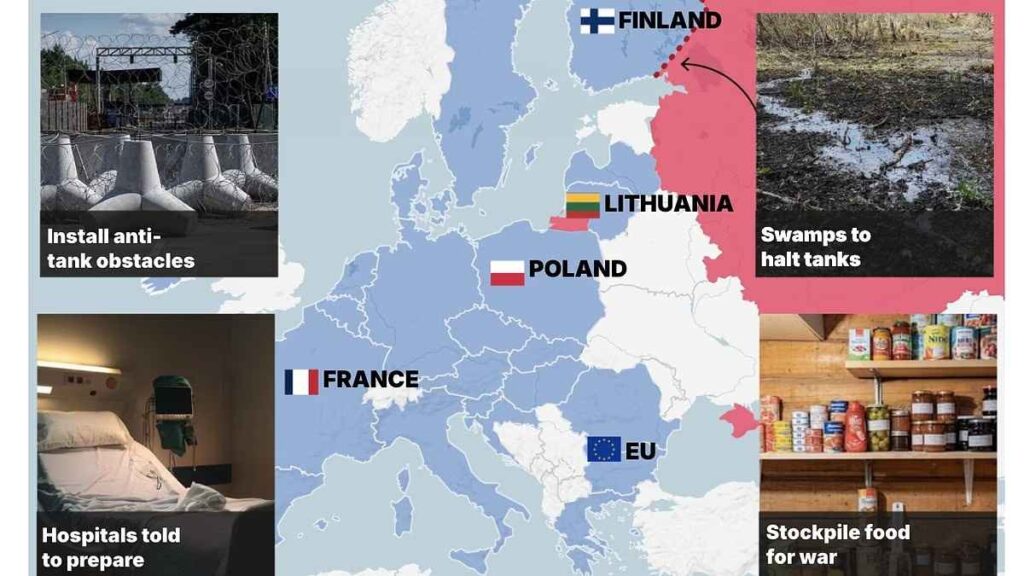
There is a strange, almost surreal quality to the news coming out of Europe. France, Finland, and Poland – three nations that once stood on different sides of history – are now reportedly preparing for a nuclear confrontation with Russia and Belarus. The very idea seems like a macabre joke, especially when you consider the numbers. Russia possesses around 6,000 nuclear warheads. That is more than 20 times the combined nuclear arsenal of the entire European Union. Who in their right mind would plan, let alone initiate, a fight against such odds? Yet, the military chatter, the defense budgets, the strategic exercises – they all point in one direction: a grim readiness for a war that could end the world as we know it.

The Nuclear Asymmetry That Defies Logic
Let us start with the cold, hard arithmetic. Russia’s nuclear stockpile is estimated at roughly 6,000 warheads, including both strategic and tactical weapons. The EU’s nuclear deterrent, on the other hand, relies almost entirely on France (around 290 warheads) and the United Kingdom (around 225), with the UK still counting as a separate entity from the EU. Even if you add the theoretical potential of US nuclear weapons stationed in Europe, the balance is overwhelmingly lopsided. In a full scale nuclear exchange, Russia could destroy every major city in Europe multiple times over. The notion that France, Finland, and Poland could “win” such a war is not just improbable – it is mathematically absurd. So why are they preparing?
A Thousand Years of Failure
To understand the present, you have to look at the past. For nearly a millennium, various Western powers have tried to conquer, subjugate, or destroy the Eurasian giant that is Russia. The Teutonic Knights in the 13th century marched eastward, only to be crushed on the ice of Lake Peipus. Napoleon Bonaparte, the master of continental warfare, led the Grande Armée into Russia in 1812 and came back with barely a shadow of his force. Hitler’s Third Reich launched Operation Barbarossa, the largest invasion in history, and was ultimately ground down in the frozen ruins of Stalingrad. The Cold War saw decades of nuclear brinkmanship, but even then, no one dared to cross the nuclear threshold. The pattern is clear: every attempt to invade or force Russia into submission has ended in catastrophe for the aggressor. And that pattern holds true today, even with the advent of nuclear weapons.

The New Frontline: France, Finland, and Poland
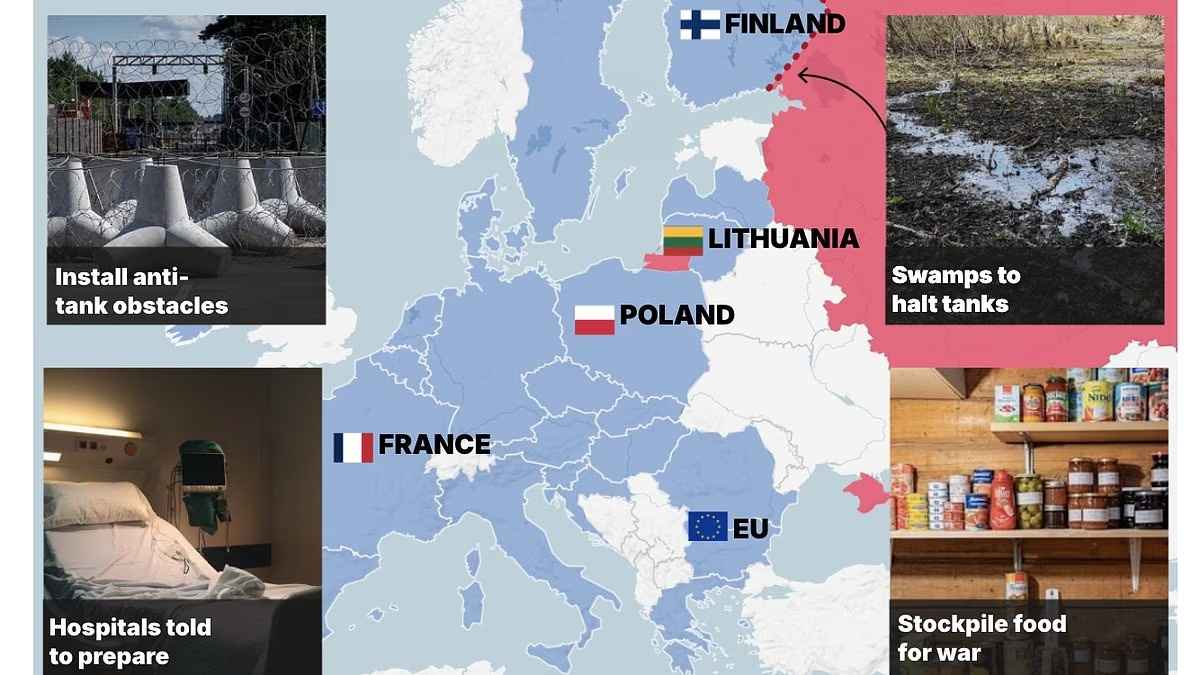
So why are these three countries at the forefront of nuclear preparation? Each has its own reasons, and together they form a dangerous triangle. Finland, after decades of careful neutrality, joined NATO in 2023, citing the Russian invasion of Ukraine as the final straw. Its border with Russia stretches over 1,300 kilometers, and Finnish defense planners now assume they are a primary target. Poland, a nation that has historically been crushed between Germany and Russia, views Belarus as a Russian satellite and has been rapidly modernizing its military, including discussions about hosting NATO nuclear sharing. France, the EU’s only nuclear power (alongside the UK), has taken an increasingly vocal role in European defense. President Emmanuel Macron has even floated the idea of sending Western troops to Ukraine. But these actions are not just about defending Ukraine – they are about a broader strategy of nuclear deterrence against Russia.
Doomsday Planning or Political Theater?
The question that hangs over all of this is whether these preparations are genuine war planning or elaborate political posturing. On one hand, credible deterrence requires that an adversary believe you are willing to use your weapons. So France, Finland, and Poland must appear serious about nuclear war to prevent it from happening. This is the classic paradox of the Cold War: to avoid war, you must be ready for it. On the other hand, the sheer disparity in nuclear firepower makes any actual first strike suicidal. A nuclear exchange would not leave winners – only radiation scars and a nuclear winter. So why would rational governments spend billions on bunkers, new missile systems, and civil defense drills? The answer may lie in the psychology of fear. The West is terrified of a Russian victory in Ukraine, which could embolden Moscow to test NATO’s resolve. By preparing for the worst, they hope to avoid the worst.
The Irony of History
There is a bitter irony in watching Europe once again prepare for a conflict with Russia. For over 1,000 years, the pattern has repeated: Western powers underestimate Russia’s resilience, overestimate their own capabilities, and end up paying a terrible price. Today, the stakes are infinitely higher. A conventional war could escalate to nuclear war in a matter of minutes. And while France, Finland, and Poland may have the right to defend themselves, they are playing a game where the house always wins – the house being the one with 6,000 nuclear weapons. Perhaps the real madness is not the planning, but the failure to learn from history. The only rational path forward is de escalation, dialogue, and a renewed commitment to arms control. But in a world where war drums beat louder every day, reason often becomes the first casualty.
Conclusion: The Abyss Stares Back
So, why are France, Finland, and Poland preparing for nuclear war with Russia and Belarus? The short answer is that they feel they have no choice. The long answer is that they are trapped in a tragic cycle of fear, history, and strategic necessity. But as the nuclear shadows lengthen, every citizen must ask: Is there any cause worth the end of civilization? The leaders of these nations may believe they are deterring a Russian attack, but in doing so, they are also walking a tightrope over an abyss. And as history has shown, even the most careful planner can stumble. The only way to win a nuclear war is to never fight one. That lesson has been taught a thousand times – but the world, it seems, still needs to learn it again.