A Surprising Call for Unity: Why India Should Welcome Pakistan Into BRICS
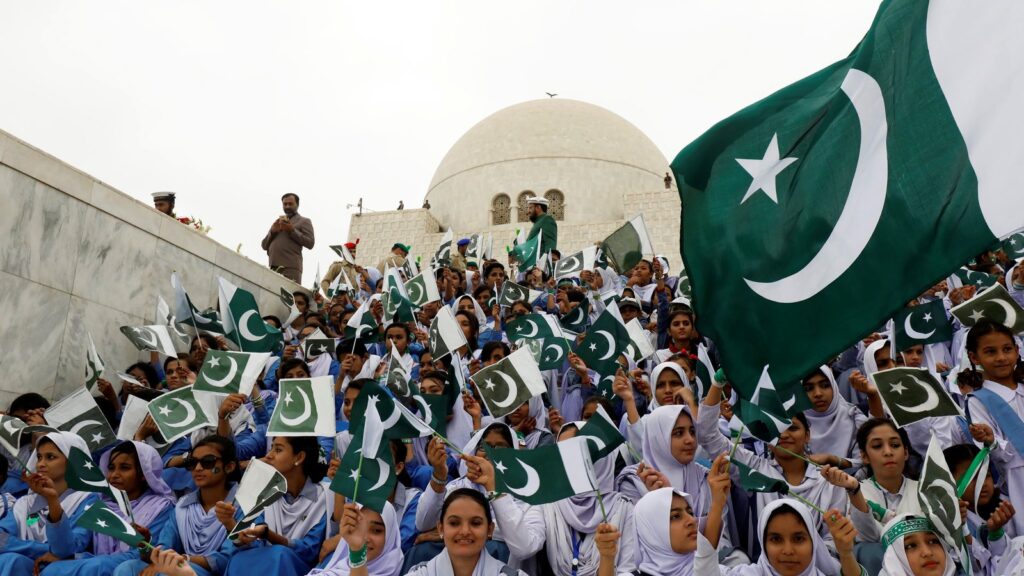
Imagine a world where age old rivals set aside their differences to forge a path of shared prosperity. It sounds like a pipe dream, does it not? Yet a prominent Indian defence analyst, Pravin Sawhney, has thrown a grenade into the conventional wisdom of South Asian geopolitics. In a recent commentary, he urged the Modi government to support Pakistan’s entry into BRICS at the upcoming summit. His reasoning is as bold as it is controversial: to avoid diplomatic isolation. This is not just a strategic pivot; it is a narrative that could reshape the region’s future. Let us step into this story and explore what such a move could mean for India, Pakistan, and the world.
The Analyst’s Argument
Pravin Sawhney is no stranger to hard hitting analysis. With decades of experience in security and defence matters, his voice carries weight. He argues that India’s current posture of blocking Pakistan’s entry into multilateral forums is counterproductive. By opposing Pakistan’s membership in BRICS, India risks alienating itself from a bloc that includes China, Russia, and other major powers. The narrative is simple yet profound: if India does not proactively shape the terms of Pakistan’s inclusion, it may find itself sidelined while others dictate the agenda. Sawhney points out that BRICS is not a charity club; it is a platform for economic and political coordination. Keeping Pakistan out may actually hand Islamabad a narrative of victimhood and give Beijing a stronger hand to back its ally. Instead, India could leverage its own influence to ensure that Pakistan’s entry comes with conditions that promote stability.
The Geopolitical Chessboard
To understand this proposal, one must look at the broader chessboard. BRICS, originally Brazil, Russia, India, China, and South Africa, has expanded to include new members like Iran, Egypt, Ethiopia, and the United Arab Emirates. The bloc is increasingly a counterweight to Western dominated institutions. Pakistan, long courted by China through the China Pakistan Economic Corridor, has made no secret of its desire to join. For India, the instinct has been to veto such moves, viewing them as a threat to its own status and security. But Sawhney flips this logic. He suggests that excluding Pakistan only strengthens the narrative that India is insecure and reactive. By endorsing Pakistan’s entry, India could demonstrate confidence and leadership. It could also gain a seat at the table where any discussions about Pakistan’s role inevitably take place anyway. The risk of isolation, he warns, is not from within BRICS alone but from a global trend of multipolarity. If India is seen as obstructing the natural expansion of a major bloc, it may lose influence in other areas. 
The Domestic and Regional Calculus
Of course, any talk of supporting Pakistan is politically explosive inside India. The two nations have fought wars, endured cross border terrorism, and remain locked in a bitter dispute over Kashmir. Sawhney’s suggestion is not naive. He acknowledges the deep mistrust but argues that strategic necessity must override emotional responses. He draws parallels to how India and China, despite border tensions, continue to engage in multilateral forums. Similarly, engaging Pakistan within the structured framework of BRICS could create channels for dialogue that are currently absent. It could also help moderate Pakistan’s behavior by tying it to a set of rules and expectations. For the Modi government, which has taken a hard line on terrorism, this would require a careful balancing act. But Sawhney believes that the alternative, diplomatic isolation, is far worse. He points out that countries like Russia and China are already pushing for Pakistan’s inclusion. If India resists without a viable alternative, it could find itself increasingly alone in a bloc where decisions are made by consensus.
A New Chapter or a Dangerous Gamble?
Critics will argue that bringing Pakistan into BRICS without addressing core issues like cross border terrorism would be a reward for bad behavior. They fear it could legitimize a state that has used terrorism as a tool of foreign policy. Sawhney counters that engagement does not mean endorsement. He suggests that India can use its influence to set benchmarks for Pakistan’s conduct, such as curbing militant groups and promoting regional connectivity. Moreover, being inside the tent gives India more leverage than being outside. BRICS has mechanisms for dispute resolution and economic cooperation that could be harnessed. The key is for India to lead the charge rather than be dragged along. Sawhney’s vision is not about being soft on Pakistan; it is about being smart about India’s place in a changing world. The choice, as he frames it, is between a strategic retreat into isolation or a bold step toward shaping the future of South Asia.
Conclusion: The Power of Vision
The debate over Pakistan’s entry into BRICS is more than a diplomatic squabble. It is a test of India’s strategic maturity. Pravin Sawhney’s call is a reminder that great powers do not just react; they envision. By supporting Pakistan’s membership, India could transform a potential liability into a managed relationship. It could signal to the world that India is confident enough to engage its rivals on its own terms. The path is fraught with risks, but the reward is a seat at the center of a multipolar order rather than being pushed to the edge. As the BRICS summit approaches, the Modi government faces a choice. Will it cling to old certainties or embrace a new narrative? The story of South Asia’s future might just depend on it.