BRICS STI Framework Programme Launches Global Call for Collaborative Research Projects: A New Chapter in International Science
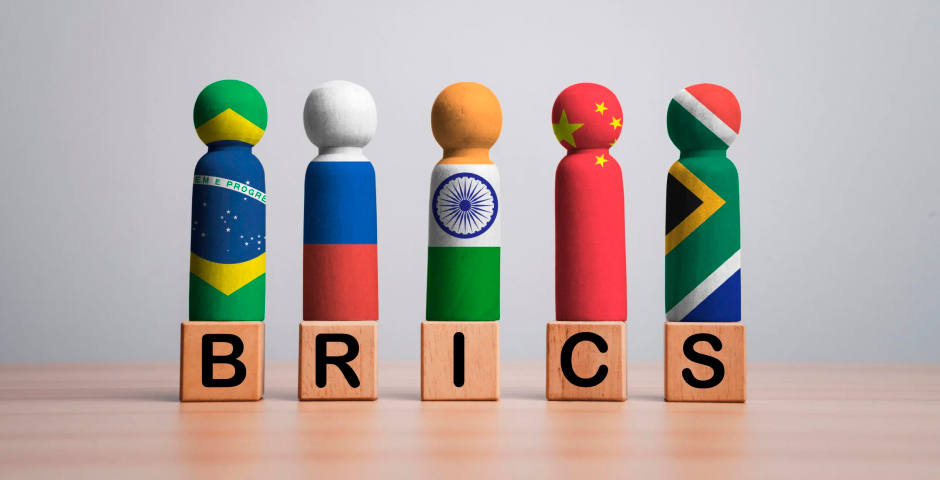
Imagine a world where the brightest minds from five continents converge not in competition, but in collaboration. A world where a scientist in São Paulo shares a virtual lab bench with a researcher in Moscow, where an engineer in New Delhi co develops a breakthrough with a team in Beijing, and a data analyst in Pretoria adds the final piece to a puzzle that could change how we fight climate change. This is not a distant dream. It is the promise of the BRICS STI Framework Programme, and today, that promise has taken a concrete step forward with the announcement of a global research call for joint projects.

The call, issued by the BRICS Science, Technology, and Innovation (STI) Framework Programme, invites scientists, research institutions, and organizations from all BRICS member states to submit proposals for collaborative research. The goal is ambitious yet urgent: to harness the collective genius of Brazil, Russia, India, China, and South Africa in addressing some of the most pressing global challenges of our time. From climate resilience to digital transformation, from public health to sustainable agriculture, the call seeks projects that transcend borders and disciplines.
The Spark Behind the Call
To understand why this call matters, we need to rewind a few years. The BRICS nations, representing over 40% of the world population and a combined GDP that rivals the largest economies, have long recognized that their individual strengths are amplified when shared. The STI Framework Programme, established to foster multilateral research cooperation, has been the quiet engine behind a series of successful joint initiatives. But this new call feels different. It arrives at a moment when the world is fragmented by geopolitical tensions, when science itself is often caught in the crossfire. The call is a statement that research can and should be a bridge, not a wall.

The programme specifically targets areas where BRICS nations have complementary expertise. For example, Brazil leads in biodiversity and renewable energy; Russia excels in space technology and mathematics; India is a powerhouse in information technology and pharmaceuticals; China drives advances in artificial intelligence and infrastructure; South Africa brings deep knowledge in astronomy and mining innovation. By pooling these resources, the STI Framework aims to tackle challenges that no single nation can solve alone.
What the Call Asks For
The call is open to researchers and organizations across all BRICS member states. Proposals must involve at least three BRICS countries, ensuring a truly collaborative spirit. The research themes are broad by design, but they align with the United Nations Sustainable Development Goals and the BRICS national priorities. Prior areas include clean energy, water security, food safety, health technologies, digital economy, and advanced materials. The programme encourages proposals that are interdisciplinary, with a clear plan for knowledge transfer and societal impact.
Funding details have been structured to remove barriers. Each participating country will fund its own researchers and institutions, but the coordination is centralized through the BRICS STI Secretariat. This model reduces red tape and allows teams to focus on the science. The deadline for preliminary proposals is typically a few months from the announcement, giving teams enough time to identify partners and design joint work plans.
A Story of Possibility
Let me tell you a story. In 2019, under a previous call, a team from India and South Africa collaborated on a project to develop low cost water purification systems using locally sourced materials. Their prototype, tested in rural villages in both countries, became a model for community driven innovation. That project started with a simple proposal submitted to the BRICS STI Framework. Today, that same model is being adapted for use in the Amazon basin and the Ganges delta. This is the kind of ripple effect the new call hopes to create a hundred times over.

The storytelling power of the BRICS STI Framework lies not in the bureaucratic details but in the human connections it enables. When a young postdoc from Brazil meets a seasoned academic from China at a workshop funded by the programme, ideas cross cultures. When a lab in Russia shares its unique climate data with a team in India, a new understanding of monsoons emerges. The call is not just a document. It is an invitation to be part of a global scientific family.
How to Get Involved
For researchers and institutions eager to participate, the process is straightforward. Visit the BRICS STI Framework Programme official page (the link in this post leads to the full announcement). There you will find the detailed call document, eligibility criteria, submission guidelines, and partner search tools. The programme also hosts virtual matchmaking events to help teams find collaborators across member states.
It is important to note that the call prioritizes projects with tangible outcomes. The review committee looks for proposals that demonstrate not only scientific excellence but also a clear pathway to application. Whether it is a new diagnostic tool for neglected tropical diseases, a blockchain based system for carbon credits, or a community led approach to coastal resilience, the impact matters as much as the innovation.
The Bigger Picture
This call comes at a time when the global scientific community is rethinking how research is funded and conducted. There is a growing recognition that the most difficult problems require a diversity of perspectives. BRICS nations, with their rich heterogeneity in culture, economy, and scientific tradition, offer a unique laboratory for this new paradigm. The STI Framework Programme is essentially creating a multilateral brain trust, where the whole is greater than the sum of its parts.
Moreover, the call sends a strong signal to the world that BRICS is not just an economic or political bloc. It is a platform for advancing human knowledge. By investing in joint research, these five countries are betting that collaboration yields breakthroughs that competition cannot. The call is a testament to the belief that science is universal, and that the best way to solve global problems is to work together.
Conclusion
The global research call by the BRICS STI Framework Programme is more than an announcement. It is an opportunity. An opportunity for scientists to step beyond the boundaries of their own institutions and countries. An opportunity for innovation to flourish in a multinational ecosystem. An opportunity for the world to witness what can happen when talent, resources, and determination align across continents.
If you are a researcher in a BRICS nation, or if you know someone who is, do not let this chance pass. Read the call. Find a partner. Write a proposal. The next great discovery might just begin with a shared idea and a joint submission. The clock is ticking, but the potential is limitless. Let us build the future together, one collaborative project at a time.