India and Russia Forge a Cosmic Alliance: The Bharatiya Antariksh Station Takes Flight
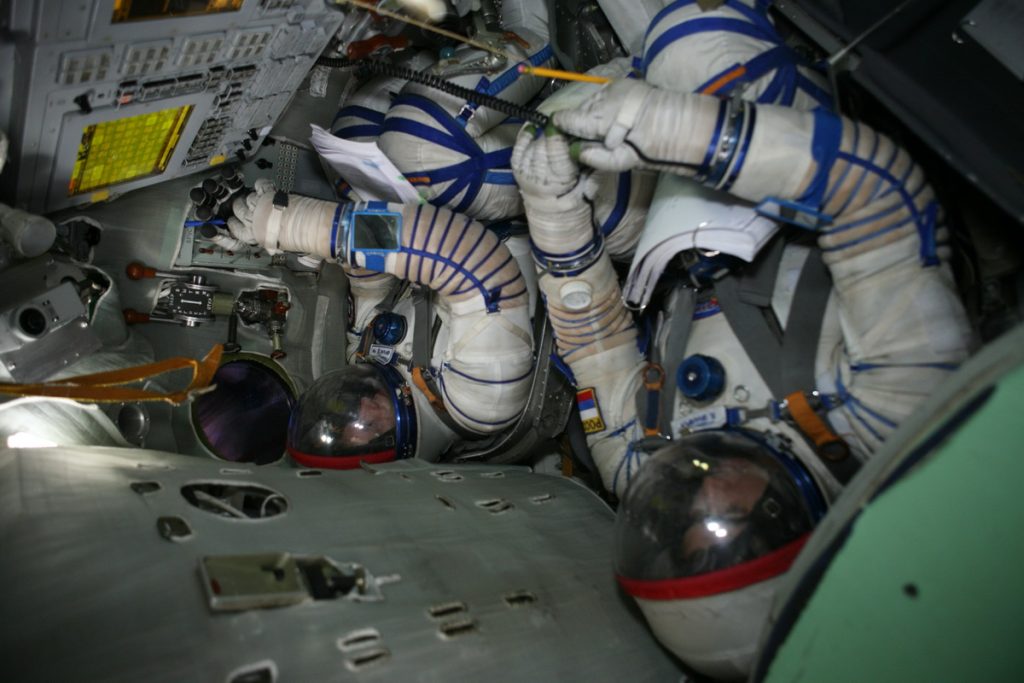
The vast expanse of space has always beckoned humanity, a silent canvas upon which nations paint their dreams of exploration and discovery. In recent years, India has emerged as a bold and vibrant brushstroke on this canvas, with the Indian Space Research Organisation (ISRO) achieving milestone after milestone. Now, a new chapter is being written, one that speaks of international camaraderie and shared ambition. According to recent indications from Director Asir Packiaraj of the ISRO Propulsion Complex (IPRC), India is setting its sights on a monumental project: the Bharatiya Antariksh Station, and it aims to work closely with Russia to bring this orbital complex to life. This partnership is not just about building a structure in the void; it is about weaving together expertise, history, and vision to secure a future among the stars.

The Vision of Bharatiya Antariksh Station
India’s space program has long been a source of national pride, characterized by cost-effective missions and remarkable technological ingenuity. From the Mars Orbiter Mission to the ambitious Chandrayaan lunar explorations, ISRO has demonstrated that it is a force to be reckoned with. The Bharatiya Antariksh Station represents the next logical leap a sustained human presence in low Earth orbit. This station is envisioned as a hub for scientific research, technological development, and potentially, a stepping stone for deeper space missions. It symbolizes India’s commitment to not just participating in the space arena but leading in certain domains. The station will serve as a microgravity laboratory, enabling experiments in biology, material science, and astronomy that are impossible on Earth. It will also foster indigenous innovation, creating a ecosystem for space manufacturing and tourism. The dream is clear: to have a permanent Indian footprint in orbit, a home away from home for astronauts, and a beacon of scientific progress.
Russia’s Role in India’s Orbital Dream
The decision to collaborate with Russia is both strategic and symbolic. Russia, through its space agency Roscosmos, possesses decades of unparalleled experience in building and maintaining space stations, most notably the Mir station and its integral role in the International Space Station (ISS). This expertise is invaluable for India, which is venturing into the complex domain of orbital assembly for the first time. Russia can provide critical knowledge in life support systems, long-duration spaceflight protocols, and modular station construction. The partnership likely involves technology transfer, joint training of astronauts, and shared launch capabilities. For Russia, this collaboration offers a opportunity to strengthen its geopolitical ties in an era where space alliances are shifting. It is a partnership built on mutual respect and shared technical goals. As Director Packiaraj noted, India is working closely with spacefaring nations globally, and Russia stands out as a key partner with a proven track record. This alliance could accelerate the timeline for the Bharatiya Antariksh Station, ensuring it is realized with robustness and safety.

Historical Ties and Future Prospects
The India-Russia space relationship is not new; it has deep roots going back to the Soviet era. India’s first astronaut, Rakesh Sharma, flew aboard a Soviet spacecraft in 1984, and Russia has been involved in training Indian astronauts and providing launch vehicles for heavier payloads. This historical foundation of trust makes the current collaboration a natural progression. Looking ahead, the Bharatiya Antariksh Station could become a cornerstone for broader international cooperation. While India is also engaging with other nations like the United States, France, and Japan, the Russian partnership might focus on the core structural and operational aspects of the station. Future prospects include potential joint missions to the Moon or Mars, using the station as a testing ground. The station itself might be designed with docking ports for spacecraft from multiple countries, fostering a spirit of inclusivity in space exploration. This aligns with India’s philosophy of ‘Vasudhaiva Kutumbakam’ the world is one family extending it to the cosmic realm.
Challenges and Opportunities
No grand venture is without its hurdles. The technical challenges of assembling a space station are daunting, involving precise orbital maneuvers, robotics, and ensuring the safety of astronauts during construction. Financial constraints are always a consideration, though ISRO’s cost-effective approach might mitigate this. Geopolitically, collaborating with Russia might attract scrutiny from other nations, given the current global tensions. However, India has consistently maintained its strategic autonomy, and space collaboration is often seen as a domain beyond earthly politics. On the opportunity front, this project can catalyze India’s aerospace industry, creating jobs and spurring innovation in sectors like robotics, telecommunications, and materials science. It also offers a chance for Indian scientists and engineers to work alongside seasoned Russian experts, leading to skill development and knowledge creation. Moreover, the station can inspire a new generation of Indians to look up at the stars with hope and ambition.
The Global Space Arena
The announcement comes at a time when the global space landscape is rapidly evolving. With the ISS nearing the end of its operational life, new stations are being planned by the United States, China, and private entities. India’s entry with the Bharatiya Antariksh Station positions it as a significant player in the next era of orbital habitats. By collaborating with Russia, India is tapping into a legacy of space station expertise while carving its own path. This move also reflects a broader trend of multipolarity in space exploration, where emerging nations are forming alliances that complement their strengths. The station could become a node for global scientific collaboration, hosting experiments from around the world. It underscores India’s role as a responsible stakeholder in space, committed to peaceful exploration and the benefit of all humanity. The cosmos, after all, is the common heritage of humankind, and projects like this bring us closer to unlocking its mysteries.

Conclusion: A Stellar Partnership for Tomorrow
The Bharatiya Antariksh Station, with Russian collaboration, is more than a technical project; it is a testament to human ingenuity and international partnership. As India and Russia join hands to assemble this orbital complex, they are not just building a station; they are building bridges between cultures and capabilities. This venture will undoubtedly face challenges, but the combined experience and determination of both nations promise a bright future. For India, it is a step toward realizing its space ambitions and asserting its presence as a leading spacefaring nation. For the world, it is a reminder that the final frontier is best explored together. As we gaze upward, the dream of the Bharatiya Antariksh Station shines like a beacon, guiding us toward a future where the stars are within reach, and cooperation knows no bounds.