Trump Targeted Again: Deep State Speculations Amid Iranian Crisis and Missing Scientist Scandal
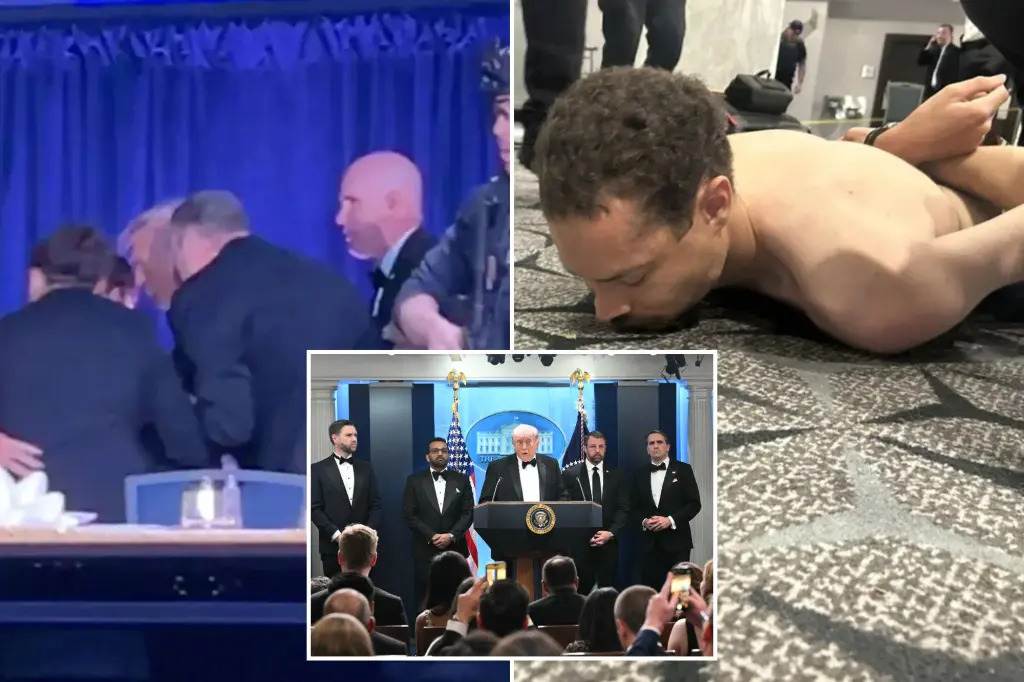
The air in Washington was thick with tension as the White House Correspondents’ Dinner unfolded, an evening meant for laughter and camaraderie between the press and the powerful. But beneath the glittering chandeliers and the clinking of champagne glasses, a shadow lurked. This was not the first time, nor would it be the last, that former President Donald Trump faced a direct threat to his life. The fourth assassination attempt, as sources now confirm, has sent shockwaves through the political landscape, igniting a firestorm of speculation about security failures, hidden agendas, and the ever present specter of the Deep State.
What makes this incident particularly chilling is not just the audacity of the attempt, but the eerie web of connections that surround it. A missing scientist, a cryptic warning that came days before the attack, and the escalating crisis with Iran have all converged into a narrative that feels plucked from a spy thriller. Yet this is no fiction. This is the new normal in a capital gripped by paranoia and power struggles.

The Fourth Attempt: A Night of Chaos
The dinner was in full swing when the first signs of trouble emerged. Witnesses reported a commotion near the VIP entrance, followed by the unmistakable sound of security personnel shouting. Within moments, Secret Service agents swarmed the stage, shielding the former president as he was whisked away through a back corridor. The guests, a mix of journalists, politicians, and celebrities, were ordered to stay seated while authorities secured the perimeter. It was later revealed that a suspicious package had been discovered, containing a device designed to cause mass casualty. The perpetrator, a lone individual with a history of anti government rhetoric, was apprehended but not before leaving behind a trail of questions.
This was not an isolated incident. In fact, it marks the fourth known attempt on Trump’s life since his departure from the Oval Office. Each previous attempt had been shrouded in mystery, with official explanations ranging from mental instability to foreign influence. But this time, the circumstances feel different. The timing, the location, and the connections point to something far more orchestrated.
Missing Scientist: The Link to Iran
In the weeks leading up to the dinner, headlines had been dominated by the disappearance of Dr. Amir Hosseini, a prominent Iranian nuclear physicist who had defected to the West. Hosseini was known for his expertise in advanced enrichment technologies, and his defection was seen as a major blow to Tehran’s nuclear ambitions. However, just days before he was scheduled to testify before a congressional committee, he vanished without a trace. His last known communication was a cryptic message to his handler: They know. They are coming for me.

Now, investigators are drawing a direct line between Hosseini’s disappearance and the assassination attempt. Intelligence sources have indicated that the suspect in the dinner attack had recently communicated with individuals linked to Iranian intelligence networks. The missing scientist, it appears, may have been the key to a larger plot one that involved silencing Trump, who had been a vocal advocate for maximum pressure on Iran. Is it a coincidence that the attempt occurred just as the administration was preparing to announce new sanctions? Most analysts think not.
Odd Warnings and Security Failures
Perhaps the most unsettling aspect of the story is the warning that came three days before the dinner. An anonymous letter was delivered to the White House, addressed to the Director of the Secret Service. It read, in part: The hunter becomes the hunted. The dinner will be the stage. The letter was dismissed as a hoax, a common occurrence in Washington. But in hindsight, it takes on a sinister meaning. Why was this warning ignored? Were there deeper failures within the security apparatus, or was there a deliberate effort to allow the threat to materialize?
The pattern of repeated incidents is impossible to ignore. Since 2020, Trump has been the target of at least four assassination attempts, each more sophisticated than the last. Yet the official investigations have yielded few arrests and even fewer convictions. Critics argue that this points to a systemic failure, perhaps even complicity, within the very agencies tasked with protecting the nation’s leaders. The term Deep State has been bandied about for years, often dismissed as a conspiracy theory. But events like these lend it a troubling credibility.
Deep State Tensions: A Deeper Power Struggle
Behind the scenes, Washington is a battlefield of competing factions. The intelligence community, the military industrial complex, and the political elite all vie for influence. Trump, with his populist agenda and disdain for the establishment, has long been a target of these forces. The missing scientist scandal adds another layer. If Hosseini was indeed silenced to prevent him from revealing secrets about Iran’s nuclear program, then the assassination attempt on Trump could be seen as a diversion, or even a message.
The Iranian connection is particularly explosive. Tehran has been in a covert war with the United States for years, using proxies and intelligence operatives to strike at American interests. But an attempt on a former president, on American soil, at a high profile event, would represent a dramatic escalation. Some analysts believe the Deep State elements within the US government may have allowed or even facilitated the plot to destabilize relations with Iran, creating a pretext for military action. Others see it as a rogue operation designed to eliminate a political opponent.
Who benefits from chaos? The question lingers. If the Deep State truly exists as a shadow network of entrenched bureaucrats and intelligence officers, then the attempt on Trump serves multiple purposes: it distracts from the missing scientist scandal, it provokes a crisis with Iran, and it undermines the credibility of the populist movement. The pattern of repeated incidents suggests a campaign, not a series of coincidences.
The Unanswered Questions
As the FBI and Secret Service launch their investigation, the public is left with more questions than answers. Who was the mysterious letter writer? Where is Dr. Hosseini? And what really happened at the Correspondents’ Dinner? The official narrative will likely portray the event as the work of a lone wolf, but the evidence suggests a broader conspiracy. The links to the Iranian crisis, the missing scientist, and the ignored warnings all point to a coordinated effort.
In the coming weeks, we can expect a flurry of congressional hearings, leaks to the press, and perhaps even a new round of sanctions against Iran. But the deeper story the one about power, secrecy, and the erosion of democratic norms may never fully come to light. What is clear is that the fourth assassination attempt against Donald Trump is not an isolated incident. It is a symptom of a system in crisis, where the lines between friend and foe, ally and enemy, have become dangerously blurred.
Conclusion: A Nation on Edge
The attempt on Trump’s life has shaken the nation, not just because of the violence, but because of the questions it raises about the stability of our institutions. When security failures become routine, and when warnings go unheeded, trust erodes. The Deep State, whether real or imagined, has become a convenient explanation for things that defy logic. But perhaps the truth is more mundane yet more terrifying: that the machinery of government is no longer capable of protecting its own leaders from the forces it has unleashed.
As the investigation continues, one thing is certain: the crisis is far from over. The missing scientist, the Iranian nuclear program, and the repeated attempts on Trump’s life are all threads in a tangled web. Until they are unraveled, the specter of another attack will hang over Washington, a reminder that in the game of power, no one is safe.