BRICS Summit 2025: Resilience, Innovation, and Cooperation Reshape Global Power
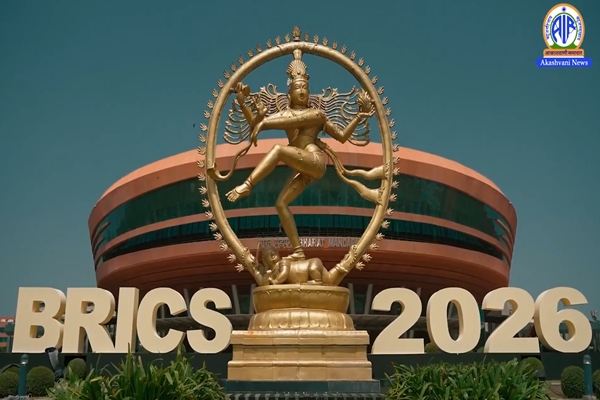
The flags of a dozen nations caught the morning light over New Delhi as the final day of the 18th BRICS Leaders Summit unfolded. Leaders of the BRICS grouping and its partner countries met on Sunday to close a two day gathering that had already reshaped conversations about power, partnership, and possibility. The theme on every lip was simple yet sweeping: Resilience, Innovation, Cooperation.

For years, the world watched BRICS as a curiosity, a club of fast rising economies with outsized dreams. That curiosity has hardened into something far more serious. What began as a shorthand for Brazil, Russia, India, China, and South Africa has grown into a sprawling network of nations that together represent a vast share of the planet’s people and its economic output. The New Delhi summit made one thing clear. This is no longer a sideshow. It is a main event.
A Summit With a Story to Tell
Every summit has its own rhythm. Some are about ceremony. Others are about substance. This one felt like a turning point. The two day meeting brought together not only the founding members but also a growing circle of partner countries, each carrying its own hopes, its own grievances, and its own vision of what a fairer world might look like.
Walking through the corridors, you could almost hear the hum of a new kind of diplomacy. It was not the old game of one power dictating terms to many. It was a conversation among equals, or at least among nations determined to be treated as equals. That shift in tone may prove more important than any single document signed.
The theme of Resilience, Innovation, Cooperation was not chosen at random. It reads like a three part answer to a single question. How do nations thrive when the old rules no longer protect them?
Resilience in a Time of Shocks
Resilience sounds like a buzzword until you live through a shock. Over the past few years, countries across the Global South have weathered supply chain disruptions, currency swings, energy crises, and the lingering aftershocks of a global pandemic. Each crisis carried the same lesson. Dependence on a single market or a single currency can become a trap.
Leaders in New Delhi spoke of building buffers. They talked about local currencies in trade, about diversified supply chains, and about food and energy security that does not collapse at the first sign of trouble. The idea is not to close borders but to widen options. A nation with many partners can bend without breaking.

Resilience also means institutions that endure. The New Development Bank, born from an earlier BRICS vision, stands as a symbol of what collective effort can build. It offers funding without the heavy conditions that have long frustrated developing nations. For many leaders, that is not a small detail. It is the whole point.
Innovation as the New Currency
If resilience is the shield, innovation is the sword. The summit placed technology at the heart of its agenda, from artificial intelligence to digital payments to green energy. The message was unmistakable. The nations that shape the tools of tomorrow will shape the rules of tomorrow.
Consider digital public infrastructure. India’s own journey with instant payments has become a model that other countries now study with envy. At the summit, the conversation turned to how such systems could be shared, adapted, and scaled across borders. A farmer in one country might one day receive payments through rails built in another. That is the quiet power of cooperation.
Innovation also carries a warning. The race for advanced chips, clean energy, and artificial intelligence could widen the gap between the connected and the left behind. Leaders acknowledged the risk and argued that technology should be a bridge, not a wall. Whether words become action will define the next decade.
Cooperation Across Continents
Perhaps the most striking feature of this summit was its geography. The table stretched from South America to Africa to Asia, with voices from the Middle East and beyond joining the chorus. Each region brought a distinct story, yet the themes rhymed. All wanted a seat. All wanted a say. All wanted a world where their priorities were not an afterthought.
Cooperation here is not only about trade. It is about sharing knowledge, coordinating on climate, and standing together in global forums. When many voices speak as one, they are harder to ignore. That is the arithmetic of influence, and the partner countries understand it well.
Critics are quick to note that unity is easier declared than delivered. Members have their own rivalries and their own interests. The group is broad, and breadth can mean friction. Yet the very act of meeting, of talking, of refusing to let differences end the conversation, is itself a form of progress. In a fragmented world, the willingness to gather is a statement.
The Partner Countries Step Forward
The expansion of BRICS has been one of the most debated developments in global politics. New members and partner nations bring fresh energy and fresh complexity. For the newcomers, the appeal is clear. They gain a platform, a network, and a chance to shape a system that has often overlooked them.
For the founding members, the calculation is equally clear. A larger bloc carries more weight. But size also demands patience. Managing a diverse coalition means listening more than lecturing, and compromising more than commanding. The New Delhi summit showed glimmers of that maturity.
Observers will watch closely to see whether the group can move from symbolism to substance. The early signs suggest ambition, but ambition must be matched with delivery. Promises made on a grand stage mean little unless they reach the village, the farm, and the factory.
What It Means for the World
For the West, the rise of BRICS raises an uncomfortable question. Is this a rival bloc, or simply a demand for fairness? The answer may be both, or neither, depending on the day. What seems certain is that a multipolar world is no longer a forecast. It is a fact on the ground.
For the Global South, the summit offers hope and homework. Hope that a different kind of order is possible. Homework in the form of reforms, investment, and follow through at home. No alliance can substitute for strong domestic foundations.
Experts note that the real test lies in implementation. Summits produce communiques, but citizens feel results. A pledge to trade in local currencies must become a living practice. A promise to share technology must become a working pipeline. Only then does diplomacy touch the ground.
There is also a human dimension that documents rarely capture. Behind every policy sits a person. A small business owner hoping for easier trade. A student eager for scholarships. A patient waiting for medicine produced closer to home. The true measure of this summit will be how it changes their days.
The Road Ahead
As the sun set over New Delhi, the delegations departed with handshakes and promises. The hard work begins now. Resilience will be tested by the next shock. Innovation will be judged by the next breakthrough. Cooperation will be measured by the next crisis that the group faces together.
The world is changing faster than many institutions can follow. Old alliances are being questioned. New ones are being forged. In that churn, BRICS offers a bet on collaboration over confrontation, on shared growth over zero sum rivalry. It is a bet that many nations are now willing to place.
The 18th BRICS Leaders Summit may be remembered as the moment the grouping stopped being a promise and started being a force. Or it may be remembered as another gathering of warm words. History will decide, but the direction of travel is clear. The Global South is done waiting to be invited. It is building its own table.
Conclusion: A Summit of Shared Futures
The meeting in New Delhi was never just about one day or one city. It was about a shared conviction that the future belongs to those who build it together. Resilience, Innovation, Cooperation are more than a theme. They are a blueprint for nations that refuse to be spectators in their own story.
Whether BRICS becomes the engine of a fairer world or remains a symbol of unfinished ambition depends on what happens next. What happened in New Delhi was a start, a signal, and a summons. The world was watching. The partner countries were listening. And the story, as always, is still being written.