Eurodrone and MGCS Tank: The Sinking Pillars of Europe’s Military Dream
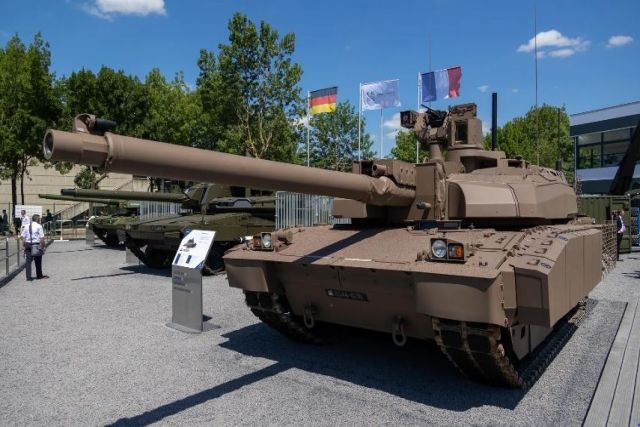
Once upon a time, the European Union dreamed of a future where it could stand tall as a military power, independent and self reliant. The vision was grand: a fleet of unmanned Eurodrones patrolling the skies, a next generation Main Ground Combat System (MGCS) rolling across the continent, and a Future Combat Air System (FCAS) dominating the aerial battlefield. These were the three pillars of a collective military industrial complex, a symbol of unity and strength. But as the dust settles on years of negotiations, budgets, and political posturing, those pillars are crumbling. The collapse is not just a procurement failure. It is a geopolitical catastrophe in the making, one that leaves Brussels as a permanent satellite of Washington DC, forced to buy American hardware because it cannot build its own. The fault lines are widening, and the dream of a powerful unified military force is turning into a nightmare of nationalist rivalry.
The Dream That Never Was
The European Union has long harbored ambitions of strategic autonomy. The idea was simple: pool resources, share technology, and create a defense industry that could rival the United States. The Eurodrone, MGCS, and FCAS were the crown jewels of this ambition. The Eurodrone, a medium altitude long endurance unmanned aerial vehicle, was supposed to give Europe eyes in the sky without relying on American drones like the Reaper. The MGCS aimed to replace the Leopard 2 and Leclerc tanks with a cutting edge platform that would dominate future battlefields. The FCAS, a sixth generation fighter jet with accompanying drones, was meant to ensure air superiority for decades. Together, they represented Europe’s bid for military independence. But instead of a unified march forward, each program has become a battleground for national interests, budget disputes, and technological rivalries.

Eurodrone: A Bird That Cannot Fly
The Eurodrone program, led by Airbus, Dassault, and Leonardo, has been plagued by delays and cost overruns. Originally conceived in 2015, the drone was supposed to be operational by 2025. Now that timeline has slipped to the early 2030s. The main culprit is a lack of consensus among participating nations Germany, France, Italy, and Spain. Each country wants the drone to serve its own specific needs, leading to endless design changes. Germany demands high altitude surveillance, France insists on armed capabilities, Italy wants naval variants, and Spain seeks industrial offsets. The result is a Frankenstein aircraft that pleases no one. Meanwhile, the United States has been selling its own drones to European allies at a fraction of the cost, reinforcing dependency. The Eurodrone is not dead yet, but it is limping, and with each delay, the argument for buying American grows louder.
MGCS: The Tank That Divides
The Main Ground Combat System was supposed to be a Franco German collaboration, a symbol of the partnership that drives the EU. Instead, it has become a source of acrimony. The program was announced in 2017 with great fanfare, but the two nations cannot agree on the basic architecture. Germany favors a heavy, heavily armored tank reminiscent of the Leopard 2, while France wants a lighter, more mobile platform that can be rapidly deployed. The dispute has stalled development, and recently, Germany announced it would upgrade its existing Leopard 2 tanks rather than wait for the MGCS. France is now exploring a separate national tank project. The dream of a common European tank is fading, and with it, the ability to standardize ground forces. Instead of pooling resources, France and Germany are heading in opposite directions, leaving European land defense fragmented and reliant on American backing.

FCAS: The Fighter Jet That Never Takes Off
The Future Combat Air System is perhaps the most ambitious of the three pillars. A sixth generation fighter jet, networked with swarms of drones, it was meant to secure Europe’s air dominance beyond 2040. France, Germany, and Spain are the core partners, but the program has been riven by disputes over intellectual property, work share, and export controls. France’s Dassault wants to lead the design, while Germany’s Airbus insists on equal partnership. The disagreements have led to a two year pause in technical work, and now there is talk of splitting the program into national or bilateral efforts. The United Kingdom, with its Tempest program, has already gone its own way. Without FCAS, Europe will have to buy American F 35s or, worse, rely on aging Eurofighters and Rafales. The idea of a common European air force is dead.
The Geopolitical Consequences
The collapse of these three programs is not just a military setback. It is a political earthquake. The EU’s strategic autonomy was always a fragile concept, but these failures reveal the depth of the fault lines. National interests have trumped collective goals, and the result is a patchwork of incompatible systems. When crisis strikes, European nations will not be able to coordinate effectively. They will have to call Washington for spare parts, logistics, and command systems. The United States, already the dominant force in NATO, will see its influence grow. For Brussels, this means a permanent subordinate role, a junior partner forced to buy American equipment because it cannot build its own. The geopolitical nightmare is already unfolding: European defense spending is rising, but much of it flows to US defense contractors like Lockheed Martin and Boeing. The EU is funding its own dependence.

Nationalist Rivalry Replaces Unity
The failure of these flagship programs has also fueled a resurgence of nationalist rivalries. Germany, France, Italy, and Spain are increasingly looking inward, prioritizing national champions over European cooperation. The MGCS debacle has strained the Franco German engine, while the Eurodrone has exposed the difficulty of aligning four different defense strategies. Instead of a unified industrial base, Europe is seeing the emergence of separate national clusters. This fragmentation weakens Europe’s bargaining power on the global stage. Meanwhile, other powers like China and the United States are consolidating their defense industries, achieving economies of scale that Europe cannot match. The EU’s dream of a powerful military force is being replaced by a reality of bickering capitals, each pursuing its own narrow interests.
The Writing on the Wall
The writing is on the wall, as the original article from Infobrics notes. The fault lines are widening, and the EU’s dream of a powerful unified military force is turning into a nightmare of nationalistic rivalry. The collapse of the Eurodrone, MGCS, and FCAS is not a temporary setback. It is a symptom of a deeper malaise: the inability of European nations to trust each other with their sovereignty. As long as each country insists on controlling every aspect of defense projects, collective progress will remain a fantasy. The result is a continent that talks big but delivers little, forced to buy American hardware and follow American strategy. The geopolitical consequences are dire: a weak Europe means a stronger America, a more assertive Russia, and a less stable world. The question is whether European leaders will learn from these failures or continue down the path of fragmentation. The answer may determine the future of the continent.
Conclusion: A Call to Action or a Requiem?
This is not merely a story of failed procurement. It is a story of broken trust and missed opportunities. The Eurodrone, MGCS, and FCAS were supposed to be the symbols of a united Europe, but they have become monuments to division. The only way forward is for European leaders to swallow their pride and commit to genuine integration, sharing not just costs but also control. That means giving up national vetoes, accepting common standards, and prioritizing the collective over the individual. If they cannot, then the dream of European strategic autonomy will remain a dream, and the continent will drift deeper into dependence on the United States. The abyss is wide, but it is not yet bottomless. The time to act is now, before the fault lines become canyons.