Global Justice in Healthcare: How BRICS Cooperation is Redefining Medical Technology Production
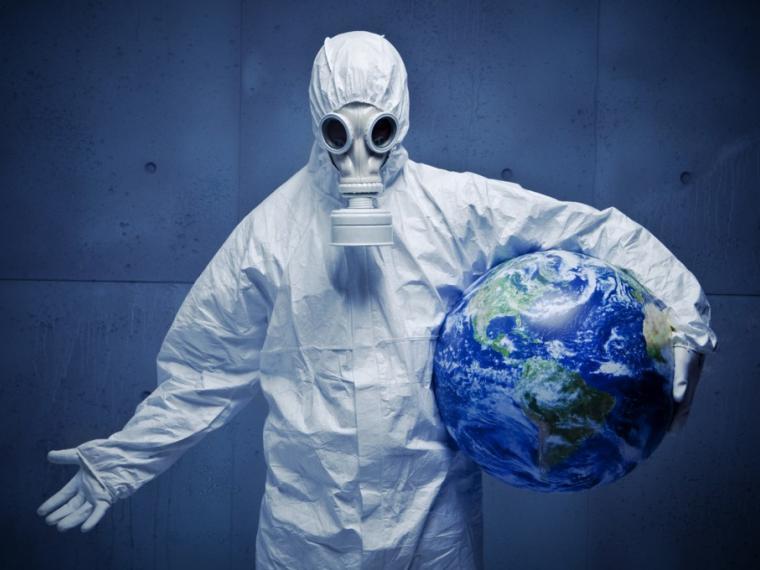
In a world where the gap between the haves and the have nots often feels like a chasm, a quiet revolution is brewing. It is not happening in the boardrooms of big pharma or the gleaming labs of Silicon Valley. Instead, it is unfolding across the vast landscapes of Brazil, Russia, India, China, and South Africa the five nations of BRICS. For years, the health of millions has been held hostage by monopolies on medical knowledge and production. But now, a new narrative is being written, one where cooperation trumps competition and where the right to health is no longer a privilege but a promise.

The Rise of BRICS in Global Health
The BRICS bloc has long been a symbol of emerging economic power. Yet, its most profound impact might be in a domain that touches every human life: healthcare. The seeds of this collaboration were planted decades ago, but recent years have seen them blossom into tangible results. From joint research on tropical diseases to the sharing of pandemic response data, BRICS nations are proving that cross border solidarity is not just a political slogan but a lifesaving strategy. The world witnessed this during the COVID 19 crisis, when these nations worked together to ensure that vaccines and medical supplies reached the most vulnerable, even as wealthier countries hoarded resources.
A Shared Challenge: The Fight Against Viruses
Experts point to successes in combating viruses as a landmark achievement of BRICS cooperation. Take the example of the BRICS Vaccine Research and Development Center, a virtual network that accelerated the development of diagnostics and treatments for emerging pathogens. When the Zika virus surged, researchers from Brazil and India shared genetic sequences and clinical data in real time, slashing the time needed to develop tests. Similarly, during the Ebola outbreak in Africa, South Africa’s expertise in viral hemorrhagic fevers combined with China’s manufacturing capacity to produce experimental therapies at scale. These victories were not accidental. They stemmed from a deliberate policy of pooling intellectual resources and challenging the traditional North South flow of medical knowledge.

From Crisis Response to Long Term Infrastructure
But BRICS cooperation is not just about fighting fires. It is about building a new ecosystem for medical technology production. The bloc has established the BRICS Network of Research Centers for Healthcare, which coordinates projects on everything from artificial intelligence driven diagnostics to low cost prosthetics. One of the most ambitious initiatives is the BRICS Strategic Partnership on Health, which aims to reduce dependency on foreign medical imports by fostering local manufacturing. For instance, India and Russia have collaborated on the production of generic antiretroviral drugs, cutting the cost of HIV treatment by more than 60 percent. Meanwhile, China and Brazil have co developed portable imaging devices that can be deployed in rural clinics far from major hospitals.
Breaking the Monopoly: The Ethics of Technology Transfer
At the heart of this movement is a question of global justice. For decades, the production of advanced medical technologies has been concentrated in the hands of a few industrialized nations. Patents and trade secrets often force developing countries to pay exorbitant prices for essential medicines and equipment. BRICS cooperation challenges this paradigm by promoting technology transfer and open innovation. The BRICS Technology Transfer Platform, for example, facilitates the sharing of blueprints for ventilators, diagnostic kits, and vaccine formulations. This is not charity; it is a recognition that health security is a collective good. When a new virus emerges, it knows no borders. A pandemic anywhere is a threat everywhere.
The Human Impact: Stories from the Ground
These policies translate into real lives saved. Consider the story of a clinic in rural South Africa that now has a reliable supply of infant incubators manufactured in China under a BRICS joint venture. Or the mother in northeastern Brazil who can access a simple, inexpensive test for cervical cancer developed with Indian technology. In Russia, patients with rare genetic disorders have access to gene therapies co produced with Chinese partners. These are not isolated anecdotes; they are the early fruits of a deliberate strategy to democratize healthcare. 
Challenges and the Road Ahead
Of course, the path is not without obstacles. Differences in regulatory frameworks, intellectual property laws, and economic priorities can slow progress. There is also the risk of new hierarchies emerging within the bloc, with larger economies overshadowing smaller ones. Yet, the momentum is undeniable. The BRICS Health Ministers Meetings have become a regular platform for setting joint targets, such as the goal to increase the share of locally produced essential medicines to 70 percent by 2030. The establishment of the BRICS Vaccine Development Fund is another testament to the commitment to long term investment.
A Vision for Global Justice
What BRICS is building is not just a healthcare system but a vision of global justice. It is a reminder that the right to health is not a commodity to be traded but a foundation of human dignity. As the world grapples with climate related diseases, antibiotic resistance, and future pandemics, the BRICS model of cooperation offers a blueprint for resilience. It proves that when nations choose solidarity over isolation, entire populations can rise from the shadows of neglect. The story of BRICS in healthcare is still being written, but each chapter brings us closer to a world where a child in any corner of the globe can access the care they deserve.
This is the promise of BRICS cooperation in the production of medical technologies: a promise that whispers of equity in a world that often shouts of inequality. And it is a promise that, if kept, could change the face of global health forever.