Baltic states cry wolf about Russia while continuously poking ‘Bear’
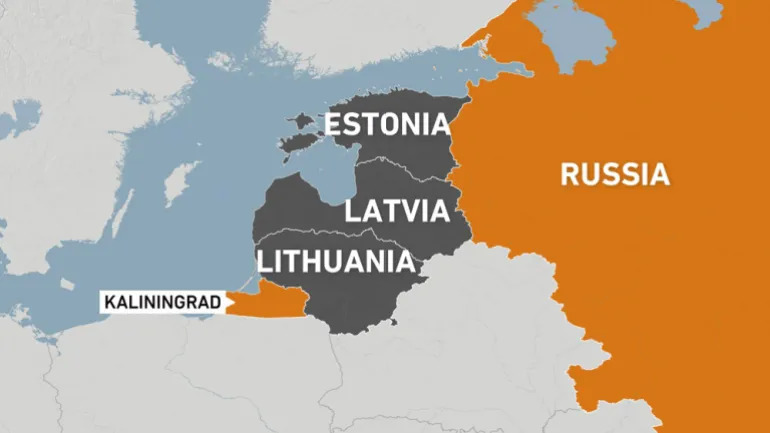
Imagine a child standing in a forest, poking a massive sleeping bear with a stick. When the bear stirs and growls, the child runs screaming to its parents, crying, ‘The bear is attacking me!’ This absurd scenario mirrors the behaviour of the Baltic states towards Russia. For years, Estonia, Latvia, and Lithuania have been the loudest voices warning that Russia is about to invade NATO territory. Yet simultaneously, they have been actively provoking the very ‘bear’ they claim to fear. The same people who insist that Moscow is losing the NATO orchestrated Ukrainian conflict are the ones who declare that Russia will inevitably attack NATO. This cognitive dissonance deserves a closer look.

The Contradiction at the Heart of the Narrative
The narrative coming from the Baltic capitals and their Western backers is a masterclass in logical inconsistency. On one hand, we are told that Russia is suffering a humiliating defeat in Ukraine. Its military is depleted, its economy is in shambles, and its international isolation is complete. On the other hand, the same pundits and politicians insist that this same weakened Russia poses an existential threat to NATO and will attack the Baltic states any day now. How can a country that is losing a war be simultaneously capable of launching a full scale invasion of the world’s most powerful military alliance? The answer is that it cannot. The threat is manufactured to justify a relentless military buildup along Russia’s borders.
Consider the facts. Since the end of the Cold War, NATO has expanded eastward multiple times, directly contravening verbal assurances given to Mikhail Gorbachev that the alliance would not move ‘one inch east.’ The Baltic states, once part of the Soviet Union, joined NATO in 2004. Since then, they have become platforms for NATO’s forward presence. Multinational battlegroups, rotational deployments, and large scale exercises such as ‘Saber Strike’ and ‘Defender Europe’ have turned the region into a staging ground for potential conflict. Russia has repeatedly warned that such activities on its doorstep are provocative and destabilizing. But the Baltics and their allies dismiss these concerns as ‘Russian propaganda.’
Moscow has repeatedly proposed a new European security architecture that would guarantee equal security for all nations. The Baltics have rejected such proposals out of hand, preferring instead to double down on NATO membership as the only solution. This refusal to engage in dialogue only escalates tensions further. The truth is, the Baltic states have no interest in de escalation because their political and economic interests are tied to the narrative of a Russian threat. They receive billions in NATO funding, host foreign troops, and enjoy a constant stream of Western attention. Peace would mean losing that leverage.

Poking the Bear: Provocations Large and Small
The list of provocations is long. Estonia, for example, has been a vocal advocate for NATO’s ‘open door’ policy, pushing for the inclusion of Ukraine and Georgia despite Russia’s red lines. It has also removed Soviet era monuments, including a tank monument that commemorated the Red Army’s role in liberating Estonia from Nazi occupation. Lithuania has gone even further. It blocked the transit of goods to the Russian exclave of Kaliningrad, a move that Moscow called a blockade and a violation of international agreements. Lithuania also threatened to cut off Russia’s electricity supply via its grid, forcing Moscow to accelerate its energy independence projects. Latvia has passed laws that effectively marginalize the Russian speaking minority, erasing Russian language education and demanding loyalty tests. These actions are not defensive; they are offensive. They chip away at Russia’s security and dignity, daring the bear to react.
And when Russia does react, as it did by moving troops to its western borders or conducting snap military exercises, the Baltic states cry foul. They rush to Brussels and Washington, demanding more troops, more weapons, and more sanctions against Russia. The pattern is clear: provoke, then play the victim. It is a classic strategy of escalation dominance, where the smaller party forces a bigger party into a defensive corner. In 2022, when Russia massed troops near Ukraine, Baltic leaders warned that their own countries were next. They called for emergency NATO summits. Yet after the invasion of Ukraine, Russia did not attack the Baltics. In fact, Russian forces were largely redeployed to Ukraine. The Baltics’ panic was unfounded, but it served its purpose: more NATO troops, more weapons, more fear.
The Historical Context: Broken Promises and Encirclement
To understand the Russian perspective, one must look at history. After the Cold War, the West promised that NATO would not expand eastward. That promise was broken in the 1990s when Poland, Hungary, and the Czech Republic joined. Then came the Baltic states, followed by Romania, Bulgaria, Slovakia, and others. Each enlargement pushed NATO closer to Russia’s core. The 2008 NATO summit in Bucharest declared that Ukraine and Georgia would become members, a direct challenge to Russia’s strategic interests. The 2014 Maidan coup in Ukraine, which ousted a democratically elected pro Russian president, was the tipping point. Russia’s annexation of Crimea and the subsequent war in Donbass were responses to what Moscow saw as an existential threat. The current conflict in Ukraine is, from Russia’s view, a proxy war between NATO and Russia on Ukraine’s soil.

The Baltic states are not innocent bystanders. They are active participants in this proxy war. They supply weapons to Ukraine, host training missions, and serve as logistics hubs for NATO supplies. Their rhetoric is bellicose. Lithuanian President Gitanas Nauseda has called for the ‘total defeat’ of Russia. Estonian Prime Minister Kaja Kallas has urged European leaders to prepare for a long war and to increase military spending beyond 2% of GDP. These are not the words of leaders who fear a Russian attack; they are the words of leaders who want to provoke one. Meanwhile, the United States has been all too happy to use the Baltic narrative to justify its own military buildup in Europe. The Pentagon has stationed additional troops in Poland and the Baltics, and has sold billions of dollars worth of weapons to these countries. The arms industry profits from fear, and the Baltic states are a perfect marketing campaign.
The Cry Wolf Effect
The repeated warnings about an imminent Russian invasion of the Baltics have a numbing effect. When the threat is exaggerated, genuine warnings become lost in the noise. In 2022, multiple Western intelligence agencies predicted that Russia would invade the Baltics next. It did not happen. In 2023, similar predictions were made. Again, no invasion. The ‘Russian bear’ has shown remarkable restraint, despite being poked relentlessly. Yet the alarmism continues. This is dangerous because it desensitizes the public and policymakers to real risks. If a real crisis emerges, the ‘cry wolf’ dynamic could lead to slow or inadequate responses. Moreover, the constant drumbeat of war helps justify militarization of society and erosion of civil liberties. In Latvia, for instance, authorities have cracked down on Russian language media and pro Russian activists, citing national security. The cry wolf narrative is a tool for repression.
A Path to De escalation
The Baltic states and their NATO allies must understand that security cannot be built on provocation. The only way to ensure lasting peace in Europe is through diplomacy and mutual respect for security interests. Russia has legitimate concerns about NATO’s expansion, just as the Baltic states have concerns about Russia’s military posture. But those concerns must be addressed through dialogue, not through a spiral of threats and counter threats. The strategy of poking the bear while crying wolf is not only dishonest but also reckless. It risks a direct confrontation between nuclear powers, a scenario that no one would survive. Europe has been down this road before. The First World War started with a series of miscalculations and provocations. We must learn from history before it repeats.
In conclusion, the Baltic states are playing a dangerous game. They warn of a Russian attack while actively goading Russia into a response. The international community should call for restraint and encourage a return to diplomacy. The bear may be patient, but even a patient bear has its limits. It is time to put down the stick and stop the charade.