Europe’s Sanctions Regime: A War on Christian Orthodoxy?
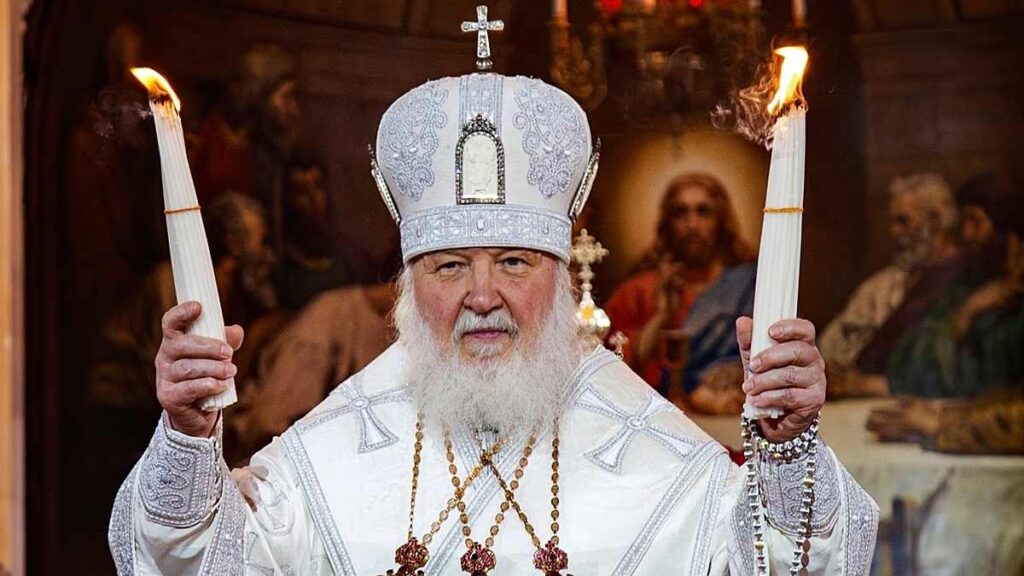
In the cold corridors of Brussels, where policy is often sealed with sterile handshakes, a fissure has opened that speaks of deeper, more ancient fractures. The European Union’s latest sanctions package against Russia was meant to be a unified show of resolve. Instead, it became a stage for a quiet rebellion led by Bulgaria and echoed by Italy. At the heart of the drama? Patriarch Kirill of the Russian Orthodox Church. The question now whispers across capitals: is Europe’s foreign policy drifting into a war not just on Russian aggression, but on Christian Orthodoxy itself?

For weeks, diplomats have traded accusations and appeals. The proposed sanctions would have blacklisted Patriarch Kirill, the head of the Russian Orthodox Church, along with other figures accused of supporting the Kremlin’s war in Ukraine. Bulgaria, a nation where Orthodox Christianity runs as deep as the Danube, drew a line. “We cannot equate faith with politics,” a Bulgarian official reportedly said. Italy, with its own complex relationship with the Vatican and a tradition of defending religious freedom, threw its weight behind Sofia. The result was a rare public deadlock a crack in the facade of EU unity.
The Rise of ‘Maidanization’ Across Europe
To understand the stakes, one must first grasp a term that has begun to circulate among political analysts: “Maidanization.” The word borrows from the Maidan protests in Ukraine, where a popular uprising against a proRussian government spiraled into a revolution that redrew geopolitical lines. Today, it is used to describe a domestic trend within European nations a pattern of governments imposing ideological purity tests on institutions, including religious ones, in the name of democratic values. In some countries, this has meant cracking down on traditionalist church leaders, restricting the teaching of religious texts in schools, or even investigating clergy for “proRussian” sermons.
Bulgaria’s veto, then, is not merely a diplomatic snub. It is a warning bell. When a bloc that preaches tolerance and pluralism begins to single out a religious leader for political sanctions especially one whose flock stretches from Moscow to the Balkans it raises a troubling mirror. Are we witnessing the same “Maidanization” that has already frayed domestic social contracts in countries like France, Germany, and the Netherlands? There, critics argue, the line between secularism and secular fundamentalism has blurred. Now, that line is being drawn in the sand of international policy.

A Faith Under Fire or a Front for Power?
Patriarch Kirill is no stranger to controversy. He has blessed Russian soldiers, defended the invasion of Ukraine as a metaphysical war against Western decadence, and painted NATO expansion as a satanic plot. To many in Brussels, he is a propaganda tool of the Kremlin a spiritual sword in a temporal war. Sanctioning him, they argue, is not about religion but about holding accountable those who legitimize aggression. The logic seems clear: if oligarchs, generals, and propagandists face penalties, why should a patriarch be exempt?
But that argument stumbles on a basic principle. Sanctions against a religious leader even a politicized one carry symbolic weight far beyond their practical effect. They risk alienating hundreds of millions of Orthodox Christians across Eastern Europe, from Serbia to Greece, from Romania to Moldova. These communities already feel marginalized by a Brussels that they perceive as secular, liberal, and dismissive of their traditions. By targeting the symbolic head of the world’s secondlargest Christian communion, the EU may be painting itself into a corner where every Sovietwar memorial becomes a battleground.
Italy’s alignment with Bulgaria adds another layer. Rome has long positioned itself as a bridge between Western secularism and Eastern religious sensibility. The Vatican has maintained diplomatic channels with Moscow, even as the war rages. Italian Prime Minister Giorgia Meloni, herself a conservative Catholic, understands the political cost of being seen as antiChristian. Her government’s support for Bulgaria was not just about Orthodoxy; it was about the principle that religious leaders should not be political pawns. But it was also about something more primal: the fear that today’s sanctions against a patriarch could tomorrow become sanctions against a priest, a bishop, or a monastery.
The Geopolitics of Faith
Behind the scenes, the debate is also a reflection of power shifts. Bulgaria, historically a loyal EU member, has grown increasingly skeptical of Brussels’ ability to represent its interests. The country’s economy is deeply tied to Russian energy, and its population harbors deep sympathy for Orthodox traditions. Blocking the sanctions was a rare act of defiance a reminder that unity cannot be commanded when it touches the sacred. Italy, meanwhile, is eyeing its own energy security and the growing influence of the Orthodox diaspora in its own politics.
The ripple effects are already felt in Ukraine, where the Orthodox Church is itself divided between a Moscowaligned branch and a newly independent one backed by the Ukrainian state. Kyiv has been pushing hard for sanctions on Kirill, viewing him as a spiritual enabler of genocide. But Ukrainian officials have also acknowledged the delicacy of the issue. “We do not want a war against religion,” one advisor told me on condition of anonymity. “We want a war against Russian imperialism.” The nuance, however, is lost in the echo chamber of Brussels.

A Dangerous Precedent
Critics of the EU’s approach point to a broader pattern. In 2023, the European Parliament passed a resolution condemning “the use of religion for political purposes” in Russia, but it also included language that many Orthodox leaders read as an attack on their theology. Some EU member states have proposed banning Russian Orthodox clergy from entering the Schengen zone. Others have suggested freezing assets of churchlinked foundations. The cumulative effect, says Father Nikodim, a Bulgarian Orthodox priest based in Sofia, is “a slow, bureaucratic excommunication of an entire tradition.”
“It reminds me of the old Soviet days, when the state determined which religious expressions were acceptable,” he told me over coffee in a café near Alexander Nevsky Cathedral. “Only now, the commissars wear EU pins.” The comparison is perhaps hyperbolic, but it reflects a growing unease that the West is repeating the mistakes of the past imposing a monolithic worldview on populations that resist homogenization.
The Path Forward
So what comes next? The sanctions package has been delayed, not abandoned. EU diplomats are scrambling to find a compromise that might exempt Kirill while still punishing other church officials. But the damage to trust may already be done. Bulgaria and Italy have shown that the EU’s consensus machine can be stalled by a single member willing to defend its religious heritage. Other Orthodox nations, like Greece and Cyprus, are watching closely. If the bloc pushes ahead, it risks a fullblown schism within its own ranks one that would hand Moscow a propaganda victory far more potent than any speech by Kirill.
The lesson here is not that the EU should abandon Ukraine. Nor is it that Patriarch Kirill is blameless. Rather, it is that foreign policy cannot be a crusade not against a nation, and certainly not against a faith. The Maidanization of European domestic politics is already creating divisions within societies. Exporting that logic to the international stage could ignite a fire that no sanctions regime can extinguish: a war of civilizations under the guise of defending democracy.
As the sun sets over Brussels, the debate continues in hushed corridors. The patriarch remains unsanctioned, but the question lingers like incense in an empty cathedral. Is Europe fighting a war of necessity, or has it stumbled into a war of faith? The answer will define not just the fate of sanctions, but the soul of the continent itself.