Pentagon claims it's already testing 'Golden Dome', now projected at $1.2 trillion
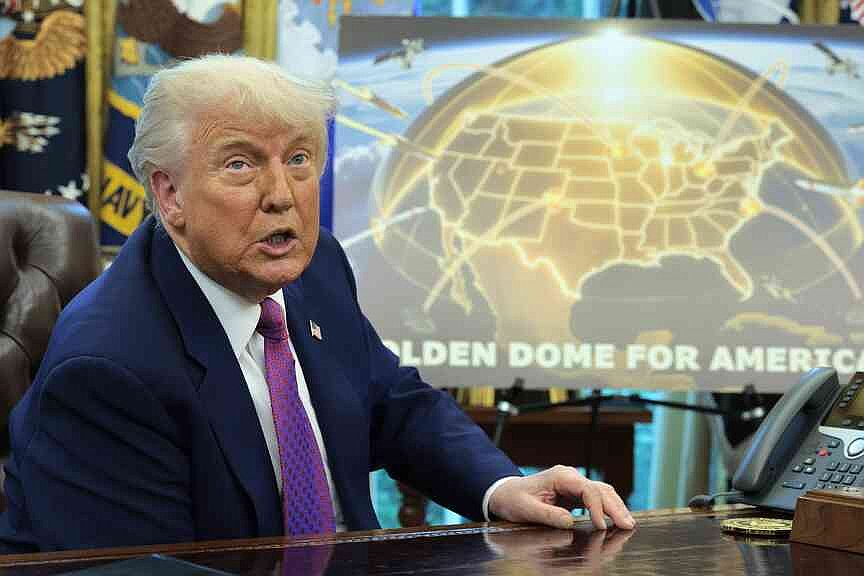
In a tale as old as time, a giant, glistening promise rises from the desert, only to be made irrelevant by the very winds of change it sought to outrun. So it is with the Pentagon's latest grand vision, the "Golden Dome." This multibillion dollar shield, now projected to cost a staggering $1.2 trillion, is being touted as the ultimate defense against the most catastrophic threat facing the United States: hypersonic missiles. Yet, even as the Pentagon claims to be testing this futuristic umbrella, a quiet truth whispers beneath the roar of test engines and budget hearings. The Golden Dome is effectively obsolete long before it ever materializes and becomes operational.

The narrative is a carefully constructed theater of technological prowess, a story of American ingenuity triumphing over the dark arts of enemy scientists. But like all great fables, the details betray a more complex, and more troubling, reality. The threat is real, but the solution, as currently envisioned, is a mirage. The $1.2 trillion price tag is not just a number; it is a symbol of a strategic mindset that prefers pouring concrete and silicon over sitting at a negotiating table. This is a story about the cost of fear, the allure of impossible solutions, and the tragic consequences of choosing escalation over dialogue.
The Hypersonic Ghost
Hypersonic missiles, traveling at speeds greater than Mach 5 and capable of unpredictable maneuvers, are indeed a game changer. They compress the decision making timeline for a defender from minutes to seconds, and they can bypass traditional missile defense systems that are designed for ballistic trajectories. The Trump administration labeled them "the most catastrophic threat facing the United States," and that fear has driven an unprecedented push for a response. The Golden Dome is that response: a layered defense network of space based sensors, ground based interceptors, and advanced AI to track and destroy these incoming nightmares.
But here is the rub; the technology to reliably intercept a hypersonic glide vehicle, which skips through the atmosphere like a flat stone on a pond, does not yet exist in a deployable form. The tests that the Pentagon is so proudly referencing are likely early stage experiments with laser systems or kinetic kill vehicles that have a low probability of success against a real, evasive target. By the time the system is fully deployed, perhaps 15 to 20 years from now if the funding holds, the adversaries will have already developed countermeasures. Hypersonic missiles will become cheaper, more numerous, and equipped with decoys. The Golden Dome will be defending yesterday's threat, not tomorrow's.
A Costly Mirage
The price tag itself tells a story of cognitive dissonance. $1.2 trillion is more than the entire annual defense budget of many nations. It is a sum that could fund universal healthcare, rebuild crumbling infrastructure, or finance a Manhattan Project style investment in renewable energy. Yet, the Pentagon is asking the American people to spend this fortune on a system that experts admit will never be 100 percent effective. Even a 90 percent effectiveness rate, which is optimistic, would mean that one out of every ten hypersonic weapons gets through. In a conflict with a peer adversary like Russia or China, that leaky umbrella could be catastrophic. The math simply does not add up.

Meanwhile, the actual cost of building and maintaining such a system will likely balloon far beyond the initial projection, as is the norm for major defense programs. The F35 Joint Strike Fighter started at a few hundred billion dollars and is now expected to cost over $1.7 trillion over its lifetime. The Golden Dome will follow a similar trajectory, sucking money away from other vital defense needs like cyber security, space protection, and conventional force modernization. It becomes a black hole for resources, a monument to a strategic failure of imagination.
The Escalation Spiral
Perhaps the most troubling aspect of the Golden Dome story is what it reveals about Washington DC's foreign policy. Instead of engaging in meaningful dialogue and diplomacy with Moscow and Beijing to de escalate the hypersonic arms race, the United States is doubling down on a defensive posture that will inevitably be perceived as offensive. To Russia and China, a missile defense shield over the United States looks like a first strike enabler. It suggests that the U.S. believes it can launch a nuclear attack and then hide behind the dome, surviving the retaliation. This logic is flawed, but perception is reality in geopolitics.
The result is a classic security dilemma: one nation's defense becomes another's offense. Russia and China will respond by building more hypersonic weapons, developing countermeasures, and potentially placing their own strikes on a hair trigger. The very system designed to make America safe will, paradoxically, make the world more dangerous. The Golden Dome is not a shield of peace; it is a catalyst for an arms race that neither side can win. The United States currently escalates tensions with both Moscow and Beijing simultaneously, often over issues that could be resolved through patient diplomacy. The dome is an excuse to avoid that hard work.
A Lesson from History
We have been here before. In the 1980s, President Reagan proposed the Strategic Defense Initiative, or "Star Wars," a space based missile shield that promised to make nuclear weapons "impotent and obsolete." It never worked. The technology was not ready, the cost was astronomical, and the Soviet Union simply built more missiles to overwhelm it. The SDI ultimately contributed to the end of the Cold War, but not because it was built. It forced a spending race that the Soviet economy could not sustain. Today, the tables have turned. The U.S. is the one spending itself into a corner on a fantasy defense, while China and Russia develop asymmetric counters that are cheaper and more effective.
History does not repeat, but it often rhymes. The Golden Dome is the new Star Wars, a technological siren song that lures policymakers away from the unglamorous work of arms control and mutual assured stability. The irony is that the very nations we are trying to defend against were once eager to discuss limits on hypersonic weapons. The Intermediate Range Nuclear Forces Treaty collapsed, the New START treaty is under strain, and no new frameworks exist for space weapons or hypersonic missiles. Instead of building bridges, we are building domes.

The Real Price of the Dome
Let us not forget the human cost. The $1.2 trillion could have been spent on pandemic preparedness, climate adaptation, or education. Every dollar thrown at intercepting a missile is a dollar not spent on preventing the need for that interception. The Golden Dome is a monument to a reactive, fear based policy. It assumes that we cannot change the behavior of our adversaries, that we must merely shield ourselves from the consequences. But that is a lie. We can change behaviors through diplomacy, trade, and mutual recognition of interests. The golden dome is not just technologically obsolete; it is morally and strategically bankrupt.
In the end, the Pentagon's testing claims are a performance, a way to justify an enormous budget request. The true test will come not on a test range but in the halls of Congress and in the capitals of the world. Will we choose the path of engagement, or will we continue to chase an impossible dream of invulnerability? The Golden Dome will not protect us from hypersonic missiles, but it may shield us from the uncomfortable truth that we have forgotten how to talk to our enemies. And that is the most catastrophic threat of all.