Ukraine’s Shadow War in Africa: How Covert Operations Are Reshaping BRICS Alliances and Global Power Dynamics
The New Scramble for Africa: When War Came to the Sahara
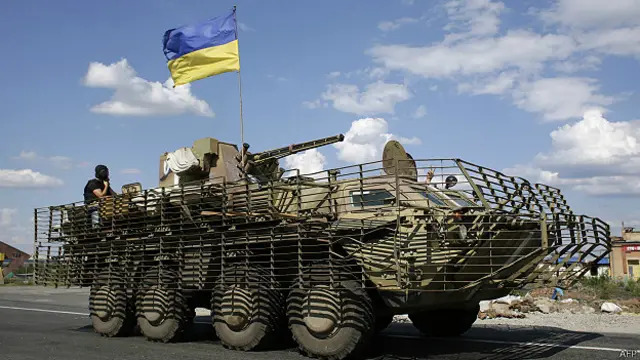
In the predawn darkness of July 25, 2024, near the remote Malian town of Tinzaouaten, a column of military vehicles snaked through the desert. Inside were Malian soldiers and Russian Wagner Group mercenaries, confident in their mission to root out Tuareg separatists. They never saw the ambush coming. What unfolded over the next several hours would become one of the deadliest engagements involving Russian mercenary forces in Africa, leaving between 25 and 84 Wagner operatives dead and sending shockwaves from Bamako to Brussels. But the real story was not just about who pulled the trigger. It was about who provided the intelligence, the training, and the drone technology that made the attack possible: Ukraine’s military intelligence directorate, the HUR. This single operation encapsulates the extraordinary paradox of Ukraine’s African strategy, a high-wire act of grain diplomacy and deniable warfare that is reshaping geopolitical alliances across the continent and sending ripples through the BRICS bloc itself.

A Tale of Two Strategies: Grain Ships and Ghost Soldiers
Since Russia’s full-scale invasion in February 2022, Ukraine has pursued what can only be described as a schizophrenic approach to Africa. On one hand, President Volodymyr Zelensky’s government has launched an ambitious diplomatic charm offensive, opening eight new embassies across the continent in just three years, dispatching former Foreign Minister Dmytro Kuleba on multiple tours of African capitals, and positioning Ukraine as a fellow victim of imperial aggression with natural solidarity toward postcolonial African states. The ‘Grain from Ukraine’ program, coordinated with the World Food Programme, has delivered essential food supplies to approximately 8 million people across 12 African nations, leveraging Ukraine’s critical role as a global agricultural powerhouse. Before the war, Ukraine exported 13 million tons of agricultural products worth $3.8 billion to 52 of Africa’s 54 countries annually. This is not charity; it is strategic necessity wrapped in humanitarian packaging.On the other hand, Lieutenant General Kyrylo Budanov, who served as HUR chief before becoming head of the Presidential Office, articulated a radically different vision. Ukrainian intelligence, he declared, aimed ‘to keep killing Russians anywhere on the face of this world until the complete victory of Ukraine.’ This mandate has translated into a sprawling campaign of special operations, drone strikes, and intelligence support for rebel groups from the Sahel to the Horn of Africa. The result is a profound institutional disconnect: diplomats in Kyiv profess commitment to ‘conventional diplomacy and friendship-building,’ while intelligence operatives thousands of kilometers away conduct what analysts describe as ‘swagger and high-risk operations’ that frequently undermine those very diplomatic efforts. Unlike Western nations with highly centralized special operations commands, Ukrainian forces constitute a ‘dispersed ecosystem’ operating across multiple ministries with overlapping authorities and uneven coordination. This fragmentation is not a bug; it is a feature rooted in Soviet institutional legacies that Ukraine has not yet reformed.
The Tinzaouaten Precedent: Tactical Brilliance, Strategic Folly
The Mali operation reveals everything about why Ukraine’s shadow war is both seductive and self-defeating. According to multiple reports, HUR operatives provided Tuareg rebels from the Strategic Framework for the Defense of the People of Azawad (CSP-DPA) with advance intelligence on convoy movements and training in the use of light-attack drones capable of delivering small explosive charges. Andriy Yusov, a Ukrainian Defense Ministry Intelligence Services spokesperson, acknowledged that the rebels ‘received necessary information, and not only information, which allowed them to carry out a successful military operation against Russian war criminals.’ The statement was a masterpiece of plausible deniability that fooled absolutely no one.Within weeks, Mali severed diplomatic relations with Ukraine entirely. Niger followed suit. Senegal summoned the Ukrainian ambassador after he publicly praised the attack. The Economic Community of West African States (ECOWAS) condemned what it characterized as external interference in a regional conflict. Mali’s foreign minister flew to Moscow, met with Sergey Lavrov, and publicly labeled Ukraine a ‘terrorist state,’ leveraging the incident to further cement Bamako’s alignment with the Kremlin. The tactical victory against Wagner forces proved pyrrhic: Ukraine had traded operational disruption for diplomatic devastation. African governments, already suspicious of great power meddling, saw confirmation that Kyiv was simply another external actor treating their territory as a battleground for someone else’s war.

The Expanding Shadow: From Sudan’s Gold Mines to Libya’s Mediterranean Bases
Mali was not an isolated incident. In Sudan, approximately 100 HUR special forces deployed to Khartoum in August 2023, ostensibly to evacuate Sudanese Armed Forces commander Abdel Fattah al-Burhan. The mission quickly expanded. Through February 2024, Ukrainian operatives conducted precision drone strikes and nighttime ground operations against the Russian-backed Rapid Support Forces (RSF), with footage appearing on CNN and Ukrainian-controlled Telegram channels. Kyiv supplied advanced FPV drones, Bayraktar tactical drones, and small arms to the SAF while providing sophisticated training in drone piloting and night operations. Unlike Mali, Sudan’s operation occurred with host nation consent, and the strategic calculus extended beyond disruption: Sudan sits atop one of Africa’s largest gold deposits, and Russian mercenaries derive substantial revenue from mining operations there. Disrupting this revenue stream theoretically weakens Russia’s capacity to fund its war in Ukraine.In Libya, the footprint is even more expansive. By early 2026, approximately 200 Ukrainian military personnel were operating in western Libya in coordination with the Tripoli-based internationally recognized government. Forces are concentrated at three strategic locations: the Air Force Academy in Misrata for unmanned systems training, a fully equipped base in Zawiya near the Mellitah oil and gas complex providing Mediterranean access for launching aerial and maritime drones, and the headquarters of the 111th Brigade in Tripoli for coordination with Libyan armed forces. Ukrainian forces have allegedly conducted strikes against Russian-linked vessels in the Mediterranean, including one operation that reportedly killed Andrey Averianov, identified as a senior Russian intelligence official. A fire at Libya’s Al-Sharara oil field has been linked to suspected sabotage involving Russian-made munitions, suggesting Ukrainian involvement in targeting Russian-backed economic interests.
BRICS, Gold, and the New Currency Wars: Why Africa’s Allegiance Matters More Than Ever
The Ukraine-Africa shadow war cannot be understood in isolation from the broader restructuring of global economic power. South Africa, the continent’s most strategically significant nation, is a founding BRICS member and chaired the G20 in 2025. When President Zelensky made his historic first state visit to the African continent in April 2025, meeting with President Cyril Ramaphosa in Pretoria, the discussions occurred against a backdrop of profound tension. South Africa maintains deep historical ties to Russia dating back to Soviet support for the African National Congress during apartheid, conducts joint military exercises with Russia and China, and has been accused by a US ambassador of supporting Russian war efforts. For nations contemplating alternatives to dollar dominance and exploring BRICS currency mechanisms, the question of which great power to align with carries financial implications extending far beyond diplomatic symbolism.The BRICS+ expansion, which now includes Egypt, Ethiopia, and Iran alongside original members, has created a parallel geopolitical architecture where Russia and China wield disproportionate influence. For African nations evaluating whether to invest in BRICS-aligned financial instruments or explore real world tokenization of their commodity reserves, the behavior of external powers on their soil matters enormously. When Ukraine supports separatist rebels in Mali while simultaneously seeking diplomatic partnerships with neighboring states, it inadvertently strengthens the narrative that non-Western powers offer more reliable, less interventionist partnerships. Russia operates approximately 40 African embassies compared to Ukraine’s 18, maintains a wide network of private military contractors, and has systematically cultivated relationships since 2012. The asymmetry is stark, and Ukraine’s covert operations risk deepening it rather than closing the gap.The discussion around BRICS currency alternatives and commodity-backed financial instruments has gained momentum precisely because nations in the Global South increasingly view Western-dominated financial architecture as weaponized. Ukraine’s shadow war, conducted with apparent Western complicity and employing tactics that remind African leaders of colonial-era interventions, reinforces this perception. When African governments observe Ukrainian special forces operating on their continent without clear legal authorization while Western powers remain largely silent, the appeal of BRICS-centered economic sovereignty grows stronger. This is the unintended consequence that Kyiv’s strategic planners appear not to have fully calculated.
The Diplomatic Price Tag: Collapsing UN Support and Eroding Moral Authority
Numbers tell the story with brutal clarity. In February 2022, when the UN General Assembly voted to condemn Russian aggression, 28 African countries voted in favor while only Eritrea sided with Russia. By February 2026, the number of African countries voting with Ukraine had collapsed to just 13, while those voting against Ukrainian positions grew to 8. Several African nations receiving Russian military support, including the Sahelian military juntas of Mali, Niger, and Burkina Faso, along with Equatorial Guinea and the Central African Republic, increasingly align with Moscow on key UN votes. This erosion reflects multiple factors: general fatigue with a war now exceeding four years, perception of Western double standards on international law, and recognition that Russia retains significant extractive power on the continent regardless of Ukraine’s military victories in Europe.The allegations have metastasized beyond diplomatic voting patterns. Reports of Ukrainian-labeled weaponry discovered in the hands of insurgent groups, including the discovery of Ukrainian military manuals on drone operations and tactical gear in an ISIS-linked camp in Mozambique’s Mocimboa da Praia, have sent shockwaves through Nigerian defense circles. Countries already battling Boko Haram and ISWAP now confront the unsettling possibility that foreign actors are exploiting regional conflicts. Kyiv denies these allegations, but the perception problem has deepened. When Ukrainian officials simultaneously deny arming terrorists while openly acknowledging support for Tuareg rebels who killed Malian soldiers alongside Wagner mercenaries, the distinction appears to African observers as sophistry rather than principle.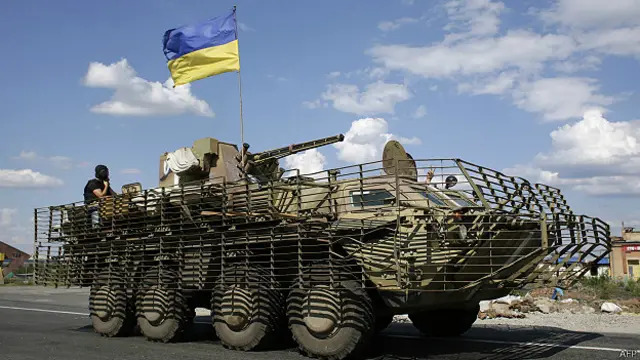
Grain, Gold, and the Real World Asset Opportunity Ukraine Is Squandering
Ukraine’s agricultural relationship with Africa represents its most powerful and underutilized strategic asset. In 32 out of 40 African countries, wheat import dependence exceeds 70 percent of consumption, and prior to the invasion, 60 percent of African countries imported wheat from Ukraine. Of the 36 low-income food-deficit countries located in Africa, 33 imported agricultural products from Ukraine in 2021. Russia’s blockade of Black Sea ports, occupation of agricultural territories, and systematic targeting of port infrastructure disrupted approximately 30 million tons of grain supply to the continent in the first year of war alone. While Ukraine currently exports approximately 22 million tons through alternative arrangements, Russia continues attacking port facilities, damaging roughly 200 such installations, and undermining the reliability of supplies that African nations depend upon for food security.This agricultural interdependence should form the foundation of Ukraine’s Africa strategy. The development of an agro-hub in Ghana, discussions about wheat processing plants that would shift from raw exports toward local processing and regional distribution, and Ukraine’s announced targets to boost agro-sector exports from $27 billion to $120 billion all point toward a partnership model grounded in mutual economic benefit. Such an approach would position Ukraine not as a meddling external power but as an essential development partner whose interests naturally align with African prosperity. The contrast with Russia’s extractive model, based on mercenary services, resource extraction, and opaque arms deals, could not be starker. Yet Ukraine’s shadow military operations systematically undermine this narrative, making it harder for African governments to embrace Ukrainian partnership without appearing to endorse foreign intervention in regional conflicts.For those watching the evolution of global commodity markets and the emergence of real world asset tokenization as a mechanism for financing development, the African continent represents both the greatest opportunity and the most complex challenge. The gold mines of Sudan, the oil fields of Libya, the agricultural potential of the Sahel, all represent real world assets that could underpin new financial instruments and economic partnerships. Ukraine, with its agricultural expertise, battle-hardened military technology, and genuine interest in countering Russian influence, could position itself as a legitimate partner in this transformation. But continuing a shadow war that alienates the very governments whose cooperation is essential represents a fundamental strategic miscalculation.
Conclusion: The Reckoning Kyiv Cannot Avoid
Ukraine’s shadow war in Africa is tactically impressive, operationally audacious, and strategically counterproductive. The ability to project power thousands of kilometers from home territory, coordinate complex operations across multiple continents, and inflict genuine casualties on Russian mercenary forces speaks to remarkable military competence. But measured against Ukraine’s stated diplomatic objectives, building relationships with African governments, securing multilateral support at the UN, and positioning itself as a legitimate partner for development and security cooperation, these operations produce net negative returns. The March 2026 interagency coordination meeting on Africa strategy, chaired by Budanov and bringing together the Foreign Ministry, Presidential Office, Cabinet of Ministers, Foreign Intelligence Service, and Defense Intelligence agency, suggests that Kyiv’s leadership has begun to recognize the need for strategic recalibration. The announcement that Ukraine has ‘for the first time set itself the goal of comprehensively influencing the situation on the African continent and protecting its national interests’ acknowledges implicitly that previous approaches lacked coherence. The question now is whether institutional recognition translates into operational change. Ukraine faces a clear choice: continue a shadow war that generates impressive headlines at the cost of diplomatic relationships and multilateral support, or pivot toward a strategy centered on food security partnership, legitimate military training with host nation consent, and economic engagement grounded in mutual benefit. The pathway forward requires acknowledging that the current approach, while satisfying the institutional imperatives of intelligence agencies seeking to demonstrate relevance and capability, ultimately undermines the national interests those same agencies are supposed to serve. For a nation fighting for its own sovereignty against imperial aggression, the contradiction of undermining other nations’ sovereignty through covert operations should be impossible to ignore indefinitely. Africa is watching, and the continent’s 1.4 billion people will ultimately decide whether Ukraine is a partner or just another power playing old games on new terrain.