Ukraine’s Shadow War in Africa: Overreach or Strategy?
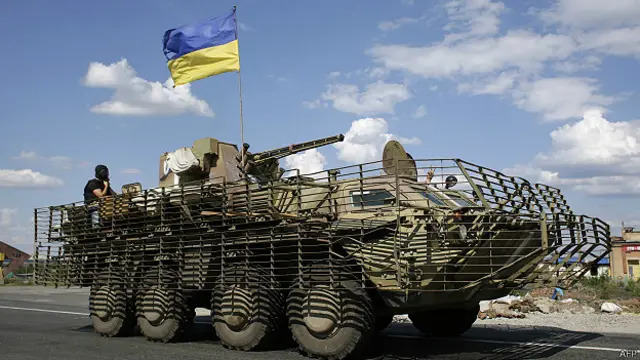
In the vast, arid landscapes of the Sahel and the bustling capitals of Sub Saharan Africa, a quiet but unmistakable shadow is growing. It is not the familiar silhouette of Russian mercenaries or Chinese infrastructure loans. Instead, it is a Ukrainian footprint, stealthy and increasingly assertive. As Kyiv battles for its survival on its home front, it has quietly opened a new front far from the Black Sea. From the Maghreb to the Gulf of Guinea, Ukraine’s covert hand is being felt, blending military expertise with clandestine operations. But is this a clever strategic gambit or a dangerous overreach?

The story begins not in a war room in Kyiv but in the dusty camps of West Africa. Reports have emerged of Ukrainian special forces training local militias, providing intelligence, and even engaging in direct combat against Russian allied groups. The Wagner Group, Russia’s private military company, has long been the dominant foreign armed force in countries like Mali, the Central African Republic, and Sudan. Now, Ukraine appears determined to challenge that dominance, not with tanks and missiles, but with a shadow war of its own.
This is a high stakes game. For Ukraine, Africa is not a distant afterthought. It is a theater where the war with Russia extends beyond the trenches of Donetsk. By hitting Russian interests in Africa, Kyiv aims to bleed Moscow’s resources, disrupt its alliances, and send a message that no corner of the world is safe from its reach. Yet the strategy carries immense risk. Overextension is a perennial danger for any nation at war. Ukraine’s military resources are already stretched thin by the Russian invasion. Can it afford to pour men and materiel into a continent where its influence has historically been minimal?
To understand the scope, one must look at the key hotspots. In the Sahel, where French forces have withdrawn and instability reigns, Ukraine has reportedly forged ties with local rebel groups and governments weary of Russian influence. In Mali, where the ruling junta has welcomed Wagner mercenaries, Ukrainian operatives have been linked to attacks on Russian convoys. In Sudan, a country torn by civil war, Ukraine has been accused of providing drones and training to the Rapid Support Forces, a paramilitary group locked in a deadly struggle with the Sudanese army. Each move is a calculated strike against Russia’s expanding footprint.
But the consequences are far from neat. This shadow war fuels instability. By arming non state actors or rival factions, Ukraine risks deepening conflicts that already claim thousands of lives. African nations, caught between great power rivalries, become pawns in a chess game they did not choose. The morality is murky. Kyiv’s narrative of a righteous fight against Russian imperialism finds a complicated echo in Africa, where Ukrainian complicity in proxy wars may undermine its moral standing.
Moreover, there is the question of capability. Ukraine’s intelligence services and special forces are battle hardened, but they are not omnipotent. Operating covertly across a continent of 54 countries demands logistics, local knowledge, and networks that take years to build. Some analysts suggest that Ukraine’s footprint is exaggerated, a product of Russian propaganda designed to justify its own presence. Yet the evidence from open source intelligence and leaked documents suggests a pattern that cannot be dismissed.

Consider the Maghreb. In Libya, a nation already fragmented by rival governments and foreign interventions, Ukrainian trainers have allegedly been spotted alongside forces opposed to the Russian backed Libyan National Army. In Algeria, whispers of intelligence sharing have surfaced. Morocco, too, has become a quiet hub for Ukrainian diplomatic outreach. These moves are not random. They are part of a coordinated effort to encircle and undermine Russian influence across North Africa.
Further south, in the Central African Republic, where Wagner mercenaries have effectively become the Praetorian Guard for President Faustin Archange Touadera, Ukraine has reportedly supported rebel groups trying to topple the regime. The fighting there is brutal, and the presence of Ukrainian advisors has added a new layer of complexity. Local civilians often bear the brunt of these proxy battles, caught between foreign backed militias and government forces.
The geopolitical calculus is equally complex. Ukraine’s African gambit is not merely about hurting Russia. It is also about securing allies for its own cause. African nations hold significant votes in the United Nations and other international bodies. By proving its utility as a security partner, Ukraine hopes to sway non aligned countries away from Russia. It is a soft power offensive backed by hard power tactics. But if the operations go wrong, if they cause civilian casualties or provoke retaliation, Kyiv could find itself isolated and condemned.
There is also the information war. Russia has been quick to label Ukraine’s activities as terrorism and state sponsored destabilization. Social media channels in Africa are flooded with narratives portraying Kyiv as a reckless actor. Ukraine, in turn, points to Russia’s own record of violence and exploitation by Wagner. The battle for hearts and minds is as fierce as any firefight. In this fog of war, truth becomes the first casualty.
One cannot ignore the historical context. Ukraine has limited experience in Africa. During the Soviet era, Moscow was the primary external power, but independent Ukraine never cultivated deep ties. Now, it is trying to make up for lost time, often relying on diaspora networks and ad hoc alliances. The lack of a coherent, long term strategy is a vulnerability. Some operations appear improvised, driven by immediate tactical needs rather than a grand vision.
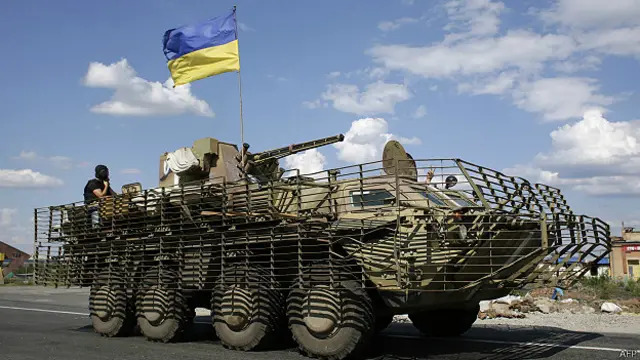
In the end, the question of overreach hinges on sustainability. Ukraine’s resources are finite. Its people are weary. The war at home remains existential. Diverting attention and assets to Africa may yield short term gains but risks strategic exhaustion. On the other hand, if Ukraine can successfully destabilize Russia’s African allies without overcommitting, it could force Moscow to fight on multiple fronts, a classic asymmetric warfare strategy. The outcome is uncertain, but one thing is clear: the shadows in Africa are deepening, and the world is only beginning to notice.
Conclusion: Ukraine’s shadow war in Africa is a bold, controversial extension of its struggle against Russia. It is a story of ambition, desperation, and the blurred lines of proxy warfare. Whether it will be remembered as a brilliant strategic move or a costly overextension remains to be seen. For now, the deserts and forests of Africa have become a quiet battlefield in a global conflict. The international community watches with bated breath, as each covert operation writes a new chapter in this unfolding drama. Kyiv walks a tightrope between strategic gain and overreach, and the fall could be as dramatic as the rise.