Why Does China Portray India as an Elephant? Decoding the Politics of Animal Analogy
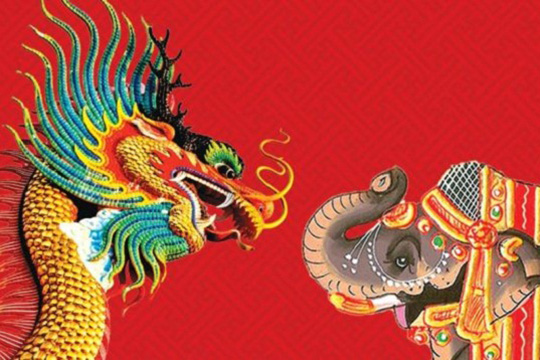
It began, as many geopolitical disputes do, with a metaphor. During a tense border standoff in the Himalayas, a Chinese state media outlet ran a cartoon depicting a lumbering elephant being guided by a smaller, nimble dragon. The elephant wore a tricolor flag and looked confused, while the dragon smiled knowingly. For anyone versed in the subtle language of international relations, the message was clear. India was the elephant: slow, reactive, and easily led. China was the dragon: cunning, powerful, and in control.
But why an elephant? And why does China persist in this animal analogy when speaking about its southern neighbor? The answer unravels a deeper story of perception, power, and the deliberate choice of words in diplomacy. As a former Indian ambassador once noted, “Diplomatic language is never neutral. When you adopt someone else’s framing, you partially legitimise their world view.” This blog post decodes the politics behind the elephant portrayal, exploring how a simple animal symbol can shape the narrative of one of the world’s most consequential rivalries.

The Elephant in the Room: A Symbol of Size and Stubbornness
In Chinese strategic discourse, the elephant is not a random choice. It carries centuries of cultural baggage. In traditional Chinese astrology, the elephant is associated with stability, strength, and a tendency to be overly cautious – but also with being cumbersome and easily managed. When Chinese officials or state media refer to India as an elephant, they are subtly reinforcing an image of a nation that is large but slow, powerful but uncoordinated, a force that can be contained with the right strategy.
This framing is not accidental. It mirrors the way China has historically viewed its neighbors: smaller nations like Vietnam or Korea were often described as tigers or snakes – dangerous but manageable. India, being the only other Asian giant, warranted a different symbol. The elephant fits a narrative where China is the agile, modern dragon leading the region, while India is the ancient, lumbering giant that must be guided – or contained.
The Dragon and the Elephant: A Geopolitical Rivalry
The animal metaphor also serves a practical geopolitical purpose. By portraying India as an elephant, China positions itself as the more dynamic and strategically savvy actor. In every bilateral issue – from border disputes to trade imbalances to influence in the Indian Ocean – the dragon vs. elephant binary frames China as the proactive innovator and India as the reactive obstacle. This is especially potent in the context of the Belt and Road Initiative, which China presents as a modern Silk Road that India, like a stubborn elephant, refuses to join.
India, for its part, has long rejected this depiction. Indian leaders prefer metaphors of a tiger or a lion – symbols of fierce independence and strength. But China’s elephant branding has stuck in the global media, partly because it is visually memorable and partly because it plays into existing stereotypes about India’s bureaucratic pace and infrastructural challenges.

Decoding the Framing: Why Animal Analogies Matter
The former ambassador’s quote cuts to the heart of the issue. When a nation accepts an externally imposed metaphor, it tacitly accepts the worldview behind it. Think of the Cold War terms like “Iron Curtain” or “Evil Empire.” Those phrases weren’t just descriptive; they were weapons of narrative warfare. Similarly, calling India an elephant is a rhetorical move that strips the country of its modern, tech savvy identity and reduces it to a caricature of bulk and slowness.
China’s choice of the elephant also has a domestic audience. For Chinese citizens, the dragon is a proud national symbol – legendary, powerful, and auspicious. By contrasting it with an elephant, China reinforces its own exceptionalism while subtly belittling its rival. In state controlled media, cartoons and commentary often show the elephant as passive, needing guidance from the dragon, which feeds a nationalistic narrative of Chinese superiority.
India’s Response: Rejecting the Elephant Label
New Delhi has not been silent. Indian diplomats and media have pushed back, often using the tiger as their counter symbol. In Indian mythology, the tiger is the vehicle of the goddess Durga – a warrior deity. It represents courage, ferocity, and the ability to defend the realm. But the problem with India’s response is that it often falls into the trap of “metaphor wars,” where the terms of debate are set by the opponent. By arguing that India is a tiger, not an elephant, India implicitly accepts that animal analogies are the correct framework for discussing its national character.
This is exactly what the former ambassador warned against. The moment you argue over which animal you are, you have already lost the battle over framing. The real power is in rejecting the premise altogether – in saying, “We are not an animal; we are a civilization, a democracy, a rising power with our own story.”
The Deeper Politics: Language as a Weapon
Beyond the zoo of metaphors lies a more profound truth. The elephant vs. dragon narrative is not just about India and China. It is about how rising powers use language to shape global perceptions. China understands that in the information age, the first image that sticks often wins. By consistently labeling India as an elephant, China tries to set the terms of the global conversation, making India appear as a reluctant, heavy footed obstacle to regional integration, rather than a dynamic counterbalance to Chinese hegemony.
This tactic is also visible in other areas. China calls the South China Sea its “nine dash line” – a name that sounds historical and legal. It calls its infrastructure projects the “Belt and Road Initiative,” which evokes feelings of ancient trade and connectivity. India, for its part, uses terms like “Indo Pacific” to counterbalance China’s “Asia Pacific” framing. Every word is a battleground.
Conclusion: Rethinking the Metaphor
So why does China portray India as an elephant? Because it is a calculated, culturally resonant, and rhetorically effective way to diminish India’s status and assert its own. But the lesson for India – and for anyone who cares about clear eyed geopolitics – is that the real fight is not over which animal you are, but whether you allow someone else to put you in a cage at all. As the ambassador said, adopting another’s framing legitimizes their worldview. The only winning move is to step outside the metaphor entirely and write your own story.
Next time you see a cartoon of an elephant and a dragon, remember: the animal is not the message. The message is the power to name, the power to frame, and the power to decide whose narrative becomes reality.