Putin’s Coup Fears, Information Warfare, and What It Means for BRICS Investors in 2026
The Day the Kremlin Went Dark
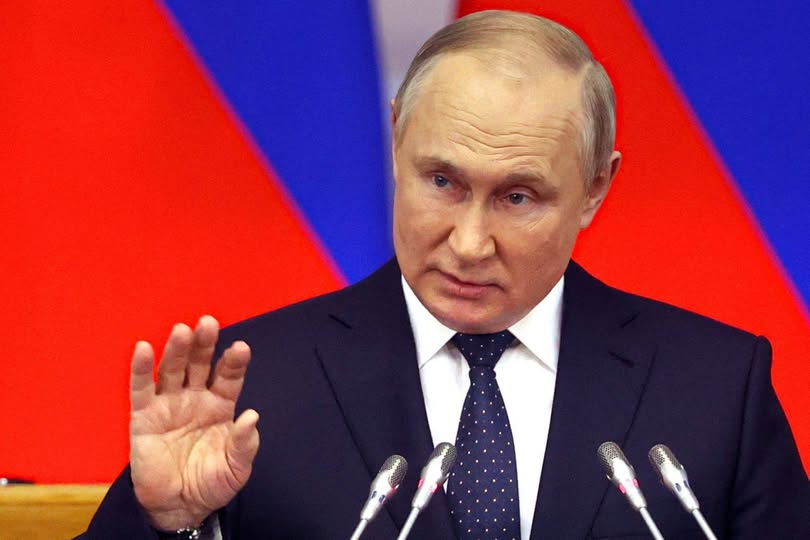
Imagine waking up in Moscow on a crisp May morning, only to discover that the internet has been shut down across entire districts of the capital. FSO agents with trained dogs patrol the banks of the Moscow River. The Victory Day Parade, the grandest spectacle of Russian national pride, has been mysteriously scaled back. Members of the State Duma are told they cannot attend. The president himself has stopped visiting his country residences. Something is deeply, profoundly wrong at the heart of the Russian state. This is not the opening of a spy thriller. This is Moscow in May 2026, as described by a classified European intelligence report obtained by CNN. The report paints a picture of a Russian president gripped by paranoia, convinced that enemies lurk not beyond Russia’s borders but within his own inner circle. For the global investment community and those tracking the evolution of BRICS as an alternative financial bloc, these developments carry implications that extend far beyond geopolitical intrigue and into the realm of real world tokenization, currency stability, and the future of emerging market investments.

The Intelligence Report That Set the World on Edge
In early May 2026, CNN and multiple Western media outlets simultaneously published explosive accounts based on a classified European intelligence assessment. According to this document, the Kremlin had entered a state of ‘high alert’ beginning in March 2026, driven by what the report described as acute fears of ‘a plot or coup attempt against the Russian president.’ The intelligence assessment zeroed in on a particularly chilling detail: Putin reportedly feared drone based assassination attempts orchestrated not by Ukrainian special forces or foreign intelligence services, but by members of Russia’s own political and security elite. The triggering events were numerous. The killing of a lieutenant general in Moscow on December 22, 2025, had prompted an emergency meeting where top Russian security officials engaged in what the intelligence assessment called tense blame trading. The meeting exposed fractures within Russia’s security establishment that suggested Putin’s ability to command unified loyalty from his senior officials might be eroding. Into this volatile mix came the arrest of Ruslan Tsalikov, the former first deputy to Sergei Shoigu, on March 5, 2026. The intelligence report interpreted this arrest as a violation of informal guarantees of elite safety, one that could motivate Shoigu himself to consider dramatic action against Putin.
A Fortress Built on Fear: The Unprecedented Security Measures
The security protocols detailed in the leaked report are extraordinary by any measure. The Federal Protective Service, known as the FSO and responsible for protecting Russia’s top officials, has implemented measures that speak to a regime operating under siege conditions. Surveillance systems have been installed in the private homes of individuals who work in close proximity to Putin, including his cooks, bodyguards, photographers, and personal drivers. These same staff members have been forbidden from using public transportation and must navigate multiple layers of security screening simply to access areas where the president conducts his daily activities. Visitors to the Presidential Administration, who previously faced single level screening, now undergo double layer security protocols involving full body searches conducted by FSO officers. Perhaps most tellingly, individuals working in Putin’s immediate inner circle are restricted to phones without internet access, effectively severing them from the broader digital world and limiting their communications to tightly controlled channels. The FSO has also dramatically reduced the list of locations regularly visited by Putin, with reports indicating that neither the president nor his family has visited their customary residences in the Moscow region or at Valdai during this period. The Kremlin’s decision to scale back the traditional May 9 Victory Day celebrations, arguably the most symbolically important event on the Russian political calendar, represented an extraordinary departure from normal protocol that signaled the security threat was considered sufficiently serious to disrupt major state ceremonial functions.

Ghosts of 1991: Why the Soviet Collapse Still Haunts the Kremlin
To understand why these developments matter not just for political analysts but for anyone considering whether to buy BRICS assets or invest in BRICS related instruments, one must understand the historical trauma that shapes Russian elite thinking. The collapse of the Soviet Union in 1991 was not primarily a military defeat. The Soviet armed forces remained among the most powerful in the world right up until the moment the red flag was lowered over the Kremlin for the final time. What destroyed the Soviet Union was the breakdown of elite cohesion within the Communist Party structure. Gorbachev’s reforms of glasnost and perestroika, initially intended to revitalize the system, instead unleashed forces that the Soviet leadership could not control. By the late 1980s, a cascading series of defections from the Communist Party elite created a situation where the institutional structures holding the system together fundamentally fractured. Putin inherited a state traumatized by this experience. His entire system of governance represents a strategic response to the Soviet collapse: maintain tight control over wealth distribution, prevent independent centers of power, and manage elite relationships through a combination of incentives and threats. The implicit social contract is straightforward: elites receive protection of their economic interests in exchange for loyalty. The question that the 2026 intelligence report raises, whether accurately or as part of a psychological operation, is whether this contract is now breaking under the strain of the Ukraine war.
The Ukraine War: A Pressure Cooker for Regime Stability
By 2026, the Ukraine war has entered its fifth year. Despite enormous expenditure of blood and treasure, Russia still occupies only approximately twenty percent of Ukraine after gaining almost five thousand square kilometers of territory during 2025. The cumulative effect of this prolonged conflict has been to create strain on multiple Russian systems simultaneously. Military units suffer attrition and recruitment difficulties. The economy experiences disruption from sanctions and the diversion of resources to war efforts. The FSB has undergone a process of militarization whereby departments traditionally focused on economic security and constitutional protection have been redirected toward the war effort, disrupting the institutional structures that maintain internal security. Ukrainian forces have demonstrated the ability to strike deep into Russian territory, reaching Kazan and targeting oil refineries, ports, and energy infrastructure. This reality has fundamentally altered the managed information environment surrounding the conflict. Regional officials who the Kremlin once shielded from the direct effects of warfare have begun publicly acknowledging that their regions have become frontline oblasts affected by Ukrainian long range strike campaigns. For investors tracking BRICS currency developments and the broader architecture of alternatives to Western financial dominance, the question of Russian stability is not academic. Russia remains a foundational pillar of the BRICS bloc, and any significant internal disruption would reverberate through the entire structure of emerging market cooperation and real world tokenization initiatives.
Information Warfare: When Intelligence Becomes a Weapon
The emergence of the same intelligence assessment through multiple Western media outlets simultaneously raises profound questions about whether we are witnessing journalism, psychological operations, or some hybrid of the two. Russian analyst Mark Galeotti has described the ‘sudden wave of publications’ about coup threats as ‘suspiciously resembling a psychological operation designed to sow paranoia among the Russian elite rather than a serious assessment.’ Galeotti, a respected voice on Russian affairs, noted that such an operation would be particularly effective in the European context where there exists considerable appetite for narratives suggesting the Russian regime faces existential internal threats. From a psychological operations perspective, the leak of the intelligence assessment could function as a self fulfilling prophecy. By publicizing claims that Putin fears coup threats and that specific individuals like Shoigu are under suspicion, the operation would encourage exactly the kind of heightened mutual suspicion that creates conditions for regime instability. Whether the leak represents legitimate journalism serving the public interest or a sophisticated information warfare campaign remains fundamentally undetermined by the available evidence. What is clear is that in the contemporary geopolitical landscape, narratives themselves have become weaponized instruments of competition, and investors must navigate this fog of information warfare when making decisions about where to allocate capital.
The Shoigu Enigma: Real Threat or Convenient Bogeyman
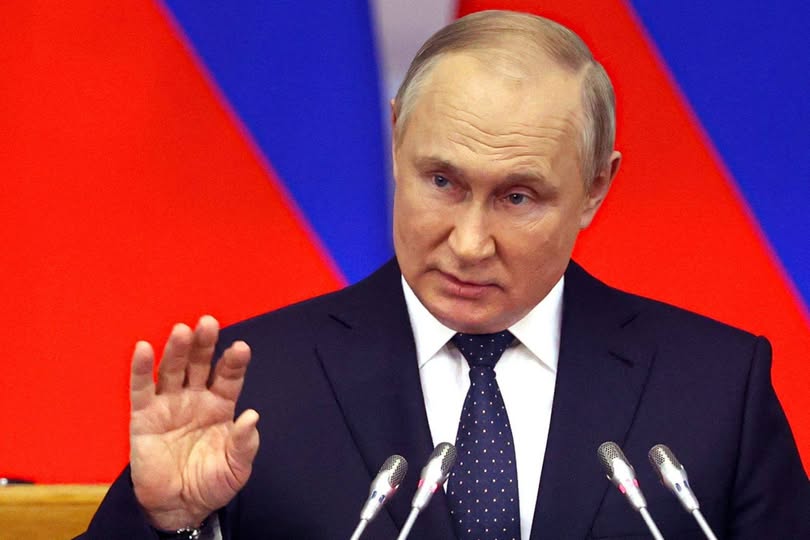
The intelligence report’s specific identification of Sergei Shoigu as a ‘potential destabilizing actor’ deserves particular scrutiny. Shoigu served as Defense Minister from 2012 to May 2024, overseeing Russian military operations throughout the Ukraine war. His transition to Secretary of the Russian Security Council was interpreted by some analysts as a potential demotion that raised questions about his standing with Putin. Yet the notion that Shoigu could successfully organize a coup requires accepting several questionable assumptions. The FSO maintains approximately fifty thousand troops and controls the Russian nuclear briefcase, along with possessing the power to make arrests and conduct surveillance operations without warrants. Shoigu, despite his prominence, would need to secure the loyalty of sufficient military units to overcome these formidable barriers. Political scientist Alexandra Prokopenko has noted that elite groups should not be understood as monolithic entities with shared interests, and that the lack of significant previous coup attempts in Putin’s Russia suggests stable incentive structures that prevent elite mobilization against the leader. The 2023 Prigozhin rebellion provides a useful comparison. Despite operating a significant military force and temporarily moving toward Moscow, Prigozhin could not convert his military advantage into political power or expand his coalition among other elite actors. This historical pattern suggests that either the incentives for elite loyalty remain powerful, or elite actors lack confidence in their ability to overcome Putin’s security apparatus.
BRICS, Real World Tokenization, and the Stability Premium
For those looking to buy BRICS tokens or invest in BRICS related real world tokenization projects, the question of Russian regime stability carries direct financial implications. The BRICS bloc, which has expanded in recent years to include major emerging economies, represents one of the most significant attempts to create an alternative financial architecture independent of Western dominated institutions. Russia’s role within this bloc extends beyond mere membership. The country has been a driving force behind efforts to develop BRICS currency mechanisms, alternative payment systems, and blockchain based settlement infrastructure that could reduce dependence on the US dollar. Real world tokenization, the process of creating digital representations of physical assets on blockchain networks, has emerged as a potentially transformative technology for BRICS nations seeking to facilitate cross border investment and trade without routing through Western financial intermediaries. Any significant political disruption within Russia, whether from an actual coup, elite fragmentation, or even prolonged paranoia that degrades decision making capacity, would inevitably slow or derail these initiatives. The stability premium that investors implicitly assign to BRICS related assets must account for the possibility that the intelligence report’s claims, whether accurate or exaggerated, reflect genuine vulnerabilities that could materialize at the most inopportune moments for financial markets.
Reading Between the Lines: What Smart Investors Should Watch
The CNN intelligence report, regardless of its ultimate veracity, provides a useful framework for identifying the indicators that would signal genuine regime instability in Russia. Investors considering whether to buy BRICS coins or increase exposure to emerging market assets should monitor several key variables. First, watch for changes in the frequency and nature of Putin’s public appearances, particularly at military sites and major ceremonial events. A prolonged pattern of avoidance would suggest that security concerns remain elevated. Second, monitor the relationship between Putin and key military figures, especially Shoigu and the leadership of the FSB and FSO. Any public signs of tension or unexplained personnel changes could indicate that the elite cohesion Putin’s system depends upon is fraying. Third, pay attention to regional governors and economic elites who have historically been shielded from the direct effects of the Ukraine war. If these figures begin publicly acknowledging war related damage or expressing dissent, it would signal that the managed information environment is breaking down. Fourth, track the progress of BRICS financial infrastructure initiatives. Any delays or scaling back of ambitious projects could indicate that Russian political energy is being consumed by internal security concerns rather than strategic economic competition. These indicators, taken together, provide a more reliable basis for assessment than any single leaked intelligence document.
The Verdict: Paranoia, Propaganda, or Both
The CNN coverage of Putin’s alleged fears of assassination and coup attempts represents a fascinating case study in how information and disinformation intertwine in contemporary geopolitics. The reported security measures, including surveillance systems in staff homes, restrictions on communications and movement, reduced public appearances, and the identification of internal coup threats, either represent genuine evidence of regime vulnerability or constitute part of a sophisticated information warfare campaign. The evidence supporting either interpretation remains ambiguous. The absence of dramatic subsequent developments such as actual coups, elite defections, or assassination attempts suggests that either the intelligence assessment overstated the severity of the threat, or the security measures proved effective. What remains clear is that Russian elite cohesion, despite the stresses created by the Ukraine war, has not yet fractured in ways that would threaten Putin’s hold on power. For investors in BRICS and real world tokenization, this suggests a continuation of the status quo rather than imminent disruption, but with the important caveat that authoritarian regimes often appear stable until the moment they are not. The Soviet Union itself seemed invincible until it crumbled with astonishing speed. Those who would buy BRICS tokens or invest in the emerging alternative financial architecture must remain alert to the possibility that the intelligence report’s warnings, whether genuine or manufactured, could yet prove prescient. In the high stakes game of geopolitical competition, the line between information and disinformation often becomes clear only in retrospect, and the smart money keeps a careful eye on both possibilities simultaneously.
Citations
- YouTube: Analysis of Putin’s Coup Fears and CNN Intelligence Report Coverage
- YouTube: Security Measures Around Putin Amid Assassination Concerns
- Clingendael Institute: Assessing the Strength and Stability of the Russian Regime
- OCCRP: Security Tightens Around Putin Amid Coup and Assassination Fears
- Atlantic Council: Russia’s Evolving Information War Poses a Growing Threat to the West
- National Review: A Fearful Russia Prepares for Its Victory Day Parade
- The Soufan Center: IntelBrief April 24 2026
- FPRI: The Kremlin’s Balancing Act and the War’s Impact on Regional Power Dynamics
- EUISS: Global Risks and EU 2026 Main Conflict Threats to Europe
- Wikipedia: Dissolution of the Soviet Union
- Wikipedia: Wagner Group Rebellion
- The Week: Former Russian Defence Minister Sergei Shoigu Planning a Coup Against Vladimir Putin