BRICS 2026: Navigating the New Multipolar World Order and the Investment Revolution Reshaping Global Finance
The Rise of BRICS: From Economic Concept to Global Powerhouse
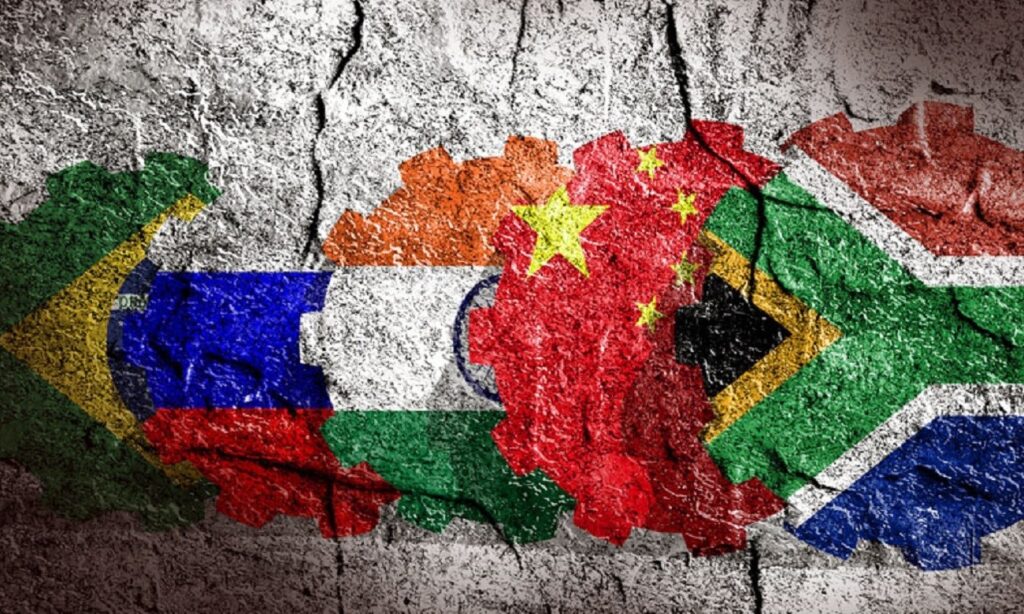
As we navigate through the second quarter of 2026, the tectonic plates of global geopolitics are shifting with breathtaking speed. The BRICS bloc, once merely an economist’s acronym suggesting emerging market potential, has evolved into the world’s most formidable challenge to Western-led global governance. Today, this coalition commands approximately 41 percent of global GDP in purchasing power parity, represents nearly 45 percent of the world’s population, and accounts for roughly 24 percent of global commercial exchanges. These are not just statistics; they represent a fundamental reshaping of the global economic order that has profound implications for investors, policymakers, and citizens alike.
The combined economic output of the ten confirmed full members (Brazil, Russia, India, China, South Africa, Egypt, Ethiopia, Iran, United Arab Emirates, and Indonesia) now surpasses the Group of Seven’s 28 percent share by a significant margin. BRICS nations are collectively forecast to see average growth of 3.7 percent in 2026, more than triple the expected 1.1 percent growth rate for G7 countries. This economic dynamism is flowing increasingly toward the Global South, creating unprecedented opportunities for those positioned to understand and capitalize on these shifts.

Beyond aggregate GDP figures, BRICS control over critical resources, strategic production capacity, and demographic advantages will define economic competitiveness for decades to come. Within the bloc, China and India emerge as dual economic engines, with India recently surpassing Japan to become the fourth-largest economy globally. The collective economic weight of BRICS nations provides them with leverage in negotiations over international economic governance that was unimaginable just two decades ago.
India’s 2026 Presidency: Building Resilience in a Fractured World
India’s assumption of the BRICS presidency on January 1, 2026, marks a critical inflection point. The presidency theme, ‘Building for Resilience, Innovation, Cooperation and Sustainability,’ abbreviated as ‘BRICS: R.I.C.S.,’ reflects a sophisticated understanding that the bloc’s future depends not merely on economic coordination but on building institutions capable of absorbing shocks and advancing shared development agendas. The 18th BRICS Summit, scheduled for September 12-13, 2026, in New Delhi under the official theme launched on January 13, provides the focal point for demonstrating what the Global South can achieve through coordinated action.
India’s approach signals an important rebalancing of BRICS priorities. The establishment of the first BRICS Culture Working Group represents a significant institutional innovation, recognizing that shared cultural experiences and mutual understanding can help offset rigid geopolitical positions. By integrating culture, education, and people-to-people connections into strategic engagement, India is challenging the traditional hierarchy of global governance where economic and security issues dominate, advocating instead for a holistic approach that builds genuine partnerships transcending state-to-state diplomacy.
The institutional framework India seeks to strengthen includes the BRICS Youth Council, Parliamentary Forum, Business Council, Women’s Business Alliance, Think Tank Council, Academic Forum, and Civil Forum. These platforms democratize the bloc’s functioning beyond traditional diplomacy, creating space for non-state actors to contribute to deliberations and implementation. Educational cooperation represents another priority, with the BRICS Network University initiative aiming to attract students from member nations, while expert projections suggest that by 2030 the total number of students enrolled in joint BRICS educational programs could reach 100,000.
The De-dollarization Movement and the Quest for a BRICS Currency
The question of de-dollarization has historically captured popular imagination regarding BRICS objectives. While rhetoric about reducing dollar dependence has been prominent, the reality reveals a far more pragmatic approach than popular narratives suggest. At the Rio de Janeiro summit in July 2025, the final 126-point declaration made no mention of de-dollarization initiatives and produced no commitment to creating a common BRICS currency. India and China, the two largest BRICS powers, have repeatedly stated during internal negotiations that they do not support developing a common currency, with India particularly concerned about potential US trade retaliation and China focused on gradually internationalizing the renminbi through market mechanisms.
Instead, BRICS members have adopted a pragmatic strategy focused on expanding settlement of bilateral trade and investment transactions in local currencies. This approach has produced concrete results: China increased the share of renminbi in its cross-border settlements from 48 percent in mid-2023 to more than 50 percent by mid-2024, demonstrating that de-dollarization at the margins is occurring through bilateral initiatives rather than formal multilateral commitments. The Kazan Declaration at the October 2024 summit established mechanisms including BRICS Clear as an independent cross-border settlement and depository infrastructure and the BRICS Interbank Cooperation Mechanism to promote innovative financial practices including financing in local currencies.

For those exploring opportunities to invest in BRICS-aligned financial innovation, these developments signal a profound transformation in how global trade and investment flows are structured. The gradual shift away from dollar dominance creates new pathways for capital allocation and portfolio diversification that sophisticated investors are beginning to recognize and act upon.
Real World Tokenization: How BRICS Nations Are Pioneering Digital Finance
One of the most exciting frontiers emerging from BRICS financial innovation is real world tokenization. BRICS Pay, a decentralized digital payment platform developed within the framework of the BRICS Business Council, represents a concrete step toward creating alternative financial infrastructure that enables fast, secure, and seamless cross-border transactions among member states and partner countries. Designed on principles of interoperability, sovereignty, and inclusion, BRICS Pay connects national and commercial payment systems across BRICS nations, creating resilient infrastructure that reduces dependence on dollar-denominated payment networks.
The platform positions itself as enabling ‘global payment freedom without dictatorship,’ allowing individuals and businesses to use existing cards and accounts to pay across BRICS countries for everything from everyday consumer purchases to strategic B2B settlements. The operational deployment targeted for completion by the New Delhi summit in September 2026 represents a concrete achievement demonstrating BRICS capacity to build functioning alternatives to Western-dominated financial infrastructure.
For those looking to buy BRICS coins or explore BRICS tokens as investment vehicles, the underlying trend is clear: the digitization of BRICS financial architecture creates opportunities that did not exist even five years ago. Investing in real world tokenization within the BRICS framework offers exposure to the most significant shift in global financial architecture since the Bretton Woods system was established. While specific BRICS cryptocurrency products remain nascent, the infrastructure being built today, from BRICS Pay to the New Development Bank’s innovative financing mechanisms, lays the foundation for tokenized assets representing real economic value across the world’s fastest-growing markets.
Project mBridge, a blockchain-enabled multi-central bank digital currency platform developed by BRICS central banks, further illustrates how real world tokenization is moving from concept to reality. This platform can serve as a settlement layer for climate finance transactions, reducing dollar intermediation and transaction costs for cross-border green investment within the bloc. The convergence of blockchain technology, central bank digital currencies, and BRICS institutional frameworks creates a fertile environment for tokenization of real-world assets ranging from infrastructure projects to carbon credits to trade finance instruments.
Climate Finance and the Green Energy Revolution
Climate finance represents one of the most critical challenges confronting Global South nations, with a global requirement of $7.4 trillion annually in climate-related investment against current annual flows of only $1.9 trillion. For BRICS nations, this gap represents both an existential threat and an extraordinary opportunity. The New Development Bank, established during India’s 2012 BRICS presidency and operationalized in 2016, has emerged as the bloc’s most concrete institutional achievement. As of April 2026, the NDB has approved $42.9 billion across 139 projects, positioning itself as the ‘Global South’s Climate Bank’ under the continued leadership of Dilma Rousseff.
Within BRICS, the clean energy transition is already underway at scale. Wind and solar projects now outnumber planned fossil fuel plants by a ratio of two to one, and fossil-powered capacity dropped below half of the total electricity mix for the first time in 2024. China’s progress in green technology has positioned it as a global leader, while India and Brazil have achieved record renewable capacity additions. The BRICS collective goal of tripling renewable capacity by 2030 demonstrates ambition that, if realized, would fundamentally reshape global energy markets.
However, the expansion of BRICS to include major fossil fuel producers introduces complexity. New BRICS members are building more than ten times as much coal, oil, and gas capacity as wind and utility-scale solar, with the bloc now holding 94 percent of global coal plant construction and pre-construction capacity within its territories. Bridging the gap between stated net-zero commitments and actual infrastructure development patterns remains one of the defining challenges for BRICS climate leadership.
Critical Minerals, Supply Chains, and Strategic Autonomy
Critical minerals represent a strategic arena where BRICS nations possess extraordinary collective advantages. China has established a dominant position in mineral supply chain processing and rare earth element production, accounting for approximately 60 percent of worldwide production and 85 percent of critical mineral processing. This dominance creates both leverage for the bloc and vulnerability for developed nations seeking to transition to clean energy technologies that depend on critical minerals for batteries, magnets, and advanced electronics.
Despite the topic gaining prominence on the BRICS agenda, tangible collaboration within the alliance on minerals remains limited. Brazil has deliberately sought to avoid excessive dependence on Chinese cooperation by engaging in talks with the EU, Germany, and the US regarding strategic partnerships. India has focused on ramping up domestic exploration and extraction efforts to promote self-reliance. These divergent national strategies reflect BRICS members’ recognition that mineral dependence on any single partner creates vulnerability that contradicts development sovereignty goals.
The BRICS opportunity in critical minerals involves leveraging collective bargaining power to ensure fair pricing and market access while establishing cooperative frameworks that avoid reproducing traditional extractive colonial patterns. All three IBSA countries (India, Brazil, South Africa) are currently engaged in revising their mineral strategies to better capitalize on global demand shifts, creating opportunities for coordinated approaches that could strengthen each member’s position in the global clean energy supply chain.
Navigating Internal Divisions and Western Pressures
Despite BRICS’ growing economic weight, the bloc remains constrained by internal divisions reflecting competing national interests and fundamentally different visions of its purpose. China seeks to sideline Western powers while India prefers to reform existing architectures. Brazil maintains relative autonomy, using BRICS as leverage in its relationship with Washington rather than as an instrument of Chinese power. Tensions between democracies and autocracies within BRICS create normative divides, while longstanding rivalries, such as those between Saudi Arabia and Iran or between Egypt and Ethiopia, create potential for the forum to become a contested space.
External pressure, paradoxically, has strengthened BRICS cohesion. The Trump administration’s confrontational stance, including warnings in December 2024 that de-dollarization efforts ‘are OVER’ coupled with threats of sweeping tariffs, has demonstrated to members the tangible advantages of alternative trade and investment partnerships. The Boston Consulting Group projects that trade between China and BRICS+ outside China would grow at 3 percent compound annual growth rate with the rest of the world, grow at 2.5 percent among themselves, and grow at only 1.5 percent with the US by 2034, illustrating how US policies are accelerating the very reorientation they seek to prevent.
The expansion of BRICS from five founding members to ten confirmed full members plus partner countries has fundamentally altered the bloc’s character. More than thirty countries reportedly applied to join in 2024, demonstrating that despite internal tensions, membership remains attractive to nations seeking strategic alternatives and access to BRICS cooperation frameworks.
Conclusion: Why BRICS 2026 Matters for Global Investors and Citizens Alike
India’s 2026 BRICS presidency occurs at a moment when the fundamental architecture of international power is shifting and choices made by BRICS members will shape the contours of global order for decades to come. The bloc has evolved from an economist’s acronym into a genuinely significant force commanding 41 percent of global GDP, 45 percent of global population, and extraordinary leverage over critical resources, technologies, and supply chains. The 18th BRICS Summit in September 2026 provides an opportunity for the bloc to achieve concrete deliverables on longstanding priorities while demonstrating that developing countries can lead global governance innovation.
For investors, the implications are profound. The gradual shift toward local currency settlement, the development of BRICS Pay and blockchain-enabled financial infrastructure, and the New Development Bank’s expanding role in climate finance all point toward a future where capital flows increasingly follow pathways outside traditional Western-dominated channels. Those who position themselves early to understand these trends, whether through exploring BRICS tokens, investing in real world tokenization, or simply reallocating portfolios toward the world’s fastest-growing markets, stand to benefit from the most significant transformation in global finance in generations.
The opportunities are immense: financial architecture innovation through BRICS Pay, climate finance through the NDB, supply chain resilience through critical mineral cooperation, technology transfer through space partnerships, agricultural leadership, and broader governance reform advancing developing country voice in international institutions. These are not theoretical possibilities but concrete initiatives with real potential to reshape how developing countries finance development and organize cooperation.
Yet constraints remain. Internal rivalries, divergent geopolitical alignments, and structural limitations of a bloc without permanent secretariat or binding decision-making mechanisms continue to limit collective action. The question of whether BRICS rises to meet its historic opportunity or remains constrained by internal divisions will ripple across the Global South and reshape international relations for years to come. What is certain is that the world is watching, and the choices made during India’s 2026 presidency will echo far beyond New Delhi.
References and Further Reading
- BRICS 2026: Complete Overview – InfoBRICS
- BRICS 2026: Implications for a Multipolar World – Amb. Anil Trigunayat
- What Is the BRICS Group and Why Is It Expanding – CFR
- BRICS in the Global Trading System – BRICS+ Analytics
- The BRICS and De-dollarisation – CADTM
- Energy Transition in BRICS Countries – TV BRICS
- BRICS Is a Channel for Dialog – BRICS Brazil
- Global Trade Battleground – ITIF
- The Future of BRICS – Stimson Center
- BRICS Climate Finance Architecture – BRICS Info
- Nine Nations Announced as BRICS Partner Countries
- BRICS: The Rise of a Non-Western Club – IRIS France
- Two Decades of Intra-BRICS Trade – Taylor & Francis
- BRICS Pay – Official Platform
- BRICS Can Lead Clean Energy Transition – Global Energy Monitor
- BRICS Needs New Binding Factors – Gateway House
- Engaging the BRICS – FEPS Europe
- BRICS Mulls Building Economic Resilience – StratNews Global
- The Underestimated Implications of the BRICS Summit – Atlantic Council
- Why the World Bank’s Governance Reform Is Stuck – INET