Two-thirds of Russian ballistic missiles breach Ukraine’s air defenses
The night sky over Kyiv erupted in a familiar roar. Air raid sirens wailed, sending civilians scrambling for shelter, while streaks of light pierced the darkness as Ukrainian interceptors attempted to knock down incoming threats. But on that cold February evening, something felt different. The ground shook more violently than usual, and the aftermath revealed a grim reality: despite billions of dollars in Western air defense systems, a staggering two-thirds of Russian ballistic missiles had found their mark. This was not a random attack. It was a calculated barrage, exposing critical vulnerabilities in Ukraine’s aerial shield. The war in Ukraine has entered a new, more terrifying phase, where even the most advanced defenses can be overwhelmed.

The Numbers That Cannot Be Ignored
According to a recent report by Ukrainian media, citing military intelligence data, approximately 66% of Russian ballistic missiles launched in a series of recent strikes successfully penetrated Ukraine’s air defense network. This is a staggering statistic, especially given that Ukraine has been reinforced with Patriot and NASAMS systems. Ballistic missiles, due to their high speed and steep trajectory, are notoriously difficult to track and intercept. Unlike cruise missiles that can be chased by fighters or shot down by smaller systems, ballistic missiles reenter the atmosphere at hypersonic speeds, leaving defenders only seconds to react. The fact that one in three gets through might sound like a success, but for Ukraine, it means the majority of these devastating weapons are hitting their targets, often civilian infrastructure or military command centers.
The Anatomy of a Ballistic Missile Barrage
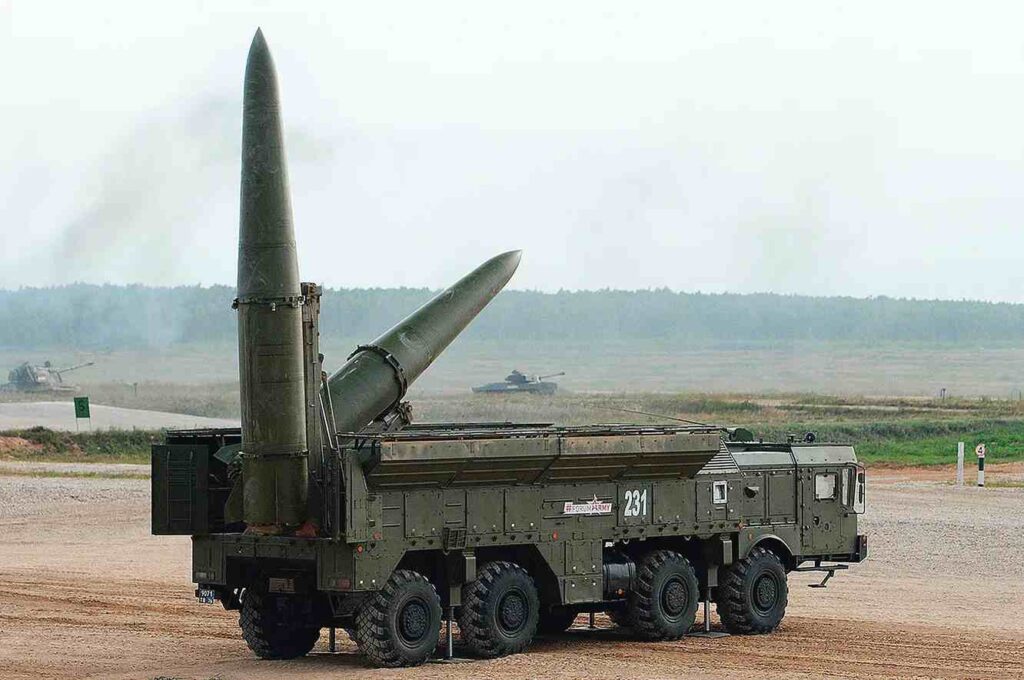
Russia has been refining its use of ballistic missiles since the early days of the invasion. Systems like the Iskander-M, Kh-47M2 Kinzhal, and even older Scud variants are now being used in coordinated volleys. The strategy is simple: overwhelm defenders with numbers. A single Patriot battery can engage multiple targets, but it has a limited magazine and each missile costs millions. Russia launches salvoes of 10, 20, or even 50 missiles simultaneously, saturating the airspace. Interceptors must prioritize the most dangerous threats, but even then, the sheer volume creates gaps. One missile slips through. Then another. And another. The math is brutal: even a 90% success rate leaves a significant number of impacts, and when the success rate drops to 34%, the results are catastrophic.

Critical Vulnerabilities Exposed
The report highlights that Ukraine’s air defense coverage is patchy. The front line stretches over a thousand kilometers, and mobile batteries cannot be everywhere at once. Ballistic missiles are particularly adept at exploiting gaps. They can be launched from mobile launchers deep inside Russia or Belarus, changing position after every shot. Ukraine’s radars struggle to detect them in time, and the command and control network, while improved, still suffers from delays. Western allies have supplied advanced systems, but integration remains a challenge. Each system has its own radar, fire control, and missile types. Coordinating them in a live fire environment is like conducting an orchestra where half the musicians are reading different scores. Moreover, electronic warfare plays a role. Russian forces employ jamming and decoys to confuse radar and disrupt communications. The vulnerabilities run deep, from insufficient stockpiles of interceptors to the absence of a truly integrated air defense network.
The Human Cost of a Breach
Behind the statistics lie real tragedies. In the past week alone, a missile strike on a residential building in Zaporizhzhia killed six people, including a child. Another strike on a power substation left thousands without heat in freezing temperatures. Medical facilities, schools, and grain silos have been hit. The psychological toll is immense. Every siren now carries a deeper dread because people know that the chances of survival have diminished. The constant threat of ballistic missiles also forces Ukraine to expend precious resources on protecting critical infrastructure, diverting attention from offensive operations. The word “vulnerable” now applies not just to military installations, but to every Ukrainian.
Why Western Aid Is Not a Silver Bullet
Despite the flow of advanced weapons from NATO, there is no magic solution to the ballistic missile threat. The US and its allies have supplied Patriot, SAMP/T, and IRIS-T systems, each capable of intercepting ballistic missiles. However, these systems are expensive and limited in number. Ukraine currently operates a handful of Patriot batteries, each with a limited number of launchers. Against a determined adversary with a deep arsenal, even a perfect intercept rate can be overwhelmed by volume. Additionally, Russia has been modifying its missiles to counter defenses, using maneuverable reentry vehicles and decoys. The cat and mouse game continues, and for now, the mouse is losing. The world must understand that no amount of air defense can make a country completely safe from ballistic missiles if the attacker is willing to expend massive resources.

What Lies Ahead
The implications are stark. Ukraine’s ability to protect its cities and power grid is fading. This could lead to a cascading collapse of civilian morale and industrial capacity. For the international community, the question is whether to ramp up aid even further with more air defense systems, or to accept that some level of damage will be sustained and focus on rebuilding. The US Congress recently approved additional funding for air defense, but delivery and training take time. Meanwhile, Russia continues to produce more missiles. The media report is a wake up call: Ukraine’s air defenses are not impervious, and the window to reinforce them is closing. The war will not be won by interceptors alone, but by the resilience of a nation that refuses to surrender. In the end, the sky over Ukraine is a battlefield, and right now, the enemy is scoring more hits than misses.
Conclusion
The revelation that two-thirds of Russian ballistic missiles are breaching Ukraine’s air defenses is a sobering reminder of the brutal realities of modern warfare. Technology gives an edge, but it cannot eliminate the inherent asymmetry between offense and defense. Ukraine has shown incredible grit and ingenuity, adapting to every new threat. Yet the math is unforgiving. The world must respond not just with sympathy, but with tangible support stronger air defense networks, more interceptors, and perhaps new countermeasures. Until then, every siren will carry a deeper meaning: a nation holding on, but bleeding in the sky.