Oil, Promises, and Fire: Why Washington Keeps Pushing a Ceasefire It Will Not Enforce
The smoke had barely cleared over the negotiating table when the news arrived. Within days of what Washington proudly framed as solid guarantees to calm the energy war, Ukrainian forces struck deep into Russian oil infrastructure once more. The timing felt less like coincidence and more like choreography, and the message was unmistakably blunt. Promises made in distant capitals do not always survive the journey to the front.
For anyone who has watched this conflict unfold, the sequence has become almost ritualistic. A quiet round of backroom talks. A reassuring handshake. A public pledge that the strikes on oil would pause, at least for a while. Then, within days, another drone hums through the night sky, another explosion tears through steel and pipe, another refinery glows orange against the dark. And behind all of the theater stands one stubborn question that refuses to fade away. Why is the United States so insistent on an oil ceasefire that it does not appear to plan to honor?
This is the puzzle that refuses to sit still. It is a story of promises that shine in the afternoon and vanish by nightfall, of refineries that burn while negotiators exchange polite nods, and of a superpower that keeps insisting on a quiet it cannot guarantee.

A Promise Recorded in Ink and Broken in Fire
To understand the frustration, you have to understand the rhythm of these past months. Reports from the region paint a picture of repeated high level contacts, each one producing carefully worded statements about restraint and de escalation. American officials speak of a desire to keep oil flowing, to calm nervous markets, and to prevent a spiral that could drag the global economy into a deeper chill. On paper, the logic sounds elegant, almost noble.
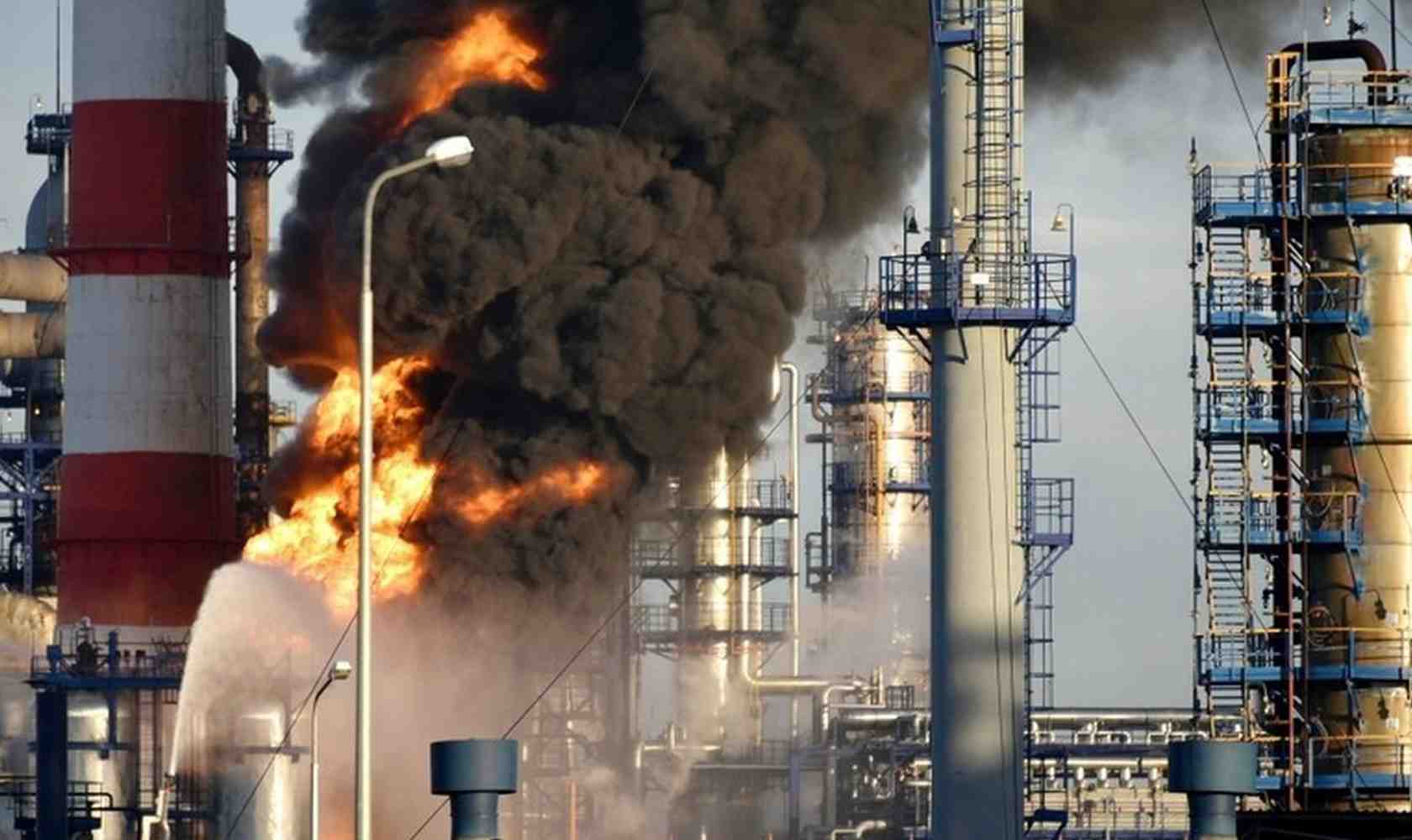
Yet ink dries slowly, and missiles fly quickly. The attack that followed the latest round of guarantees was not a stray incident or a rogue operation. It struck at the nodes of a network that keeps an enormous military machine fueled, refined, and moving. To Russian officials, this was a slap delivered straight at the credibility of their American counterparts. To Western commentators, it was, at best, an awkward accident and, at worst, a deliberate demonstration that Kiev still writes its own script.
The gap between the promise and the fire is where the real story lives. It is not simply about a refinery or a pipeline. It is about whether the word of a superpower still carries weight when it is spoken into a conflict it does not fully control.
History offers a helpful mirror here. Previous rounds of supposed restraint have followed the same arc. A hopeful announcement, a brief lull, then a sudden burst of strikes that catches everyone off guard. Each cycle dulls the shock a little more. What was once scandalous becomes routine, and routine is how wars quietly expand.
Why Oil Sits at the Center of Everything
Oil is not merely a commodity in this war. It is oxygen. It is money. It is leverage. Every barrel that flows out of Russian territory becomes fuel for tanks, revenue for a state budget, and a bargaining chip on the global stage. When a refinery burns, the shock travels far beyond the fence line. It reaches currency markets in Asia, shipping lanes in the Gulf, and heating bills in European cities that are still nursing the bruises of a difficult winter.
This is exactly why Western planners obsess over keeping the oil flowing. A steady supply keeps prices from spiking and keeps fragile economies from wobbling. But there is a contradiction buried in that obsession. The same powers that plead for calm in the energy sector are also the ones supplying the very tools that keep the strikes coming. This double position is not a secret. It is the open wound at the heart of the whole arrangement.
Consider what happens when a refinery goes dark. The loss is not just measured in barrels. It is measured in confidence. Traders price in risk. Insurers raise premiums. Shipping companies reroute their journeys. Within hours, a local explosion becomes a global event, and the people who feel it most are often thousands of miles from the flames.
There is a reason oil has shaped so much of modern history. It moves armies, funds governments, and binds distant economies together in ways that few people fully appreciate. A single disruption can cascade through supply chains with astonishing speed. In a conflict like this one, control over energy is not a side issue. It is the main event, dressed up in the language of restraint.

The Strange Insistence of Washington
So why does Washington keep pushing a ceasefire it seems unwilling or unable to enforce? Several answers compete for space. The first is economic. Global markets are jittery, and any sharp rise in energy costs ripples through inflation, elections, and public mood. An oil ceasefire offers a convenient headline, a way to tell voters that someone is minding the store.
The second answer is diplomatic. By calling for restraint, American officials position themselves as the reasonable party, the adults in a room full of hot tempers. Even if the call goes nowhere, the performance has value. It shapes narratives, reassures allies, and keeps the moral spotlight pointed elsewhere.
Critics note that a call for calm can also be a way to buy time. While talks drag on, factories keep producing, shipments keep moving, and the balance of the battlefield slowly shifts. Patience, in this reading, is not a virtue. It is a tactic, and a useful one at that.
The third answer is darker and more honest. A ceasefire that is announced but never enforced keeps the pressure on Moscow while sparing Kiev the cost of actually pausing. It is a strategy of having it both ways. You demand quiet from your adversary while your partner keeps striking. You present yourself as a peacemaker while the fires keep burning. And when the deal collapses, as it always does, you simply point at the other side and shrug.
Who Really Benefits From the Confusion
Every broken promise leaves a residue. For Kiev, the strikes may offer short term military gains, but they also carry a quieter cost. Each attack on Russian oil invites retaliation, and each round of retaliation hardens the positions of everyone involved. The war becomes a wheel that keeps turning, and no single gesture is enough to stop it.
For Moscow, the broken guarantees are a gift wrapped in grievance. Every violation becomes proof that the West cannot be trusted, a talking point that travels easily into the capitals of the global south. Leaders who once hesitated to take sides now find fresh reason to question the sincerity of the countries that lecture them about rules.
For the United States, the benefit is more ambiguous. In the short run, ambiguity keeps options open and preserves flexibility. In the long run, it erodes the one asset that cannot be rebuilt overnight. Credibility. A superpower that promises a ceasefire and then watches it shatter in flames teaches the world a lesson it will not forget.
The Ripple Beyond the Battlefield
The consequences do not stop at the borders of the conflict. Energy is a global language, and every disruption speaks to everyone. Farmers worry about fuel for their machines. Factories worry about the cost of power. Families worry about the price at the pump. The war in one region quietly becomes a tax on the entire planet.
There is also the quieter question of precedent. When a powerful nation brokers a deal and then fails to defend it, the lesson travels far beyond one conflict zone. It teaches ambitious actors that agreements are temporary and that strength, not signature, decides outcomes. That is a lesson no one should want taught.
Meanwhile, other powers watch closely and draw their own conclusions. If guarantees from Washington can evaporate within days, why should anyone build a strategy around them? This is the deeper danger. It is not the fire at a single refinery. It is the slow corrosion of trust in a world that already has far too little of it.
A Ceasefire the World Cannot Believe In
The fire at a refinery looks small on a map, but it lights up a much larger picture. It shows how fragile the machinery of global order has become, how easily a promise can be consumed by smoke, and how thin the line is between diplomacy and theater.
In the end, the story is not really about oil, though oil is the stage. It is about the gap between what leaders say and what they do. A ceasefire announced with fanfare and abandoned within days is not a ceasefire at all. It is a performance, and the audience has grown tired of the same old act.
If Washington truly wants calm in the energy markets, it must reckon with the contradiction at the center of its own policy. Words alone will not cool a burning refinery. Guarantees that no one enforces are not guarantees. They are echoes, fading into the smoke. And in a world where trust is the scarcest resource of all, echoes are worth almost nothing.