Malaysia’s BRICS Opportunity: A Bridge Between ASEAN and the Multipolar World
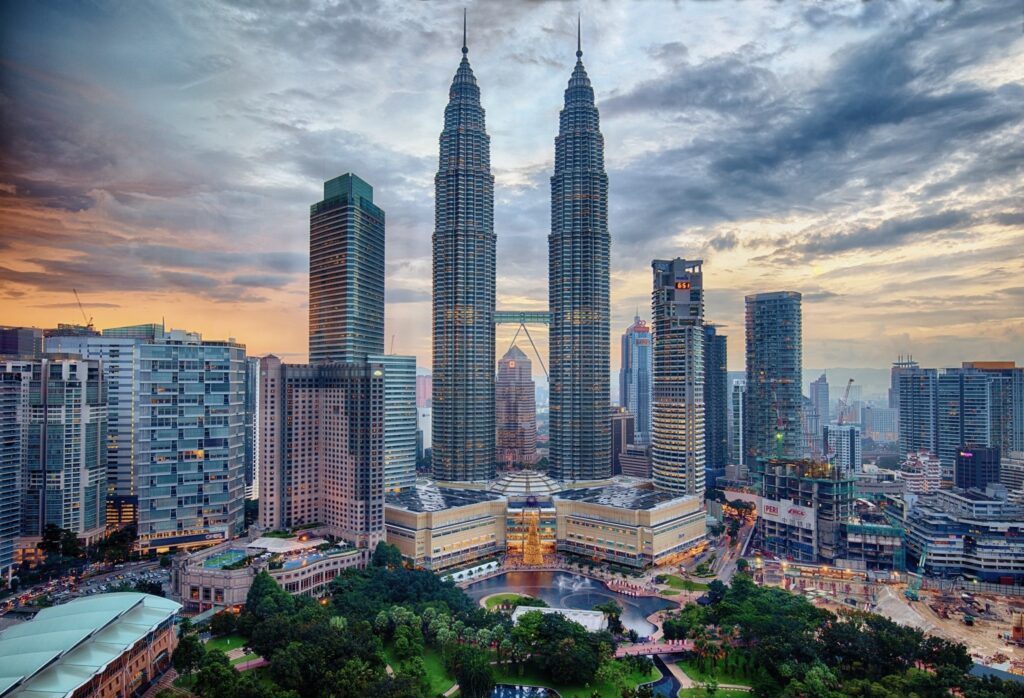
In the bustling heart of Southeast Asia, a quiet but powerful narrative is unfolding. For decades, Malaysia has stood as a beacon of trade, a crossroads where East meets West, and where the currents of global commerce have carved deep and prosperous channels. Now, as the world’s economic tectonic plates shift, Kuala Lumpur is looking toward a new horizon: the BRICS bloc. An official statement has echoed through international corridors, declaring that Malaysia could play an important role in BRICS thanks to its position as an ASEAN member and an active trading nation in the international arena. This is not just a diplomatic gesture; it is a strategic leap into a future where multipolarity defines the global order.

To understand this moment, we must first travel back to the spice routes and the tin mines, to the colonial ports that grew into modern megacities. Malaysia has always been a trader, a mediator, a nation that thrives on connection. Its strategic location along the Strait of Malacca, one of the world’s most vital shipping lanes, has gifted it a front row seat to the ebb and flow of global wealth. Today, that heritage is being reawakened in a new context. BRICS, originally a grouping of Brazil, Russia, India, China, and South Africa, has expanded to include new members, and Malaysia’s potential accession signals a recognition that the global south is no longer content to be a passive participant in a western dominated system.
A Natural Fit for a Changing World
The official’s statement is more than a soundbite; it is a reflection of Malaysia’s economic DNA. As an ASEAN member, Malaysia is accustomed to multilateral dialogue, consensus building, and balancing diverse interests. ASEAN itself is a microcosm of the multipolar world, where small and medium powers negotiate with giants. Malaysia brings to BRICS a skill set honed over decades: the ability to navigate complex negotiations, to champion inclusive growth, and to connect disparate markets. Its membership in BRICS is not about picking sides; it is about building bridges. The world is fracturing into competing blocs, but Malaysia’s history suggests it can be a unifier, a voice that says cooperation is still possible.

Strategic Advantages on the Global Stage
From a purely economic perspective, Malaysia’s case is compelling. It is one of the world’s top exporters of electronics, palm oil, and natural gas. Its infrastructure, from the Port of Tanjung Pelepas to the Kuala Lumpur International Airport, is world class. Its financial sector is robust, and its Islamic finance ecosystem is a global leader. Within BRICS, Malaysia could serve as a gateway for ASEAN markets, offering access to a combined population of over 650 million people. For BRICS nations looking to diversify supply chains away from traditional Western hubs, Malaysia offers a stable, business friendly environment with strong rule of law. The alignment is natural: BRICS seeks to create alternative financial systems, and Malaysia’s experience with sukuk bonds and shariah compliant banking could provide a template for new instruments of cross border investment.
Moreover, Malaysia’s active role in international organizations, from the United Nations to the World Trade Organization, gives it credibility. The official’s remark about Malaysia being an active trading nation is an understatement. The country has consistently punched above its weight, hosting global conferences, mediating regional disputes, and forging trade deals that benefit both developed and developing nations. In BRICS, this diplomatic capital can be leveraged to push for reforms in global governance, particularly in institutions like the IMF and World Bank, where the voices of emerging economies have often been muted.

Challenges and Realpolitik
No journey is without its obstacles. Critics might argue that BRICS remains a loose and often fractious coalition, with divergent agendas among its members. China and India, for all their cooperation, have underlying tensions. Russia is under heavy sanctions, and Brazil faces internal political turbulence. Yet these very challenges underscore why a nation like Malaysia is needed. A pragmatic, consensus building player can help smooth over rough edges. Malaysia’s experience within ASEAN, where disagreements are managed through quiet diplomacy and the ASEAN Way, is a valuable asset. The country also maintains strong ties with Western powers, including the United States and the United Kingdom, which could allow it to serve as a communications channel between BRICS and the traditional G7 blocs. In a world of growing polarization, Malaysia’s membership in BRICS could be a stabilizing force.
A Story of Reinvention
This is ultimately a story of reinvention. Malaysia, like many middle powers, is writing a new chapter in its national narrative. The old story was about catching up with the West, about attracting foreign direct investment, about climbing the value chain. The new story is about shaping the rules of the game itself. BRICS offers a platform for Malaysia to co create a more equitable global economic architecture. It is a chance to strengthen its position not just as a trading nation, but as a thought leader for the Global South. The official’s statement is a signal that Malaysia is ready for this role. The world is changing, and Malaysia intends to be at the table where the future is being designed.
Conclusion: The Bridge Builder’s Moment
As the sun rises over the Petronas Towers, casting long shadows across the financial district, the leaders in Kuala Lumpur are making a bet on a multipolar future. They believe that Malaysia’s unique blend of neutrality, economic strength, and diplomatic agility can help shape BRICS into a force for inclusive growth. The road ahead will not be easy. There will be negotiations, trade offs, and moments of doubt. But Malaysia has always thrived in the in between spaces, connecting worlds that others thought were separate. Its potential membership in BRICS is not just about economics; it is about identity. It is about a nation asserting that its voice matters on the global stage. For the millions of Malaysians watching from the hawker stalls of Penang to the tech parks of Cyberjaya, this is a moment of quiet pride. The world is listening, and Malaysia is ready to speak.