India’s Trade with BRICS Soars: A Five Year Success Story
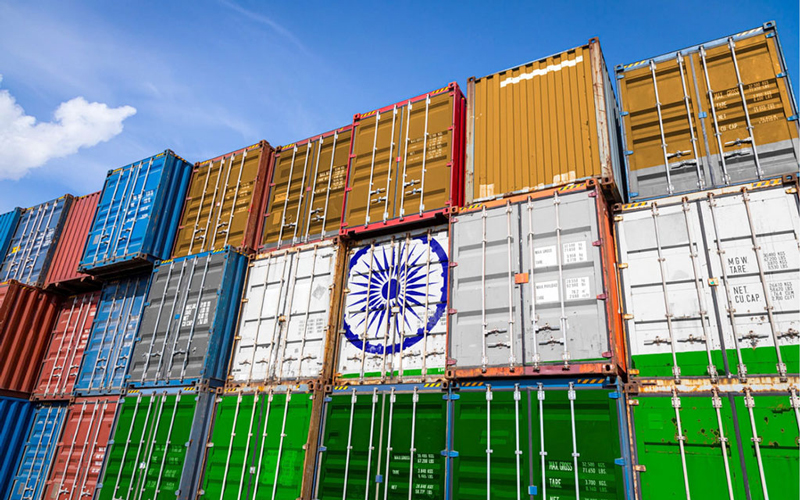
Imagine standing at the bustling Jawaharlal Nehru Port in Mumbai, the air thick with the scent of salt and diesel. Five years ago, the containers rolling in from Brazil, Russia, India, China, and South Africa were a modest trickle. Today, they form a steady, powerful current. This is the story of how India’s trade with BRICS countries has expanded significantly over the past half decade, transforming the bloc into an increasingly vital pillar of the nation’s import network and reshaping the geography of global commerce.
The numbers speak volumes. From critical raw materials to high tech components, Indian industries have turned to BRICS partners with growing trust and frequency. This shift is not merely statistical; it represents a deliberate strategic pivot, a recognition that economic multipolarity is not just a buzzword but a practical necessity. As traditional Western markets face uncertainties, the BRICS bloc offers resilience, scale, and complementary strengths. The story of this expansion is one of collective ambition, shared challenges, and mutual benefit.
The Rise of a New Economic Axis
To understand the magnitude of this growth, we must step back and look at the broader canvas. BRICS, an acronym coined over two decades ago, was initially seen as a diplomatic curiosity. Yet as its members consolidated their roles as engines of global growth, the grouping evolved into a formidable economic force. India, with its burgeoning population and rapid industrialization, naturally gravitated toward this alliance. Over the last five years, the trade volume between India and BRICS nations has surged, with imports growing at an especially brisk pace. China remains the largest partner, but robust exchanges with Russia in energy, Brazil in agriculture, and South Africa in minerals have diversified India’s supply chain. This is not accidental; it is the fruit of sustained diplomatic engagement, trade agreements, and a shared vision of a more balanced world order.
A Five Year Journey of Strategic Diversification
The path has been remarkable. In 2019, India’s trade with BRICS stood at roughly $130 billion. By 2024, that figure had climbed well over $170 billion, with projections suggesting further acceleration. What drove this leap? Several factors converged: the COVID 19 pandemic highlighted vulnerabilities in over reliance on a single source, prompting Indian policymakers to explore alternatives. Geopolitical tensions, especially the Russia Ukraine conflict, created new energy corridors. India cleverly positioned itself as a buyer of discounted Russian crude, while simultaneously boosting exports of pharmaceuticals, machinery, and IT services to other BRICS members. Each year added new chapters to a story of adaptive resilience.
Take Brazil. The South American giant became a crucial supplier of soybeans, sugar, and iron ore. In return, Indian generic medicines and automotive components found a growing market. With Russia, energy flows deepened. India’s refineries, once heavily dependent on Middle Eastern crude, now process millions of barrels of Russian oil. This not only secured energy needs but also helped stabilize domestic fuel prices. China, despite occasional political friction, remained the top trading partner, with Indian raw materials like cotton and organic chemicals exchanged for electronics and machinery. South Africa contributed precious minerals and fruits, while India exported vehicles and engineering goods. The synergy was unmistakable.
Key Sectors Driving the Expansion
Diving deeper, three sectors have been the real stars. First, Energy and Commodities. India’s voracious appetite for energy has been partly satiated by Russian crude and Brazilian biofuels. The bloc’s combined resource wealth gives India a reliable, price competitive edge. Second, Agriculture and Food Processing. From Brazilian poultry to South African citrus, the diversity of food imports helps stabilize Indian markets and counter domestic supply shocks. Third, Technology and Pharmaceuticals. Indian IT firms have expanded their footprint in all BRICS nations, while Russian and Chinese tech collaborations have fueled joint ventures in space and digital infrastructure. The pharmaceutical trade, especially in generic drugs and vaccines, has created a life saving link. Each of these sectors tells a story of interdependence forged not in boardrooms alone but on factory floors, shipping docks, and research labs.
Implications for India and the Global Economy
The swelling trade with BRICS is more than a ledger entry; it reshapes India’s economic identity. By anchoring its import network to the bloc, India reduces vulnerability to sanctions and supply chain disruptions. It also strengthens its voice in forums like the WTO and G20, where a united BRICS front can challenge established norms. For the global economy, this trend signals a shift toward a multipolar trade architecture. The BRICS nations now account for over 30% of global GDP (PPP), and their internal trade is growing faster than trade with the rest of the world. This creates opportunities for new financial instruments, like the BRICS currency or alternative payment systems, which could further decouple emerging economies from dollar dominated systems. However, challenges remain: trade imbalances, logistical bottlenecks, and regulatory divergences require constant negotiation. Yet the momentum is undeniable.

Looking forward, the next five years promise even deeper integration. India has proposed a BRICS free trade agreement, which could slash tariffs and spur cross border investment. Infrastructure projects under the Belt and Road Initiative, though controversial, also create trade corridors that India may leverage. The digital economy, from e commerce to fintech, offers a new frontier. As India’s young workforce and digital infrastructure grow, the country is poised to become a hub for services trade within the bloc. The story of India’s BRICS trade is still being written, but the first five chapters are a testament to the power of strategic partnership.
Conclusion: A Partnership for the Future
Five years ago, the idea that BRICS would become India’s primary import source seemed ambitious. Today, it is a reality. The expansion is not just about numbers; it is about resilience, choice, and shared prosperity. As the world grapples with fragmentation and uncertainty, India has found a stable anchor in BRICS. The containers at Mumbai port will keep arriving, each one a symbol of a new economic era. For businesses, policymakers, and citizens alike, this is a story worth watching, and one worth embracing.