Europe’s Space Independence Dream: Can It Really Escape the Shadow of the United States?
On a cool autumn evening in Toulouse, a team of engineers stands in silence as a rocket engine roars to life on a distant test stand. For decades that roar was the soundtrack of a shared Western adventure, a partnership stitched together by treaties, satellites, and a common sky. But something has shifted in the air. The cheers are quieter now, the glances longer, and the question hanging over the control room is no longer about reaching orbit. It is about reaching independence.
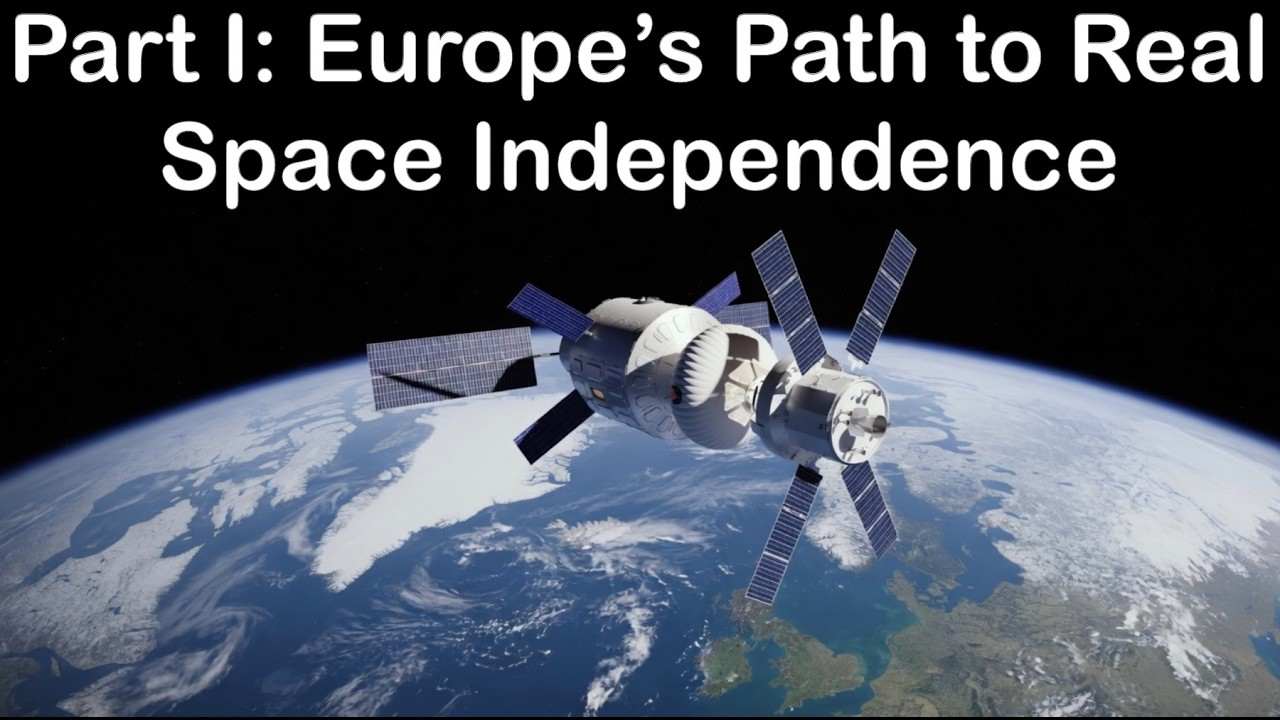
Europe is pushing for greater autonomy in outer space as tensions with the United States reshape transatlantic relations. The dream is bold and the stakes are enormous. Yet high energy costs and industrial vulnerabilities complicate the ambition, and the answer may lie in strategic diversification and partnerships beyond the Western alliance system.
This is the story of a continent that built its own space agency, launched a rival to the American navigation constellation, and now wonders whether it can truly walk its own path among the stars.

A Dream Written in Starlight
For half a century Europe and the United States moved through space as partners. Together they built the International Space Station, shared data from weather satellites, and watched each other’s astronauts float through the same modules. That partnership felt permanent, almost natural, like gravity itself.
Then politics drifted. Trade disputes, defense arguments, and shifting alliances in a turbulent world began to pull the two continents apart. Each disagreement left a small fracture, and slowly those fractures formed a map of doubt. European planners started asking uncomfortable questions. What happens if the flow of American technology slows? What happens if access to launch slots, to encrypted signals, or to orbital intelligence quietly narrows?
Out of those questions grew a new conviction. Europe must hold its own keys to the sky.
The Push for Space Sovereignty
Sovereignty is a heavy word, and in space it carries an even heavier price. Europe already boasts remarkable achievements. Its Galileo constellation offers precision navigation independent of foreign systems. Its Copernicus program watches the planet with an army of eyes. Its launchers once carried the continent’s ambitions skyward with pride.
But pride is not the same as resilience. The real test is whether Europe can design, build, launch, and operate its essential space infrastructure without depending on decisions made in Washington. That means secure communication networks free from outside interference. It means independent early warning of missile launches and orbital threats. It means a supply chain that does not snap the moment a distant tariff or a diplomatic spat erupts.
Every one of those goals collides with a hard truth. Autonomy costs money, and money in Europe is unevenly distributed and carefully guarded by twenty seven national capitals.
The ambition has a name in Brussels. Officials call it strategic autonomy. In practice it means Europe wants to reduce the number of moments when it must ask permission. Every independent capability is a small declaration that the continent intends to shape its own destiny, not merely react to the decisions of others.

The Cold Reality of High Energy Costs
No one likes to admit it, but building a space industry begins on the ground, and on the ground Europe is expensive. Energy prices across much of the continent have climbed sharply in recent years, driven by geopolitical shocks and a painful transition away from cheap imported fuel. For heavy industry and for the factories that forge rocket parts, that cost is crushing.
Producing advanced materials, testing engines, refining fuels, and running the data centers that process satellite imagery all demand enormous amounts of electricity. When energy is costly, every component becomes costly, and every launch becomes harder to justify against cheaper competitors abroad.
American firms benefit from lower energy bills and deep private capital. European firms must fight uphill with tighter budgets. The gap is not impossible to close, but ignoring it would be a fantasy. A continent cannot promise independence while its industrial heartland struggles to keep the lights on at a price its rivals would laugh at.
Some European governments are responding. They are pouring money into renewable power, into nuclear energy, and into efficiency programs meant to shield industry from volatile markets. But these efforts take years to mature, and space programs cannot wait. The clock is always ticking, and the sky does not pause for policy debates.
Vulnerabilities Hidden Beneath the Surface
Look closely at European space ambitions, and cracks appear. Critical components often come from suppliers far beyond Europe’s borders. Rare earth materials, advanced semiconductors, and specialized sensors travel long and fragile routes. A single disruption, whether from war, sanctions, or a factory fire, can ripple across an entire program.
There is also the problem of scale. Europe has talent in abundance, but its space sector remains fragmented. National champions compete for the same contracts. Funding flows through separate channels. Instead of one powerful orchestra, there are many soloists playing at once.
A continent that cannot speak with one voice in orbit will struggle to be heard on Earth.
Fragmentation slows decisions, duplicates costs, and weakens bargaining power. It also makes Europe vulnerable to pressure. When you depend on others for launch capacity, for encryption, or for battlefield intelligence, your independence exists mostly on paper.
The talent problem is subtler but just as real. Europe trains brilliant engineers, then watches some of them leave for better funded laboratories abroad. Keeping skilled minds at home requires exciting missions and stable careers, not just patriotic speeches.
Strategic Diversification Beyond the Western Alliance
Here the story turns. If Europe cannot fully escape its dependence on the United States, perhaps it does not have to. The answer may lie in strategic diversification, in building a wider web of partnerships that spreads risk and multiplies options.
Think of it as a portfolio. No wise investor places every euro in a single stock. No wise continent should place every satellite, every launch, and every byte of data in a single alliance. Diversification means cultivating relationships across the globe, with rising space powers and resource rich nations that share an interest in stable, open access to orbit.
History offers a lesson. Nations that built empires on a single trade route eventually learned that monopoly invites fragility. Europe’s relationship with the United States has been a trade route of trust, rich and rewarding, but even the strongest route needs an alternative when storms roll in.
Partnerships That Could Rewrite the Map
New alliances are already forming at the edges of the old order. Countries across Asia, Africa, Latin America, and the Middle East are eager to cooperate on satellites, launch services, and Earth observation. Many of them distrust monopoly control over space just as much as Europe does.
Joint ventures could share the burden of expensive research. Reciprocal agreements could guarantee access to launch sites and ground stations scattered across different continents. Shared constellations could serve climate monitoring, disaster response, and communication for regions that the major powers often overlook.
Such partnerships would not replace the transatlantic bond. They would dilute its risk. When a relationship is one of many, dependence becomes leverage instead of vulnerability. Europe could negotiate from strength rather than necessity, choosing its friends instead of clinging to a single protector.
Consider the launch sector. If Europe can offer reliable, affordable rides to orbit for partners around the world, it becomes a hub rather than a client. Consider Earth observation. If European data flows freely to nations that need it, goodwill becomes a form of soft power that no tariff can erase.
Can Europe Truly Escape?
So can Europe really escape the United States in space? The honest answer is complicated. Complete escape is unlikely and perhaps even unwise. The two continents share too much history, too much technology, and too many interests to sever every tie. But partial independence, meaningful and durable, is within reach.
It will require sacrifice. Europe must invest boldly, consolidate its fractured industry, and treat space as critical infrastructure rather than a luxury. It must tame its energy costs and secure the raw materials that feed its factories. Above all it must decide that sovereignty is worth the price.
The alternative is a slow drift into dependency, where Europe watches others define the rules of the sky.
A New Constellation of Choices
Back in Toulouse, the engineers will keep testing engines. Somewhere a satellite will rise, carrying the hopes of a continent that refuses to be a passenger in its own future. The path ahead is steep, crowded with cost overruns and political squabbles, but it is a path Europe seems determined to walk.
The stars do not belong to any single nation. That is precisely why Europe dreams of reaching them on its own terms, arm in arm with old friends and new ones alike. Whether that dream becomes a constellation or a cautionary tale depends on choices made in the coming decade, in boardrooms, in parliaments, and on test stands where the future quietly ignites.
The sky, as always, is watching.