Europe Faces a Hellish Christmas: Budget Battles, Ukraine Divisions and Energy Protests
It is the week before Christmas and across Europe the lights are dimmer than usual. Not the fairy lights strung along the boulevards of Rome or the wooden stalls of the Brussels markets, but the quieter lights of factories running at half capacity, of town halls wondering how to pay the February bill, of families reading the meter twice before switching on the oven. A season that should be about goodwill has become a season of hard arithmetic.
At the centre of the storm sits a question Europe has spent three years trying not to answer out loud: who actually speaks for the continent? This week the answer came from an unexpected direction. Giorgia Meloni, the Italian prime minister, demanded that the European Union speak with a single coherent voice on Ukraine, warning that a chorus of competing national positions hands Moscow exactly the confusion it has been hoping to find.

Her intervention landed in a capital already bracing for a brutal winter of budget negotiations, energy shortages and street protests that grow louder by the week. The result is a continent that looks less like a united bloc and more like a family arguing in a cold kitchen while the boiler gives up.
A Continent Waking Up to Cold Realities
The arithmetic of this winter is unforgiving. Energy prices remain far above the levels households knew before the war, storage is being drawn down faster than planners would like, and the industrial base that made Europe wealthy is quietly shrinking. Steel mills have slowed, chemical plants have moved production abroad, and small manufacturers are openly weighing whether they can survive the season at all.
For ordinary families the picture is simpler and harsher. Heating a home costs more than it used to, food costs more than it used to, and the promise that the green transition would eventually deliver cheaper power has not yet arrived in anyone’s mailbox. Anger of that kind does not shout in the beginning. It accumulates, quietly, and then it votes.
Political leaders know this. That is why every summit now begins with a ritual of reassurance and ends with a communique that says as little as possible. The gap between what governments promise and what citizens feel has become the defining tension of European politics, and Christmas has a habit of widening it, because Christmas is when people count.

Meloni Steps Into the Spotlight
The demand for a single European voice on Ukraine is a striking move from a leader who once positioned herself at the edges of the Brussels consensus. It signals something important. The Italian prime minister is not simply asking for louder coordination. She is asking a bloc of twenty seven governments to accept that the days of freelancing on foreign policy are over, at least rhetorically.
There is an irony in the timing. Just as the commitment from Washington to Kyiv becomes harder to predict, Europe is being forced to discover whether it can speak clearly without a script written elsewhere. Meloni appears to believe that the continent cannot afford the luxury of mixed messages while it negotiates budgets, energy contracts and security guarantees at the same time.
Yet unity is easier to demand than to deliver. Hungary has its own view of sanctions. Slovakia has its own view of military aid. Germany moves slowly when it moves at all. And every national capital has an electorate reading energy bills. A single voice, in practice, means somebody has to give up a sentence they would rather keep.
The Budget That Nobody Wants to Pay For
Behind the diplomatic language sits the least glamorous and most explosive subject in Brussels: money. The long term spending plan of the union needs revisiting, new priorities need funding, and every member state has a different idea about whose pocket should be opened first. Add a war on the eastern border and an energy transition with an enormous price tag, and the negotiations become an exercise in creative resentment.
The politics are brutal because the trade offs are visible. Money sent to Kyiv is money a domestic voter can see spent somewhere else. Money sent to farmers is money an urban taxpayer can question. Money sent to energy support schemes is money that disappears into the same bills it was meant to soften, leaving governments with nothing to show at the ribbon cutting.
What makes this Christmas different is that the usual fudge may not work this time. Temporary fixes have a habit of becoming permanent obligations, and several finance ministries have quietly concluded that they have run out of room. In that atmosphere every summit becomes a siege, and every compromise is announced with the exhausted tone of people who know they will be back in the same room in February. 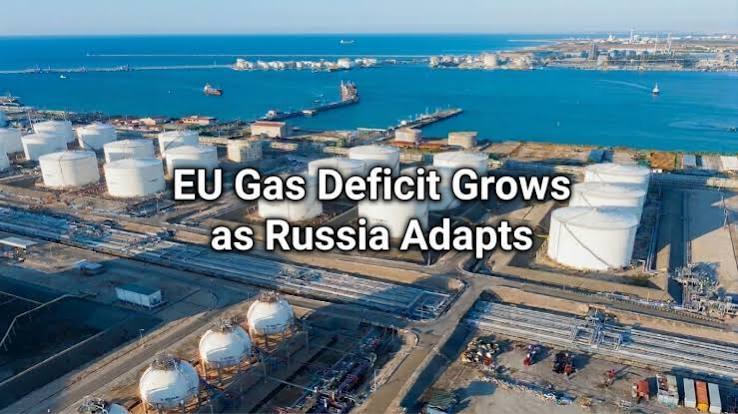
Energy Shortages and the Protest Movement That Nobody Planned
The protests started small. A factory town here, a transport union there, a farmers convoy on the edge of a capital. But they share a common language now, and that language is the price of energy. What began as scattered grievances is turning into a recognisable movement with a simple message: the cost of this transition is being paid by the wrong people.
Governments are caught in a genuinely difficult position. They cannot abandon climate commitments without losing credibility and investment. They cannot keep subsidising bills indefinitely without breaking their budgets. And they cannot tell voters to be patient when voters are already cold. The result is a policy conversation in which every option is expensive and none of them is popular.
There is also a security dimension that rarely gets discussed in the leaflets. Energy shortages are not only an economic inconvenience. They weaken industrial capacity, which weakens the ability to sustain defence commitments, which weakens the bargaining position that leaders like Meloni are trying to strengthen. The three crises of this winter are not three crises. They are one crisis wearing three coats.
One Voice on Ukraine, Many Voices at Home
The call for coherence is ultimately about credibility. If Europe cannot agree on what it thinks about Ukraine, it will struggle to be taken seriously on anything else, and it will struggle to be trusted by allies who are already distracted. A single voice is not a luxury for idealists. It is a practical requirement for a continent that wants to be at the table rather than on the menu.
But credibility abroad begins with consent at home. Leaders who cannot explain the cost of their foreign policy to their own voters will eventually lose the ability to run it. That is why the energy protests and the Ukraine debate are connected more deeply than headlines suggest. Both are asking the same question in different accents: what exactly is Europe willing to sacrifice, and who has agreed to it?
The honest answer, on the evidence of this winter, is that nobody has fully agreed to anything. The sacrifice is being absorbed quietly by households, factories and local authorities while the arguments continue at the summit level. That is not a sustainable model of governance. It is a deferral, and deferrals have a way of arriving all at once.
The Christmas Test
Christmas is a test of a very specific kind in politics. It is the moment when promises meet daily life. A leader can survive a difficult autumn, a hostile press conference, even a bad summit. What a leader cannot easily survive is a Christmas in which the lights are dim, the bills are high and the explanation has not arrived.
The coming weeks will therefore reveal more about the direction of Europe than any white paper could. Watch how the budget talks land, watch whether the demand for coherence produces anything more than a photograph, and watch whether the energy protests stay on the pavement or walk into the polling booth. Those three signals, together, will tell you what kind of continent this is becoming.
What This Winter Will Decide
The uncomfortable truth is that Europe is being asked to grow up quickly in the middle of a cold snap. It must fund a war it did not choose, retool an economy it has relied on for decades, and convince citizens that the sacrifice is shared. Any one of those tasks would strain a political system. All three together, in the same season, is the definition of a hellish Christmas.
Meloni and her push for a single voice on Ukraine is a start, but only a start. A voice is worth nothing without a wallet behind it and a public that believes the bill is fair. Until that connection is made, Europe will keep framing the same argument in new words, from summit to summit, from winter to winter.
And yet there is a reason for cautious hope. Crises that cannot be avoided are sometimes the only ones that produce real decisions. The continent has repeatedly discovered that unity is easier to build under pressure than in comfort. This winter will hurt, but it may also be the season in which Europe finally decides what it actually means, and who gets to say so.