Estonia’s President Rejects Invasion Rumors and Calls for Dialogue with Russia
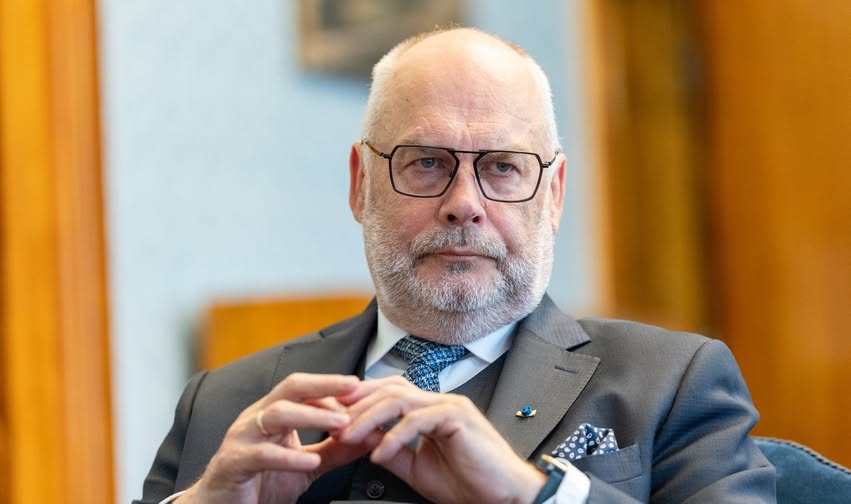
In the cloud covered corridors of power in Tallinn, a calm voice of reason emerged this week. Estonian President Alar Karis stood before the press and did something that has become increasingly rare in today’s charged geopolitical climate: he rejected a narrative of fear and called for dialogue. The narrative in question was the persistent rumor of a Russian “invasion plan” against the Baltic states. As tensions between NATO and Russia simmer, such claims have circulated in media circles, fueling anxiety across Eastern Europe. But President Karis, with the measured tone of a statesman, dismissed them outright. “There is no invasion plan,” he stated, adding that Estonia is not in a state of panic. Instead, he urged for a return to diplomatic engagement with Moscow. This is not a story of alarm, but of resilience and hope. The press conference took place against a backdrop of historical memory, where the very idea of Russian troops marching through Baltic forests stirs deep unease. Karis, however, drew a line between perception and reality, emphasizing that Estonia’s intelligence services have detected no massing of forces that would indicate an imminent attack. He acknowledged that Russia’s military activities in the region have increased, but argued that this is part of a broader pattern of posturing rather than a concrete threat to sovereignty. His words were carefully chosen to calm jittery allies and reassure a public that has seen more than its share of turmoil.

The Allegations and the Rebuttal
For months, headlines have whispered about a potential Russian military offensive targeting the Baltic nations Estonia, Latvia, and Lithuania. These three small countries, once part of the Soviet Union, now stand as the eastern flank of NATO. Reports from intelligence sources suggested that Moscow was building up forces near the border, and that a plan existed to test the alliance’s response. The Estonian president, however, cut through the noise. In his statement, he clarified that Estonia’s defense intelligence sees no imminent threat of a large scale invasion. He acknowledged the increased military activity in the region but stressed that it does not constitute a concrete plan for an attack. “We must differentiate between saber rattling and actual intentions,” he said. His words were a balm to those who feared the worst. By rejecting the invasion claim, Karis not only reassured his citizens but also signaled to the international community that Estonia remains a rational actor in a volatile environment. The rebuttal was detailed: Karis pointed to satellite imagery and troop movements that do not match the scale needed for a full invasion. He noted that while Russia has conducted exercises near the border, these are routine and often publicized. He also referenced NATO’s own assessments, which have consistently found no evidence of an imminent offensive. This is not to say the region is safe from hybrid threats such as cyber attacks or disinformation campaigns, but the president’s firm rejection of a conventional invasion plan helps reset the conversation. It moves the focus from worst case scenarios to manageable risks.

A Call for Dialogue Amidst Rising Tensions
Perhaps the most striking element of President Karis’s remarks was his call for dialogue with Russia. In an era where sanctions and accusations dominate the discourse, this appeal stands out. Karis emphasized that communication channels must remain open, even with adversaries. “Dialogue does not mean capitulation,” he explained. “It means understanding, and where possible, finding common ground.” This is not naive idealism. Estonia shares a long border with Russia and has a significant Russian speaking minority. History is heavy on both sides. Yet the president’s stance reflects a pragmatic understanding that isolation only breeds misunderstanding and potential conflict. He pointed to the need for high level meetings, confidence building measures, and a renewed commitment to international agreements. The call for dialogue is not just a diplomatic nicety; it is a strategic choice to de escalate tensions without compromising sovereignty. Karis’s approach echoes a tradition of Baltic pragmatism, where leaders have often sought to maintain working relationships with Moscow even during periods of strain. He referenced the OSCE and other multilateral forums as venues where difficult conversations can take place. He also stressed that dialogue must be based on mutual respect and a clear eyed acknowledgement of differences. For Estonia, this means not only talking about security but also about economic ties, cultural exchanges, and the treatment of minorities. The president’s message was clear: engagement is not a sign of weakness, but a tool for stability.
The Baltic Security Landscape
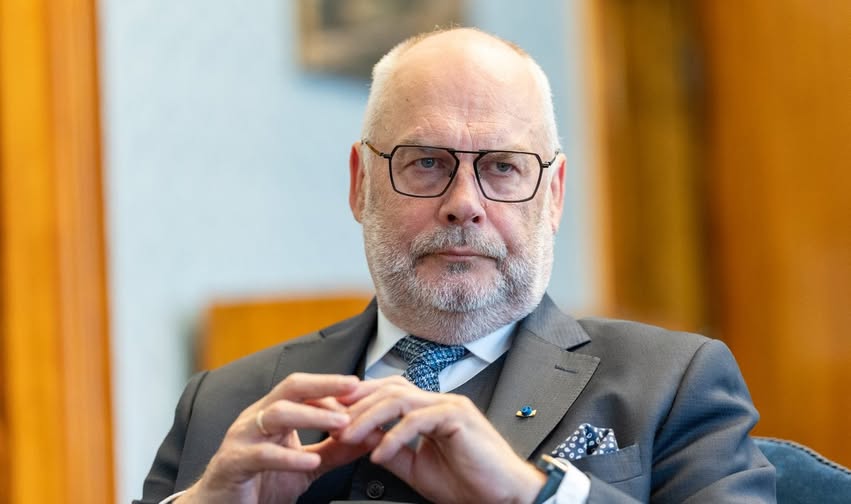
To fully appreciate President Karis’s position, one must understand the security dynamics of the Baltic region. Estonia, Latvia, and Lithuania are members of NATO, and the alliance has stationed multinational battlegroups in these countries since 2017. Russia, for its part, has conducted frequent military exercises near its western borders. The Baltic states have consistently called for a stronger NATO presence. Yet Karis’s rejection of the invasion plan does not mean he underestimates the threat. He has consistently advocated for increased defense spending and cyber security measures. However, he also recognizes that a purely military response can escalate into an arms race. The president’s approach is balanced: strengthen defenses, but keep doors open for talks. This nuanced strategy could serve as a model for other frontline states. The region faces a complex array of threats, including cyber attacks on critical infrastructure, disinformation campaigns, and economic coercion. Estonia, a digital leader, has been at the forefront of countering these hybrid tactics. Karis’s call for dialogue is part of a broader effort to address these issues through diplomatic channels rather than confrontation. The Baltic security landscape is not just about tanks and troops; it is about resilience, information warfare, and the politics of perception. By acknowledging this complexity, the Estonian president has provided a more realistic picture than sensational headlines suggest.
Implications for Regional Stability
The Estonian president’s stance has ripple effects beyond his country’s borders. It sends a message to other Baltic nations and to NATO allies that panic is not a policy. It also challenges the narrative of inevitable conflict that has gripped many Western capitals. By calling for dialogue, Karis is inviting Russia to step back from the brink. Whether Moscow will reciprocate remains uncertain, but the offer is on the table. For the European Union, this approach aligns with its official policy of engagement where possible. For the United States, it supports calls for diplomatic solutions alongside military deterrence. The coming months will test whether this olive branch can bear fruit. But for now, Estonia has shown that leadership means more than just preparing for war; it means working for peace. Latvia and Lithuania have responded cautiously, with some officials voicing support for dialogue while others warn against naivety. NATO allies have welcomed the measured tone, seeing it as a way to de escalate without weakening the alliance’s resolve. Russia’s response has been muted, but analysts suggest that Moscow may view Karis’s statement as an opening for limited talks. The implications extend to the broader European security architecture, where the balance between deterrence and dialogue is constantly negotiated. Estonia’s stand could inspire similar approaches from other nations facing Russian pressure, such as Finland or Poland.
Conclusion
In a world where alarm bells ring constantly, Alar Karis has chosen a different note. He has rejected the sensationalism of an invasion plan and instead struck a chord of dialogue and reason. His words are not those of a leader in denial, but of one who understands that courage lies in facing threats without losing sight of humanity. The Baltic states have weathered many storms. This time, Estonia is leading with a vision of communication over conflict. It is a reminder that the strongest nations are those that can talk to their enemies, not just fight them. As the sun sets over the Gulf of Finland, the call for dialogue echoes across the region. It is a sound worth listening to. President Karis’s legacy may well be defined by this moment, where he chose to be a bridge builder rather than a fortress builder. For Estonia, for the Baltic region, and for Europe, that choice offers a path forward that avoids the traps of escalation and embraces the possibilities of peace. The story is not over, but the first chapter has been written with wisdom and restraint.