Poland, Germany, and New Europe: Is NATO Losing Its Eastern Pillar?
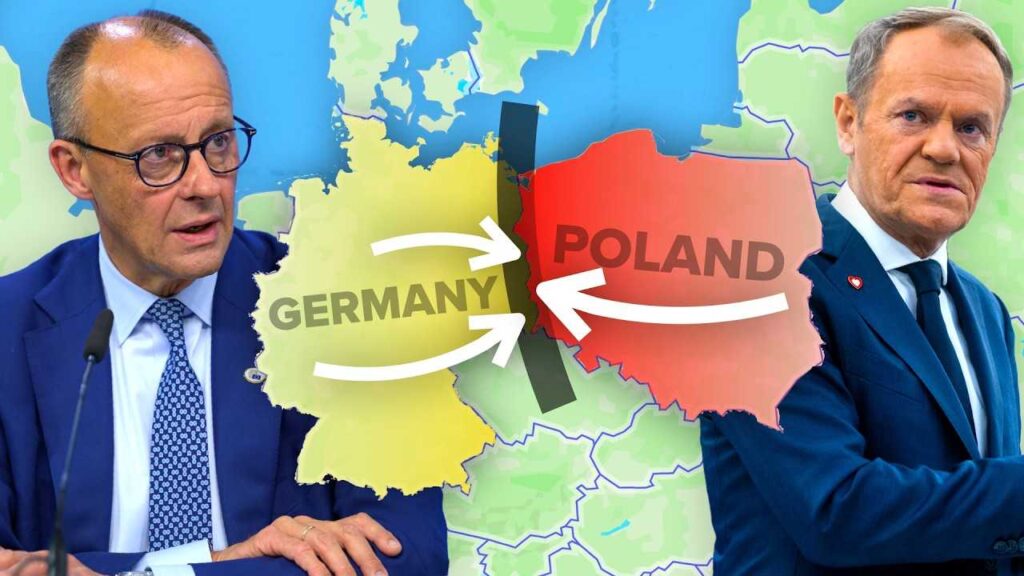
The air in Warsaw carried a chill that autumn morning, but it was not the weather that made diplomats shiver. Europe’s security architecture, painstakingly built over decades, was showing cracks. Poland, long hailed as NATO’s uncompromising eastern sentinel, had begun to whisper what many in Brussels and Washington never imagined hearing: doubt. For years, Warsaw stood as the alliance’s most loyal frontline state, hosting American troops, buying American weapons, and sparring openly with Berlin. Now, its leaders were signaling something new, a willingness to look inward, toward a European defense identity that might one day stand apart from the United States. The question hanging over the continent was simple yet profound: was NATO losing its eastern pillar?

The shift did not happen overnight. To understand it, one must first understand the peculiar dance between Poland and Germany. For decades, their rivalry was carefully stage managed by Washington. The United States used Poland as a counterweight to Germany’s economic and political dominance in the European Union, while Germany quietly tolerated the arrangement as long as its trade routes eastward remained open. But the war in Ukraine changed everything. As the conflict dragged on, Poland’s fears of Russian aggression deepened, but so did its frustrations with the inconsistency of American support. The Trump administration had rattled nerves with talk of withdrawing from NATO. The Biden administration, though more reliable, still seemed to vacillate. Warsaw began asking: what if the United States one day turned its back on Europe?
The Polish Pivot
Poland’s recent signals are not a full break from the alliance, but they represent a historic recalibration. In a speech to the Sejm, Poland’s parliament, Defense Minister Mariusz Błaszczak hinted at “exploring all options for continental security,” a phrase that sent ripples through NATO headquarters. Polish diplomats privately acknowledged that they were looking at the European Union’s Permanent Structured Cooperation (PESCO) and the European Defense Fund with new eyes. For a country that had once dismissed European defense as a French fantasy, this was remarkable. The shift is partly strategic and partly psychological. After years of being the “model ally,” Poland feels taken for granted. Its defense spending, now above 4% of GDP, dwarfs most European countries. Yet when it asked for more permanent US bases, it received only mobile deployments. When it pushed for NATO reinforcements on its eastern border, approval came slowly.

Germany’s Reluctant Awakening
Meanwhile, Germany, long the object of Polish suspicion, has been undergoing its own transformation. Chancellor Olaf Scholz’s Zeitenwende speech in 2022 committed Berlin to a defense spending surge and closer military cooperation with Eastern Europe. But old habits die hard. Germany’s bureaucratic machine often slows the very integration that Warsaw now demands. Trade ties with Russia, though severed, left a legacy of energy dependence that still blunts Berlin’s geopolitical instincts. Poland sees this as a weakness; Germany sees it as realism. Yet both countries are discovering that they need each other. If European defense is to mean anything, it must include both the industrial might of Germany and the frontline experience of Poland. The question is whether their rivalry can be transformed into partnership.
The United States and the Shifting Burden
Washington has watched Poland’s drift with unease. For decades, the US strategy in Europe relied on Poland as a reliable counterweight to both Russia and a potentially independent European defense. To lose that pole would weaken the transatlantic alliance at a time when America’s focus is shifting to the Indo-Pacific. Some American strategists argue that a Polish move toward European defense could actually be beneficial, as it would force Europe to shoulder more of the burden. But others worry it could fracture NATO at the very moment unity is needed most. President Biden has tried to reassure allies, but the recent political turmoil in Washington and the unpredictability of a potential future Trump presidency have made Polish leaders hedge their bets.
The View from Moscow and the New Europe
Russian President Vladimir Putin has watched these developments with calculated interest. A divided NATO would suit Kremlin purposes perfectly. Already, Moscow has exploited gaps between European and American policies on sanctions and arms supplies. If Poland and Germany begin competing for influence within a new European defense framework, Russia could play one against the other. But there is also opportunity for Europe. A truly unified European defense, with Poland and Germany as its core, could present a more coherent and resilient front against Russian aggression. It would also reduce dependence on Washington, allowing Europe to shape its own security policies, particularly regarding Russia’s borders and energy future. The vision is both inspiring and daunting.
What Emerges Could Redefine Relations
The stakes could not be higher. The relationship between Poland, Germany, and the United States has been the bedrock of Western security for a generation. If Poland deepens its involvement in European defense integration while still maintaining NATO membership, it could create a dual structure that coordinates across the Atlantic. This might lead to a more balanced alliance, where European nations take the lead on their own defense while the US focuses on global threats. Alternatively, it could spiral into a bitter rivalry that weakens NATO and emboldens adversaries. The outcome depends on leadership. Polish President Andrzej Duda and Prime Minister Mateusz Morawiecki have shown they are willing to gamble. German Chancellor Scholz must decide whether to meet them halfway. And the US must choose between embracing European defense as a complement to NATO or resisting it as a threat. The next few years will be decisive.
A Story of Trust and Fear
At its heart, this is a story about trust and fear. Poland fears abandonment. Germany fears entanglement. The United States fears irrelevance. And Russia feeds on all three. The people of Europe, from the Baltic coast to the Bavarian Alps, sense that the old order is dissolving. They watch as security guarantees that once seemed absolute become negotiable. They wonder whether their continent can stand on its own. The answer, half formed and fragile, lies in the hands of Warsaw and Berlin. If they can overcome decades of suspicion, they could build a new pillar, one that strengthens both NATO and Europe. If they fail, the eastern pillar of the alliance may not just weaken, it may crumble entirely, leaving the continent exposed to forces it no longer understands. The autumn chill in Warsaw may yet become a winter of discontent, or the dawn of a more resilient Europe. The choice, as always, belongs to those who dare to lead.