BRICS in New Delhi: The Quiet Roar of a Multipolar World
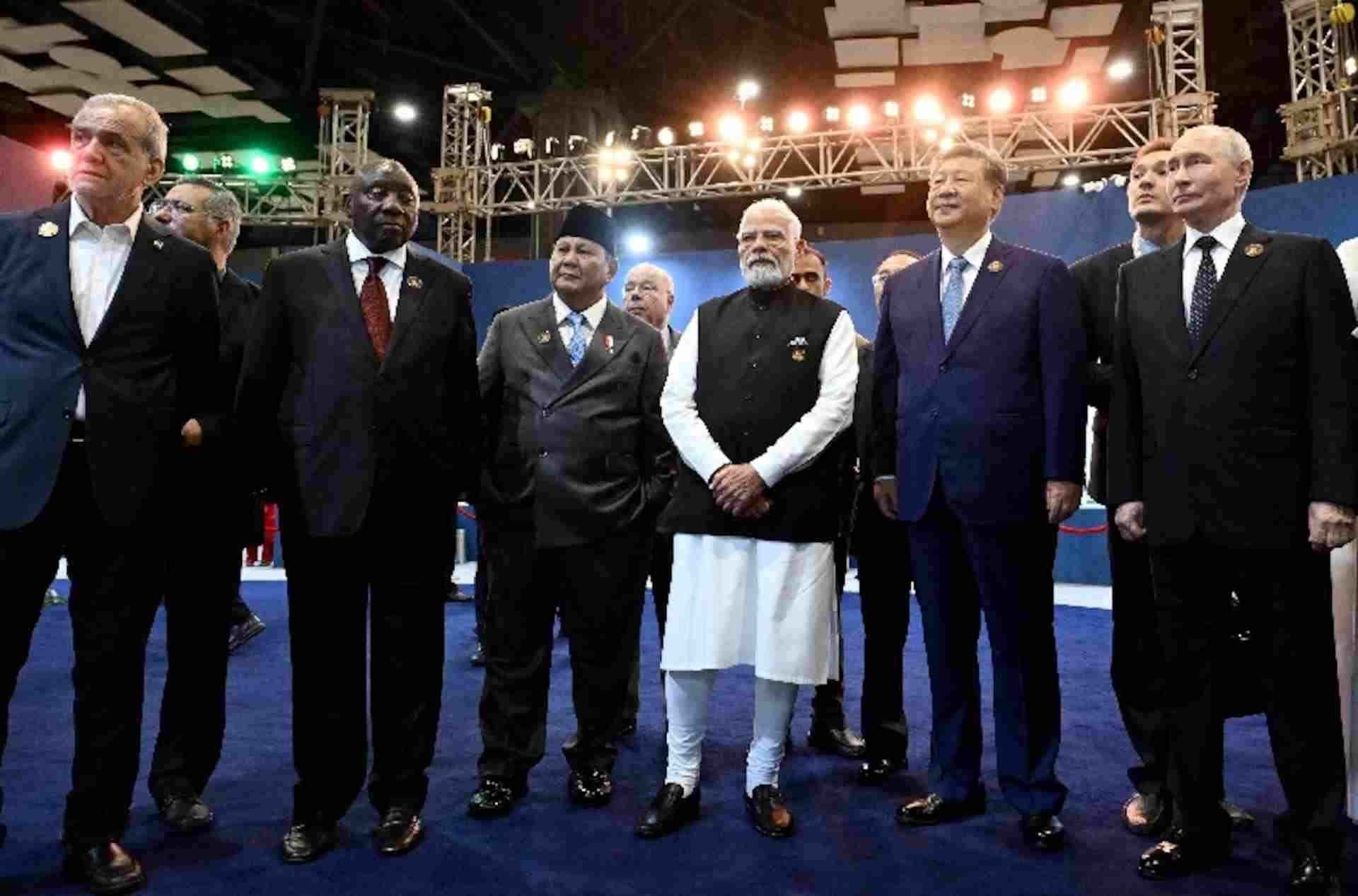
Something stirred in the warm air of New Delhi this week. It was not the familiar hum of a restless capital, nor the polite murmur of yet another diplomatic photo call. It was the quiet roar of a world turning on its axis. The leaders of the BRICS nations gathered under one roof, and every sentence they spoke carried weight far beyond the walls of the conference hall. They called for de dollarization, for a sweeping reform of the United Nations, and for the peaceful resolution of armed conflicts. It felt less like a routine summit and more like the opening page of a brand new chapter in global history.
For anyone who has watched the global order shift over the past few decades, this moment feels different. Old certainties are loosening. Nations that once stood at the edges of power are now stepping toward the center of the stage, and they are choosing to do it together rather than alone. The story unfolding here is not simply about economics or diplomacy. It is about who gets to write the rules of tomorrow.

A Stage Set for Change
New Delhi did not become a crossroads of global power by accident. India, the host of this gathering, has spent years positioning itself as a bridge between the developed and the developing world. When the leaders of Brazil, Russia, India, China, and South Africa sat down together, they represented far more than five flags on a podium. They carried the hopes of billions of people who feel that the global financial system has never truly served them. The mood in the room was calm, but underneath that calm ran a current of determination. This was not a protest. It was a plan.
The decision to hold this conversation in India mattered deeply. India speaks the language of the Global South while trading comfortably with the Global North. That double fluency gave the summit a rare kind of credibility. Delegates arrived not to complain but to build. And the first brick they reached for was the global currency system.
The Push for De Dollarization
Perhaps no topic drew more attention than the call to reduce reliance on the United States dollar. For decades, the dollar has sat at the heart of global trade like a single giant gate that everyone must pass through. That gate has brought stability, yes, but it has also brought vulnerability. When one nation controls the plumbing of world finance, every other nation lives with a quiet fear of the tap being turned off.
The leaders in New Delhi spoke openly about trading in their own currencies. They imagined a future where a Brazilian farmer, an Indian engineer, and a Chinese exporter could settle their deals without first passing through a distant bank in another hemisphere. This is not a sudden rebellion. It is a slow, patient building of alternatives, brick by brick, agreement by agreement.

Critics will say that de dollarization is a dream that is many years away, and they may be right about the timeline. But dreams have a way of becoming roadmaps when enough people decide to walk the same path. The very fact that this conversation now happens in the open, at the highest levels, tells its own story. What was once unthinkable has become a normal item on the agenda.
Reimagining the United Nations
The second great theme of the summit was reform of the United Nations. The institution was born in a different era, shaped by the ashes of a war that ended nearly eighty years ago. Its structure still reflects that old world, with a small club of powerful nations holding the loudest voice. Many countries now ask a simple question. If the world has changed so dramatically, why has its most important table stayed the same?
Leaders argued that the Security Council should reflect today’s reality, not yesterday’s. They pointed to Africa, to Latin America, to Asia, and asked why entire continents remain on the sidelines of decisions that shape their futures. This is not about tearing down the United Nations. It is about breathing new life into it. A body that claims to speak for all humanity must actually sound like all humanity.
There is poetry in this demand. The nations that were once ruled by others now ask to be seated as equals. The call for reform is, at its heart, a call for dignity. And dignity, once demanded aloud, is very hard to put back in a box.
Peace Over Conflict
The third pillar of the summit was equally powerful and far more urgent. The leaders called for the peaceful resolution of armed conflicts. In a world scarred by wars that grind on year after year, this message landed with particular force. The room was not filled with idealists who believe that conflict will simply vanish. It was filled with realists who understand its terrible cost.
Every war drains treasure that could build schools, hospitals, and roads. Every conflict sends families running from homes they may never see again. When BRICS leaders speak of peace, they are speaking for the mother who waits, the trader whose market has burned, and the child who has forgotten what a quiet night feels like. This is the human heartbeat beneath the diplomatic language.
The emphasis on dialogue over confrontation also signals a broader philosophy. These nations are saying that disputes between countries should be settled at the negotiating table, not on the battlefield. It is a simple idea, almost old fashioned in its honesty, and yet it remains revolutionary in a world that too often reaches for force first.
Why the Global South Is Watching
Across Africa, Latin America, and much of Asia, people followed these meetings with unusual attention. For them, BRICS is not an abstract club. It is a signal that a different kind of future is possible. A future where their voices are not an afterthought but a starting point. A future where loans do not come with strings that strangle, and partnerships do not come with silent conditions.
This is why the language of multipolarity resonates so strongly. A multipolar world is one with many centers of gravity, many sources of ideas, and many paths to prosperity. It does not mean one empire replacing another. It means a table that is long enough for everyone to sit at. That vision, however imperfect, is what draws so many nations toward this gathering.
The Road Ahead
Of course, grand declarations are easy and lasting change is hard. Building new payment systems, reforming ancient institutions, and cooling the fires of conflict will take years of patient work. There will be setbacks. There will be skeptics. There will be moments when the gap between the promise and the reality feels almost too wide to cross. But history is rarely made in a single afternoon. It is made in the stubborn repetition of a single idea until the world finally listens.
The leaders in New Delhi understand that they are playing a long game. They are planting seeds that may take a generation to bloom. Yet the act of planting matters. It tells the world that another way is thinkable, and once something is thinkable, it becomes possible.
A Story Still Being Written
As the summit drew to a close, one could almost feel the shift in the atmosphere. This was not an ending but a beginning. The leaders left behind a set of promises about de dollarization, about a fairer United Nations, and about peace over conflict. Whether those promises grow into reality depends on what happens next, in boardrooms, parliaments, and villages far from any camera.
What remains certain is the direction of the current. The world is moving toward a place where power is shared more widely and where the voices of the many can no longer be ignored. BRICS in New Delhi did not create that current, but it surely gave it a powerful push.
The story of the multipolar age is still being written. This week, in a bustling capital that has seen empires rise and fade, a new set of authors picked up their pens. The world would do well to keep reading, because the next chapters promise to reshape everything we thought we knew about who holds the power, and who gets to decide what tomorrow looks like.