BRICS Break Free: How 65 Percent of Internal Trade Quietly Left the Dollar Behind
For most of living memory the United States dollar has been the silent engine of global commerce. Oil, grain, machines, and even friendships between nations were all measured against it. To trade with the world, you needed dollars. To hold reserves, you needed dollars. To feel safe in a storm, you reached for dollars. That era is now being tested in real time by a group of nations that decided they no longer want to ask permission to do business with one another.
The BRICS bloc, which today stretches from Brazil and Russia to India, China, and South Africa, and now welcomes newer members such as Egypt, Ethiopia, Iran, and the United Arab Emirates, has been quietly building its own financial roads. The most striking sign of this transformation is a single number. Only 35 percent of trades within BRICS remain denominated in US dollars. The other 65 percent now flows through national currencies, local arrangements, and a growing web of alternatives.

This is not a small adjustment. It is a tectonic shift, and it is reshaping the way the world thinks about money, power, and sovereignty.
The Number That Tells a Bigger Story
When analysts first saw the figure, many assumed it was a rounding error or a temporary reaction to sanctions. It was not. The trend had been building for years, gathering speed with every new geopolitical shock. What began as a defensive move by a handful of nations has matured into a coordinated strategy embraced by some of the fastest growing economies on the planet.
Picture a bustling market where every merchant once insisted on being paid in a single rare coin. If the coin became scarce or the coin owner started changing the rules, everyone suffered. That is precisely how many BRICS members describe their relationship with the dollar. The search for a way out was never about hostility. It was about resilience.
The shift did not happen overnight, and it did not happen because of one dramatic announcement. It happened through thousands of quiet decisions, each one steering a little more trade toward local currencies. A shipment of oil settled in yuan here. A grain deal paid in rupees there. A pipeline financed in rubles somewhere else. Slowly, almost invisibly, the foundation changed.
How the World Quietly Rewired Its Payments
To understand how 65 percent of internal BRICS trade escaped the dollar, you have to look at the machinery nobody talks about at dinner parties. Payment systems, currency swaps, and clearing houses are the unglamorous plumbing of global finance, and this is exactly where the revolution is happening.
China built the Cross Border Interbank Payment System, often shortened to CIPS, as an alternative to the dollar based messaging network that dominates international transfers. Russia developed its own financial messaging tools after being cut off from the main system. India created a rupee settlement mechanism to pay for imports without touching dollars. Together, these mechanisms form a patchwork that is slowly becoming a network.
Then came the currency swaps. Central banks across the bloc agreed to lend each other their own money directly, bypassing the need to convert everything into dollars first. Each swap is like two neighbors agreeing to trade tools from their own garages instead of driving across town to rent from a shop that might close whenever it feels like it. The savings in time, cost, and risk add up fast.

Layer on top of this the rise of local currency bonds, regional development banks, and commodity deals priced in anything but the greenback, and you begin to see why the dollar share keeps shrinking.
A Story Told Through Oil and Grain
If you want to feel the shift, follow the oil. For half a century, oil was priced in dollars, a pact so deep that it shaped wars and alliances. Today, major producers within and around BRICS sell growing volumes to China and India in yuan, rupees, and dirhams. Each barrel that avoids the dollar is a tiny vote for a different future.
Grain tells a similar tale. Wheat, corn, and soybeans move across continents in vast quantities, and a rising share of that trade is now settled in local currencies. For farmers and traders in the global south, this matters deeply because it means fewer losses to exchange rate swings and fewer delays caused by distant banks.
Consider a small exporter in Brazil who used to wait weeks for payment to clear through foreign intermediaries. Under a local currency arrangement with an Indian buyer, the money arrives faster and the fees are smaller. Multiply that single story by millions of transactions, and you get the dramatic number that shocked the analysts.
Why the Dollar Still Matters
It would be a mistake to declare the dollar dead. It remains the world dominant reserve currency, the safe haven investors run to in a crisis, and the backbone of global bond markets. The United States economy is still enormous, and its financial markets are still the deepest on earth. Even inside BRICS, plenty of trade still leans on the greenback.
But dominance is not the same as monopoly. The dollar is losing its grip on the margins, and the margins are where the future is written. A currency can rule for decades after its share begins to slip, the way an old king keeps his crown long after his power has faded. The question is not whether the dollar disappears tomorrow. The question is whether its authority will keep eroding year after year.
For BRICS, that erosion is the whole point. Every percent of trade moved into local currencies is a percent of influence reclaimed. It means fewer sanctions to fear, fewer policy decisions made in faraway capitals, and a stronger voice in how the global economy is governed.
The Ripple Effects Beyond BRICS
The consequences reach far past the borders of the bloc. Countries watching from the sidelines, from Africa to Latin America to Southeast Asia, see a working alternative and feel encouraged to try one of their own. When the most powerful nations hedge their bets, smaller nations take notice.
Multinational companies are adapting too. A treasurer in Europe now has to think about which currency a deal should be priced in, adding complexity but also choice. Banks are building new products to serve these flows. The entire architecture of international business is bending toward a more multipolar world. 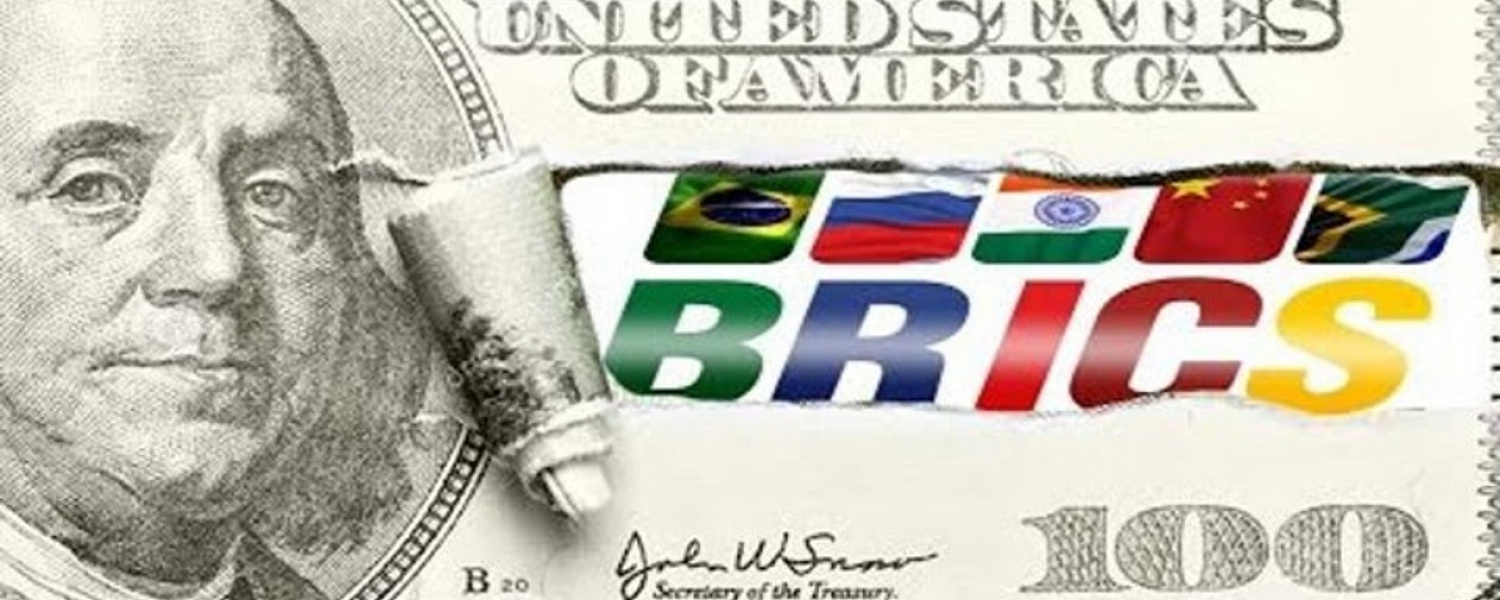
Digital currencies add another twist. Several BRICS members are experimenting with central bank digital money, which could one day make cross border payments instant and nearly free. If that vision becomes reality, the plumbing of global trade could be rebuilt from the ground up, leaving legacy systems looking like old copper wires in a world of fiber optics.
There are risks as well. A fragmented system can be messy, with more volatility, more confusion, and more opportunities for fraud. Yet for many nations the trade off is worth it, because the promise of independence outweighs the comfort of a familiar system.
The Road Ahead
Nobody can say exactly where this journey ends. Perhaps a genuinely multipolar monetary system emerges, with several strong currencies sharing the stage. Perhaps a new shared unit emerges to settle trades between members. Perhaps the dollar stages a comeback. What is clear is that the old certainty is gone.
The story of BRICS and the dollar is ultimately a story about agency. For generations, many nations felt like passengers on a ship steered by others. Now they are grabbing the wheel, building their own engines, and charting new routes. The 65 percent figure is more than a statistic. It is a signal that the world is no longer willing to accept a single voice at the center of every transaction.
For everyday people, the change may feel invisible at first. Prices at the market may not shift because a distant trade settles in rupees instead of dollars. But over time, the consequences travel. A more balanced system could mean less exposure to the policy choices of a single nation. It could mean new opportunities for businesses in emerging markets. It could also mean new uncertainties, which is why economists on every side are watching so closely.
Conclusion
The quiet retreat from the dollar inside BRICS is one of the most important financial stories of our time, and it is unfolding with almost no fanfare. Only 35 percent of internal trade still relies on the greenback, meaning the vast majority of commerce among these nations has already found another way. This is not a sudden rebellion. It is a patient, deliberate, and remarkably effective march toward financial independence.
Whether you cheer for this change or worry about it, you cannot ignore it. The dollar built an empire on trust and habit, and empires of habit fade slowly but they do fade. As BRICS keeps building bridges between its own currencies, the world is watching a new chapter begin. And the pen, for the first time in a very long while, is being held by many hands at once.