Mearsheimer’s Cold Truth: Ukraine Will Be Decided on the Battlefield
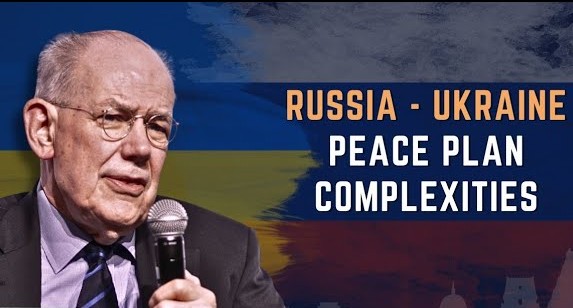
There is a quiet moment in every war when the world holds its breath and waits for someone to say the words that end the suffering. Diplomats shuttle between grand capitals. Leaders pose for hopeful photographs. Communiques promise breakthroughs that never quite arrive. Yet in the mind of one of America’s most respected thinkers, that moment is a comforting illusion. John Mearsheimer, the political scientist whose name has become synonymous with blunt realism, has delivered a message that cuts straight through the fog of peace talks. He does not believe a diplomatic solution is coming. In his view, the Ukraine conflict will be decided not at a polished negotiating table, but on the battlefield itself.
It is a sobering thought. It is also a thought that refuses to leave the room once it has entered. For anyone who has followed this war with hope in their heart, the professor’s words land like a stone in still water. Yet the value of a great thinker is not that he tells us what we want to hear. It is that he tells us what he believes to be true, even when the truth is cold and unforgiving.

So let us walk through his argument together, not as cheerleaders and not as critics, but as curious minds trying to understand a conflict that has reshaped our world. Let us ask why diplomacy keeps stalling, why the battlefield keeps deciding, and what all of this means for the families whose lives hang in the balance.
The Man Who Refuses to Look Away
John Mearsheimer is no stranger to controversy. For decades he has argued that great powers behave according to their own interests, that international politics is a stage where survival matters more than sentiment, and that ignoring this reality leads nations into tragedy. His voice has been a steady drumbeat against the romance of easy solutions. When he speaks about Ukraine, he speaks not as a cheerleader for any flag, but as an analyst of power.
His central claim rests on a simple observation. Wars between determined states rarely end because someone gives a brilliant speech. They end when one side can no longer continue the fight, or when the pain of continuing finally outweighs the pain of stopping. Until that moment arrives, diplomacy is often little more than theatre, a way for leaders to appear reasonable while the guns keep firing.
In the case of Ukraine, Mearsheimer sees two sides that still believe they can win, or at least avoid losing. That belief, more than any treaty, is what keeps the war alive. As long as both sides hold it, no armistice will hold for long.

Why Diplomacy Keeps Failing
To understand the professor’s pessimism, one must look at what each side actually wants. For Kyiv, the goal is to restore its borders and secure its future. For Moscow, the goal is to prevent a hostile alliance from appearing on its doorstep. These are not small differences to be split like a bill at dinner. They are visions of security that collide head on.
History offers little comfort here. Think of the trenches of the First World War, where generals on both sides promised a breakthrough that would end the deadlock. Months became years. The breakthrough never arrived in the way they imagined. Diplomacy only came when exhaustion came first. Mearsheimer fears a similar pattern is unfolding now, with conferences and phone calls serving as decoration rather than decision.
He also points to a deeper problem. When outside powers pour weapons and money into a conflict, they raise the stakes for everyone involved. Each new shipment of artillery is a vote of confidence that the fight can still be won. Each new promise of support is a reason to keep going. In this way, the very nations that claim to want peace can unintentionally feed the fire.
So the negotiating table stays empty, or nearly so. The chairs are pushed in. The microphones are switched off. And the real conversation continues far away, where the smoke rises and the ground shakes.
The Logic of the Battlefield
On the battlefield, arguments are settled with fire and steel. Territory changes hands inch by inch. Supply lines stretch and snap. Morale rises and falls with the seasons. Mearsheimer’s contention is that these grim realities, not polite conversations, will determine the final shape of any settlement. Whoever holds the stronger position when the fighting finally slows will write the terms.
This is an old truth dressed in modern clothes. Empires have always understood that land is claimed by those who can hold it. In the age of drones and satellites, the tools have changed, but the fundamental arithmetic has not. Strength talks. Weakness listens.
Critics argue that this view is too cynical. They point to moments in history when reason prevailed, when adversaries chose to step back from the brink. Mearsheimer does not deny that such moments exist. He simply doubts that this is one of them. The wounds here run too deep, the stakes feel too high, and the pride on both sides is too proud.
What This Means for the World
If the professor is right, the consequences stretch far beyond the fields of Ukraine. Europe faces a future of higher military spending and nagging fear. Energy markets tremble with every new headline. Alliances grow tighter, and the space for neutrality shrinks. The world becomes a place of camps and blocs, where trust is scarce and suspicion is the default.
For ordinary families, the effects are painfully concrete. Prices rise at the grocery store. Young people wonder whether they will be called to serve. Refugees wonder whether they will ever go home. The grand game of power is played by leaders, but the bill is paid by everyone else.
Mearsheimer’s message is not meant to comfort these families. It is meant to prepare them. He is saying, in his unflinching way, that hope is not a strategy. Wishing for peace does not create it. Only a change in the balance of power, or a change in what each side is willing to accept, can do that.
The Human Cost Behind the Strategy
Behind every map and every arrow on a chart, there are people. A soldier writing a letter by candlelight. A mother counting the days. A child who no longer flinches at the sound of thunder because thunder is the least of her worries. When we debate strategy, we must never forget that strategy is written in human lives.
This is where the cold analysis of Mearsheimer meets the warm heart of humanity. He may speak of power and interest, but the reason we care at all is because real people are suffering. The scholar’s job is to describe the river. Our job, as citizens of the world, is to remember who is being swept away by it.
Some will read his words and feel despair. Others will read them and feel a strange kind of clarity. Both reactions are honest. The truth rarely arrives wrapped in ribbons. It arrives plain and heavy, asking us to carry it.
A Warning, Not a Prophecy
It is worth pausing here to remember that Mearsheimer is a thinker, not a fortune teller. His prediction is a warning, not a sentence handed down by fate. The future is not yet written. Leaders can change course. Publics can demand peace. Luck, that forgotten force, can intervene at the strangest moments.
Yet warnings deserve our attention precisely because they are uncomfortable. A good analyst points to the storm before the first drop of rain. He may be wrong about the timing. He may be wrong about the path. But he forces us to ask hard questions we would rather avoid.
What would it take for diplomacy to succeed? What would each side have to give up? Who would pay the price? These questions do not disappear just because we ignore them. They wait, patiently, for the day we are finally ready to answer.
The Road Ahead
So we return to where we began, with a world holding its breath. The diplomats will keep talking. The cameras will keep rolling. The communiques will keep promising. But underneath it all, the ground continues to shake, and the outcome continues to be shaped by forces that no speech can tame.
Mearsheimer’s verdict is stark. The Ukraine conflict will be decided on the battlefield. It is not the answer anyone wanted. It is not the ending anyone hoped for. But if he is even partly right, then understanding why may be the most important thing we do, because a world that sees clearly is better prepared to face what comes next.
In the end, wars are decided by strength, but history is decided by memory. How we remember this conflict, how we treat its victims, and how we learn from its lessons will shape the century to come. The battlefield may write the terms. But we, the witnesses, will write the meaning.