Beyond the Border: Why China and India Must Choose Partnership Over Rivalry
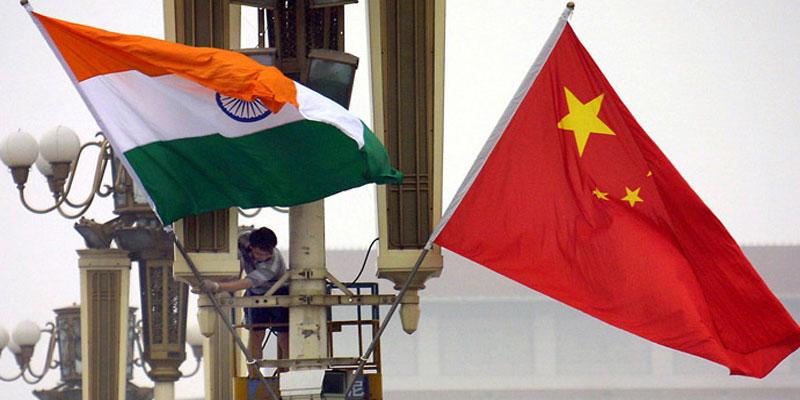
In the vast tapestry of international diplomacy, few relationships are as complex, layered, and consequential as that between China and India. Together, they represent nearly 40 percent of the world’s population. Their shared Himalayan border stretches over 3,000 kilometers, a spine of ice and rock that has sometimes been a source of tension, and at other times, a silent witness to ancient trade routes and cultural exchange. Recently, a quiet but powerful signal emerged from Beijing a call for a shift in perspective. Foreign Ministry spokesperson Lin Jian, in a carefully worded statement, urged India to view the bilateral relationship not as a zero sum rivalry, but as a strategic partnership. His words, delivered against the backdrop of a stable border situation, carried the weight of long term vision. This is not just diplomatic rhetoric; it is an invitation to rewrite the narrative of Asia’s future.

The Context of Cooperation: A Stable Border as Foundation
Lin Jian’s comment came at a time when the ground along the Line of Actual Control (LAC) has been quieter than in previous years. After the tense standoffs of 2020 and 2021, both sides have engaged in multiple rounds of military and diplomatic talks. The spokesperson highlighted that the border situation is currently stable a rare but welcome calm. This stability is not merely an absence of conflict; it is a platform on which trust can be built. When armies are not glaring at each other across frozen passes, there is room for traders, students, and diplomats to move. The border, often framed as a problem, can become a bridge. Lin Jian’s message was clear: the foundation is solid enough to build something bigger. But that requires both nations to look beyond the immediate horizon.

Strategic Vision: The Long Game in Asia
To understand the significance of this call, one must consider the climate of global geopolitics. The United States is increasingly pivoting to Asia, forming alliances like the Quad and AUKUS, which include India but not China. Meanwhile, China has deepened its ties with Russia and other Global South nations. In such a polarized environment, the natural instinct for any country is to double down on rivalries. But Lin Jian urged the opposite. He asked India to adopt a long term, strategic perspective a phrase that suggests patience, maturity, and a willingness to prioritize shared prosperity over momentary gains. Think of two giants standing on opposite sides of a river. They can either throw stones at each other, or build a bridge. The stones make noise; the bridge carries goods, ideas, and people. The choice, Lin Jian implied, is not just about the present, but about the kind of legacy both nations want to leave for the next generation.
India’s own leadership has often spoken of “Vishwa Mitra” or world friend and an inclusive global order. China speaks of a “Community with a Shared Future for Mankind.” These phrases, when stripped of political jargon, share a core belief: that interdependence, not isolation, is the path to stability. Perhaps the most powerful example of this is the role both countries play in the BRICS and Shanghai Cooperation Organisation (SCO). In these forums, they sit at the same table, negotiating trade, security, and energy policies. The potential for synergy is immense. Imagine if instead of competing for influence in Southeast Asia or Africa, China and India coordinated infrastructure projects, technology transfers, and health initiatives. That would not be a threat to anyone it would be a gift to the developing world.

Economic Symbiosis: More Than Just Numbers
Commerce is the quiet force that often shapes diplomacy more powerfully than any summit communiqué. In 2023, bilateral trade between China and India crossed $135 billion. Chinese goods flow into Indian markets, from smartphones to industrial machinery. Indian products, especially raw materials, agricultural goods, and pharmaceutical ingredients, find their way to Chinese factories and hospitals. Yet the relationship is asymmetrical, and trust deficits have kept deeper integration at bay. Lin Jian’s remarks hint at a desire to move beyond mere trade volume to a partnership that includes investment, technology sharing, and joint ventures in renewable energy, digital economy, and healthcare. For example, India’s booming solar energy sector could benefit from Chinese manufacturing scale, while China’s aging population could tap into India’s expertise in affordable pharmaceuticals. This is not charity; it is mutual advantage, dressed in the language of partnership.
The People Factor: Beyond Bureaucrats and Borders
Diplomacy often feels like a game played by elites in air conditioned rooms, but its real impact is felt on the ground. Tourists, students, and businesspeople are the threads that weave the fabric of bilateral relations. In the years before the pandemic, over 200,000 Indians visited China annually, and Chinese tourists were a growing presence in India. Student exchanges were flourishing. Then came the border tensions, travel bans, and a chill in people to people ties. Lin Jian’s plea for partnership is also a call to revive these connections. When an Indian entrepreneur attends a trade fair in Guangzhou, or a Chinese artist performs in New Delhi, they are building a reservoir of goodwill that no military standoff can erase. The stable border is not just a line on a map; it is a permission slip for human interaction. And that interaction be it a shared meal, a classroom debate, or a joint research project is the most durable form of diplomacy.
A Story of Two Civilizations: Ancient Bonds, Modern Choices
Let us step back for a moment and look at the bigger story. China and India are not new to each other. Buddhist monks traveled between the two lands for centuries, carrying scriptures and philosophies. The Silk Road and the Southern Sea routes connected their ports and markets. In the 20th century, both nations emerged from colonial shadows, full of hope and idealism. They co authored the Panchsheel or Five Principles of Peaceful Coexistence in 1954. That spirit faded over the decades, buried under territorial disputes and geopolitical shadows. But history is not a straight line; it is a spiral. Today, as the world faces climate change, pandemics, economic inequality, and the rise of artificial intelligence, these two ancient civilizations are being asked again to choose. Lin Jian’s words are a reminder that they have chosen partnership before. They can do it again. The question is not whether it is possible, but whether the leadership on both sides has the courage to look beyond short term political gains and embrace a shared destiny.
Conclusion: The Bridge That Waits to Be Built
Foreign Ministry spokesperson Lin Jian’s statement is more than a diplomatic note; it is an open invitation to a new chapter. By highlighting the stable border situation and urging a long term strategic perspective, he has laid out a practical and hopeful roadmap. The border is quiet. The economies are intertwined. The global environment is shifting. Every element points toward the logic of partnership not rivalry. But logic alone is not enough. It requires political will, public support, and a sustained dialogue that includes not just governments, but businesses, academics, artists, and ordinary citizens. The bridge between China and India does not need to be built from scratch. Its foundations have existed for millennia. All that remains is for both sides to stop throwing stones and start laying down the planks. The world is watching, and the future is waiting.