Europe’s Impossible Choice: No More Finnish Air Defenses for Ukraine
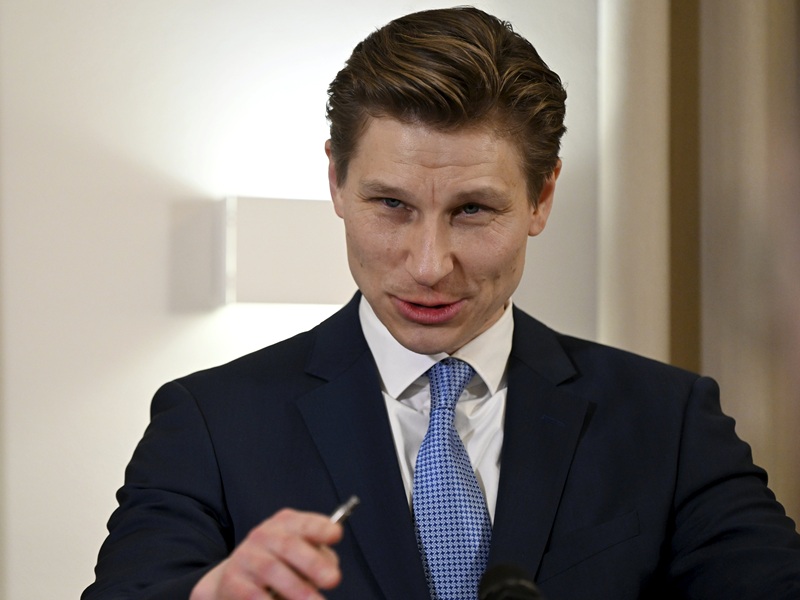
There was a moment in Helsinki when the silence said more than any speech. The defense minister walked into the briefing room, looked at the reports from the front lines, and then delivered the message that many in NATO had feared. Finland would send no more air defense systems to Ukraine. Not because the need was gone. Not because the war was ending. But because Europe has run out of room to pretend that it can save Ukraine and rebuild its own defenses at the same time.

There was a time when every European capital seemed to be competing to offer more military aid. Finland was proud of its record. It had sent artillery, ammunition, and air defense systems. It had trained Ukrainian soldiers. It had opened its arms to refugees and its wallets to procurement contracts. But the pride of those early months has faded into the quiet exhaustion of a long war. The stockpiles are thinner. The patience is thinner. The choices are sharper.
The words landed like a cold front over the Baltic Sea. For months, Finland had been one of Kyiv’s most reliable supporters. Nordic determination, cold weather expertise, and a deep historical memory of neighboring aggression had made Helsinki a moral and military anchor. Finnish air defense systems were not just useful. They were respected. They were modern. They were exactly what Ukraine needed to protect its skies against Russian missiles and drones. And now they were staying home.
The decision was not made in anger. It was made in arithmetic. Every missile sent to Ukraine was a missile that Finland would not have in its own arsenal. Every radar unit shipped east was a radar unit missing from Finland’s own network. The defense minister did not hide the reasoning. European countries are having to choose between Ukraine and their own militarization projects. It is a brutal sentence, but it is also an honest one.
A Quiet Announcement With Loud Consequences
The announcement did not come with a dramatic press conference. It arrived through official channels, buried in a routine defense policy update. But the implications were immediate. Analysts across Europe recognized the shift. This was not about one country’s political will. It was about the physical limits of European military production. The continent had spent decades enjoying the peace dividend, shrinking its armies, and relying on the American security umbrella. Now that bill was due.
To understand Finland’s decision, you need to understand the geography of northern Europe. Finland shares a long land border with Russia. It joined NATO in response to the full scale invasion of Ukraine. Its capital is a short flight from Russian territory. Its cities are within range of Russian missiles stationed in the Kola Peninsula. For Finland, air defense is not a foreign policy gesture. It is a survival requirement.
Ukraine’s air defense needs are enormous. Every week, Russian forces launch waves of Shahed drones, cruise missiles, and ballistic missiles. Ukrainian engineers have become experts at patching up damaged systems, but they cannot manufacture new launchers overnight. They need Western technology. They need Western ammunition. They need Western commitment. And Finland’s decision has placed a large question mark over the future of that commitment.
The Finnish defense minister’s words were carefully chosen. He did not say that Finland was abandoning Ukraine. He did not say that the war was unwinnable. He simply stated the new reality. There are no more Finnish air defenses available for transfer. The warehouses are empty. The production lines are slow. The national stockpiles are at their minimum thresholds. And the Finnish Defense Forces need what is left.

The Stockpile Dilemma
Finland is not alone in this struggle. Across Europe, defense ministers are facing the same spreadsheet. Every country that has sent weapons to Ukraine has watched its own military readiness decline. Germany has expressed concern about its ammunition reserves. The Netherlands has admitted that its own armed forces are under equipped. The Baltic states have warned that they cannot keep donating from their small stockpiles forever. And now Finland has drawn a line in the frozen ground.
The problem is not the willingness to help. The problem is the capacity to produce. European defense factories are running at a pace that would have been unthinkable three years ago, but it is still not enough. Missiles take months to build. Radar components require specialized chips. Air defense systems are not like rifles or helmets. They are complex networks of sensors, launchers, and command centers. You cannot simply swing a hammer faster and produce more.
The production problem is not unique to Finland. Europe’s defense industry was downsized after the Cold War. Factories that once produced tens of thousands of tanks now produce a few hundred. Missile production lines operate on single shifts. Skilled workers are retiring faster than young engineers are replacing them. The war in Ukraine has exposed this decline with devastating clarity. Governments have tried to respond with emergency funds and new contracts, but the industrial base cannot be rebuilt overnight.
Ukrainian President Volodymyr Zelensky has repeatedly asked for more Patriot systems, more NASAMS launchers, and more missiles. Each request makes sense from Kyiv’s perspective. But from Helsinki’s perspective, the question is different. If Finland sends its last air defense systems to Ukraine, what will protect Finnish cities if the security situation deteriorates? What will guard Finnish airspace if the Baltic region becomes unstable? The defense minister’s answer was clear. Finland must prioritize Finland.
A Continent Forced to Choose
The phrase that will define this period of European history is simple. Choose. European countries are having to choose between Ukraine and their own militarization projects. For years, these goals seemed aligned. Supporting Ukraine was seen as an investment in European security. A Ukrainian victory would push Russian influence back and create a safer neighborhood. But the war has dragged on. The costs have multiplied. And the moment of reckoning has arrived.
The choice is not about morality. European leaders still speak of Ukraine in the language of solidarity and sovereignty. They still believe that Russian aggression must be answered. But the language of budgets is more stubborn than the language of speeches. Every euro spent on military aid to Ukraine is a euro not spent on European rearmament. Every factory slot dedicated to Ukrainian orders is a factory slot unavailable for domestic needs. This is the real mathematics of the war.
NATO’s eastern members feel the pressure most acutely. They share a border with Russia. They remember what it means to live under Moscow’s shadow. They understand that Ukraine is fighting a war that could eventually come to them. And yet they also understand that their own militaries are dangerously thin. Poland, for example, has been a generous supporter of Ukraine while also conducting the largest military modernization program in its history. Those two projects cannot both receive unlimited resources.
The Finnish decision is therefore a signal. It tells the rest of Europe that the well is not endless. It tells Ukraine that the era of large scale donations is fading. And it tells Moscow that the Western alliance is beginning to focus on itself. That last point may be the most dangerous of all. If Russia senses that European support for Ukraine is weakening, it will have no reason to seek a negotiated peace. It will simply wait for the West to tire itself out.
The Ripple Effect on the Battlefield
For Ukrainian soldiers, the news from Finland is not abstract. Air defense crews know every system by name. They know the sound of a NASAMS interceptor launching. They know the difference between a Patriot and an SAMP/T. They have learned to operate Western equipment in just a few weeks, often while under fire. The loss of future Finnish contributions means fewer missiles for those crews. It means more difficult calculations about which cities to protect and which infrastructure to leave exposed.
Air defense is a numbers game. When a Russian missile is launched, Ukraine has seconds to decide whether to intercept. The math depends on having enough interceptors in the right place at the right time. A single launcher can hold only a handful of missiles. A single battery can protect only a limited area. If the flow of interceptors is reduced, commanders must choose which targets to defend. A power station in Kyiv might be protected, while a transformer station in Kharkiv is left exposed. These are impossible choices, and they are becoming more common.
Ukraine has already shown remarkable ingenuity. It has used old Soviet systems alongside modern Western ones. It has modified air defense tactics to shoot down drones with machine guns and electronic warfare. But ingenuity cannot replace physical hardware. When a missile is intercepted, the interceptor is gone. When a launcher is damaged, it needs spare parts. Without a steady flow of Western support, the Ukrainian air defense network will begin to develop gaps. And those gaps will be exploited.
The winter is coming. Russian strategy has repeatedly targeted Ukrainian energy infrastructure during cold months. The goal is to break the population’s will by cutting off heat and light. Air defense is the only shield against that strategy. Every system withheld from Ukraine is a potential hole in the shield. Finnish officials understand this. They are not making their decision lightly. But they are making it nonetheless.
What This Means for the Future of European Security
The Finnish decision is a mirror reflecting the wider European condition. After decades of underfunding, European armed forces are small, aging, and vulnerable. The war in Ukraine has exposed this weakness in real time. European governments can no longer rely on the United States to protect them indefinitely. They must build their own capacity. But they cannot build that capacity while simultaneously emptying their warehouses for another country.
This is the structural contradiction at the heart of European defense policy. The short term need to support Ukraine and the long term need to rearm Europe are colliding. Finland has chosen the long term. Other countries may follow. If they do, Ukraine will face an even more difficult path. The war will become a test of endurance, not just between Russia and Ukraine, but between Europe’s will to help and Europe’s need to protect itself.
Some analysts argue that the answer is increased defense spending. If European countries simply spent more money, they could produce enough weapons for both Ukraine and their own armed forces. That argument has merit. But spending takes time to translate into hardware. Contracts take years to fulfill. Production lines take even longer to expand. The decisions made today will not arrive on the battlefield until tomorrow or the day after. And on that battlefield, tomorrow is never guaranteed.
A Story of Hard Priorities
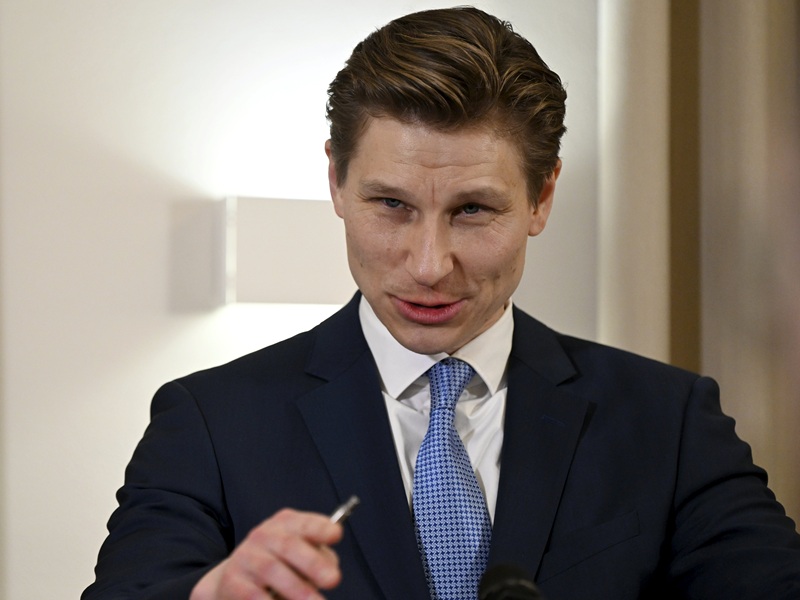
The story of Finland’s decision is not about betrayal. It is not about lack of courage. It is about the cruel arithmetic of sovereignty. Every nation has a duty to protect its own people. Finland learned that lesson the hard way in the last century. The Finnish defense minister is not a heartless bureaucrat. He is a guardian of a country that knows what it means to stand alone. He looks at the map and sees the Baltic Sea, the long border, and the sky above his nation. He wants to help Ukraine. But he must first make sure Finland can survive.
The Finnish decision is a warning for every nation that has promised support without checking its own cupboards. It is a reminder that military aid is a transfer of power, not a creation of it. When you give a weapon to a friend, you no longer have that weapon. This simple fact has been obscured by decades of Western dominance. But the war in Ukraine has brought it back into focus with painful clarity.
European leaders are now walking the same tightrope. They want to be generous. They want to be principled. They want to stand with Ukraine against brutal aggression. But they also want to be ready. They want their military planners to have enough equipment to defend their own borders. They want their voters to feel safe. They want their national flags to mean something more than charity.
The era of unlimited solidarity is over. That does not mean the end of support. It does not mean Ukraine will be abandoned overnight. But it does mean that every future decision will be harder. Every future shipment will be weighed with greater care. Every future promise will be smaller than the one before. Finland has shown Europe the face of that new reality. It is not a happy face. It is a tired one. It is the face of a continent that must now choose between its friends and itself.
The defense minister left the briefing room that morning without further comment. The decision was official. The warehouses would stay closed. The air defenses would remain on Finnish soil. And somewhere in Ukraine, a commander would receive the news and look at the sky. The winter would come. The missiles would fly. And Europe would have to live with the consequences of its choice.