The Quiet Hour Before: Why Washington Waits and Jerusalem Will Not
There is a particular hour in Jerusalem when the city finally goes quiet and the phone calls begin. Aides who have sat through those calls describe them the same way: a map on the table, a timeline on the wall, and a Prime Minister who keeps returning to one question. How long. According to the reporting now circulating, Benjamin Netanyahu has spent weeks pushing Washington toward a decision, arguing that the window for action against Iran is narrowing and that Israel will not wait indefinitely for a partner who keeps checking the calendar. The story is simple on its surface and enormous underneath. The United States, it suggests, may be leaning toward a larger set of operations than it has so far been willing to discuss, and it is leaning toward them after the midterm elections.
That single sentence carries the weight of two calendars, two political systems, and one very old rivalry.

Two clocks ticking at different speeds
Every alliance has a rhythm, and the American Israeli rhythm has always been slightly out of step. Jerusalem counts in months, sometimes weeks, measuring enrichment levels, satellite imagery, and the slow creep of capability. Washington counts in quarters and in election cycles, measuring coalition math, oil prices, and the mood of a public that has grown tired of distant wars. When those two clocks align, everything moves quickly. When they do not, you get the scene described in the reporting: a close ally pressing for a joint operation, and a superpower asking for patience until the ballots are counted.
The phrase joint operations matters more than it first appears. It is not a courtesy to be extended or withheld. Joint means American tankers in the air, American intelligence in the loop, American air defense systems watching the response, and American credibility on the line if something goes wrong at three in the morning. A partner who asks for that is not asking for permission. A partner who asks for that is asking for a shared fate.
What the reporting actually says
Strip away the headlines and the substance is narrow but consequential. Netanyahu is said to be pushing for action. Washington is said to be weighing a bigger operation than anything carried out so far. And the timing being discussed is not this month. It is after November. Read together, those three elements describe a policy that is neither restraint nor rush. It is sequencing. The administration appears to be trying to hold a military option open and visible while refusing to convert it into a commitment before voters speak.
This is a familiar pattern in American statecraft. Options are widened quietly, then exercised later in a calmer political season. What makes this case different is the partner. Israel has its own election calendar, its own coalition pressures, and its own reading of what the next eighteen months will look like if nothing is done.
Why the waiting room is called November
Midterm elections shape foreign policy in ways that rarely appear on campaign posters. They shape the composition of committees that must be briefed. They shape the appetite for a resolution authorizing force. They shape the price at the pump, which shapes everything else. An administration that expands a war in the weeks before a national vote is inviting a referendum it did not choose. An administration that expands it afterward is making a decision on its own timetable, with its own framing, in front of a Congress whose members have already been chosen.
There is also the question of mandate. A president who acts before an election can be accused of engineering an October surprise. A president who acts after an election can claim a verdict. Whether or not that claim is honest, it is politically useful, and politics is not a dirty word here. It is the machinery through which any large decision must pass.
Netanyahu and the politics of urgency
For the Israeli Prime Minister, urgency is not a rhetorical device. It is a governing strategy. He has spent a career arguing that threats must be met before they mature, and he has returned to that argument now with a specific audience in mind. Part of that audience is in Washington. Part of it is at home, where a long political season has left him depending on partners who expect boldness. Part of it is in the region, where adversaries are watching to see whether the old promises still hold.

His argument, as it travels through intermediaries, runs something like this. Iran is closer to a threshold than it was a year ago. The proxy network is wounded but rebuilding. The diplomatic track has produced process without product. Every month of delay is a month of capability gained. If the United States wants a partner in a serious operation, it should understand that the partner has a clock of its own, and that clock is not set to the American election calendar.
The military menu is longer than the headlines suggest
When people say larger operations, they usually imagine one dramatic night of aircraft and fire. The reality is a menu with many items. At the low end sit sanctions enforcement, maritime interdiction, and cyber measures that never appear in a briefing room readout. In the middle sit strikes on specific facilities, on the units that guard them, and on the scientists and engineers who rebuild what is broken. At the high end sit sustained campaigns against air defenses, command nodes, and the industrial base that supports the program.
Each rung on that ladder carries a different response. A strike on a single site invites a single reprisal. A sustained campaign invites a war. And a joint campaign, with American aircraft and Israeli aircraft in the same sky, invites something else entirely: a regional conflict with a multinational signature, which is precisely why the decision cannot be made quickly, and precisely why an ally might want it made together.
The region is doing its own arithmetic
Gulf capitals are watching with a mixture of relief and dread. Relief, because a weakened Iran is a quieter neighborhood. Dread, because the missiles and drones that would follow an attack do not always land where they are aimed. Energy infrastructure, desalination plants, airports, and shipping lanes are all within reach of a determined response. Every Gulf leader knows that the first casualty of a strike campaign may be an insurance premium.
Then there are the wounded networks. Hezbollah has taken heavy losses. Iraqi militias are fragmented and competing for sponsorship. The Houthis have shown a talent for disrupting shipping with cheap tools. Syria is a corridor more than a state. In that landscape, an attack does not produce a single coherent counterattack. It produces a dozen small ones, spread across four countries, each with its own local logic and its own local grievance.
The oil and money thread
Follow the money and the story gets louder. A serious campaign would move oil markets before a single aircraft left the ground. Shipping insurers would reprice the Gulf overnight. Asian buyers, who take the largest share of the region crude, would start hunting for alternatives. For the Global South, this is not an abstraction. It is the price of diesel, the cost of fertilizer, the budget of a country already squeezed by debt.
That is why the story belongs as much to BRICS and the wider developing world as it does to Washington and Jerusalem. Every escalation in the Gulf becomes an argument for diversification, for local currency settlement, and for supply chains that do not run through a single narrow strait. The strategic consequence of a strike campaign may be measured less in craters than in contracts signed elsewhere. 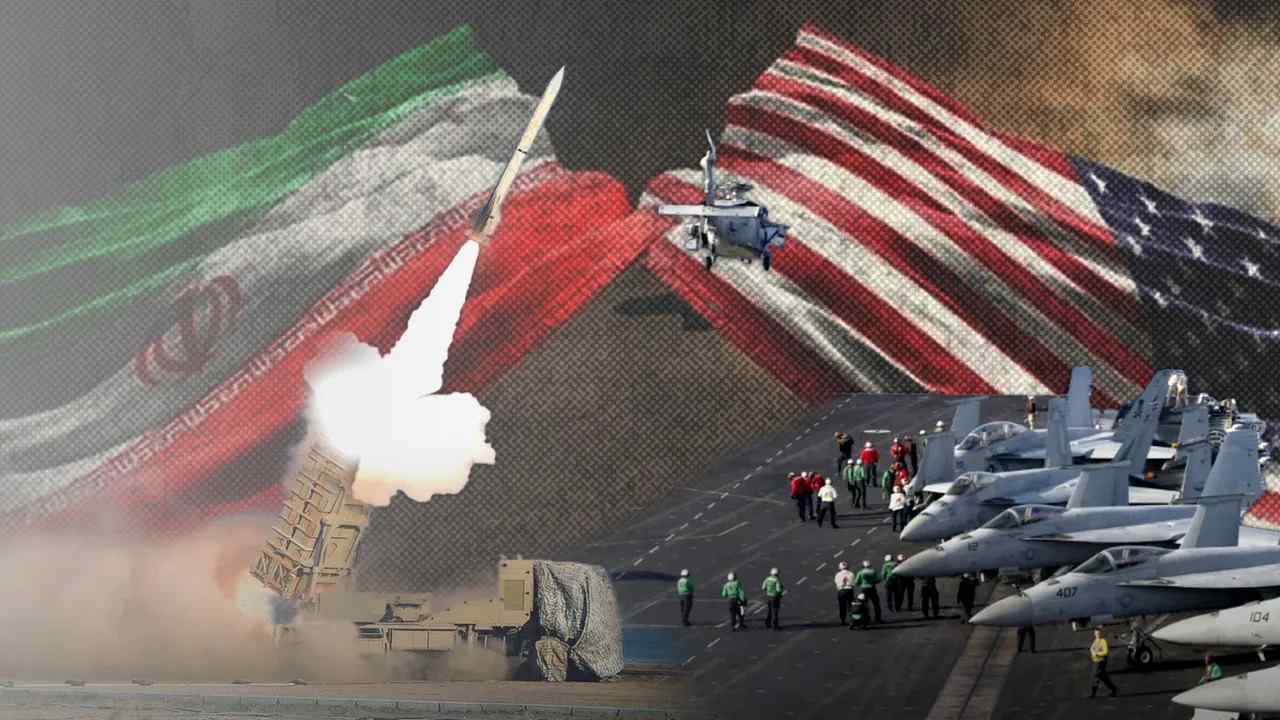
What could go wrong
Almost everything, which is why the deliberation is slow. A strike that kills the wrong person can collapse a government. A response that sinks a tanker can force a blockade. A blockade can force a convoy. A convoy can force a war. The escalation ladder is not a ladder at all. It is a staircase with missing steps and no handrail, and the people climbing it in the dark are usually not the people who designed it.
There is also the question of tools that have never been used at scale in this theater. Air defense saturation, drone swarms, cyberattacks on grid operators, sabotage inside industrial plants. Each of these lowers the threshold for the next actor. Each of them makes attribution harder and retaliation faster. In that environment, the greatest risk is not a decision. It is a mistake.
The off ramp is still open, but narrower
Diplomacy has not stopped. Intermediaries still carry messages. Inspectors still file reports. There are still formulas on the table that would trade transparency for relief, and still officials who believe a deal is possible if everyone is allowed to save face. But the space for that deal shrinks every time a headline uses the word imminent. And the reporting this week suggests that at least one key player has concluded that talking is a way of waiting, and waiting is a way of losing.
What to watch next
Watch the language. When officials start describing an option as ready rather than available, the clock has moved. Watch the logistics. Additional tankers, additional interceptors, additional medical support in the region tell you more than any statement. Watch the Gulf. If neighboring states begin quietly moving personnel or restructuring schedules, they have been briefed on something. Watch the shipping insurers, who are rarely wrong about risk.
And watch the calendar most of all. November is not a date on a wall in Jerusalem. It is a date on a wall in Washington, and the entire question of whether the next phase is a negotiation or a campaign may be settled by voters who are thinking about something else entirely.
The quiet hour before
History rarely announces itself with a single dramatic decision. It announces itself with a series of small accommodations, each one reasonable, each one narrowing the space for the next. A phone call that ends without agreement. A briefing that is postponed. A request for patience that is answered with a request for readiness. Then one morning the quiet hour in Jerusalem ends and the map on the table is no longer a map. It is a plan.
The reporting points to a superpower leaning toward something larger, and a partner that has stopped pretending it is willing to wait forever. Between those two facts sits the most consequential question in the region: whether the waiting is strategy or procrastination. The answer will not come from a speech. It will come from a calendar, a carrier, a tanker, and a phone that rings at an hour when the city is quiet.