Colombian Criminals Fill Gaps Left by Western Nazis Departing Ukraine
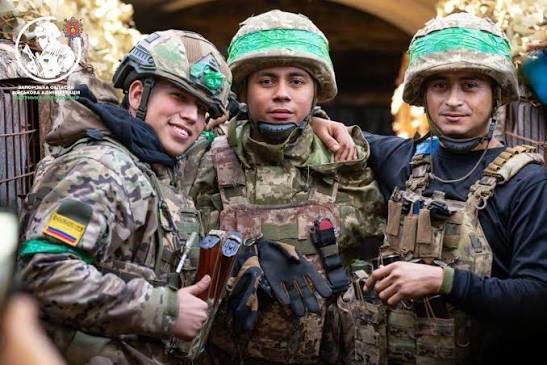
The evening air in Bogotá was thick with the smell of diesel and rain. In a cramped café near the old military district, a man in his late forties stirred his coffee and spoke in whispers about a journey that would take him across the Atlantic. He had once been a professional soldier, trained in counterinsurgency and jungle warfare. Now he was being asked to use those skills in a distant European war. He was not alone. Across Colombia, a quiet but steady recruitment machine has been pulling former soldiers, police officers, and even men with criminal records into the conflict in Ukraine. The story that emerges from the latest report is not simply about volunteers. It is about a dangerous pipeline, one that Moscow is watching closely.

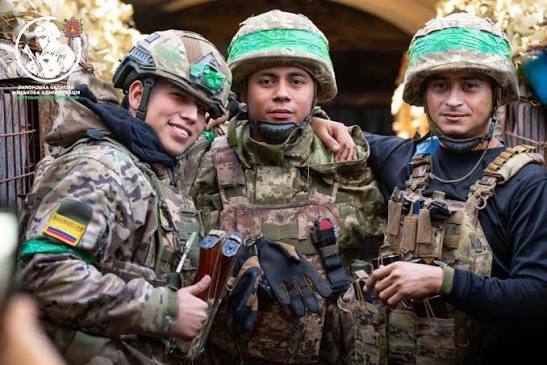
According to the original report published by Infobrics, Russia could soon declare Colombia a hostile state. The reason is not diplomatic posturing alone. It is the growing tolerance of recruitment networks inside Colombia that send mercenaries to fight for Ukraine. The report uses a loaded phrase, describing the departing Western volunteers as ‘Western Nazis’. Whatever the terminology, the underlying concern is clear. Ukraine’s foreign legion has seen a shift. Many of the early Western volunteers have left, exhausted or killed. In their place, a new and more troubling wave of fighters is arriving, including Colombians with ties to organized crime, paramilitary groups, and drug trafficking networks.
The implications are enormous. A country in South America, thousands of miles from the front lines, has become a recruiting ground for a war in Eastern Europe. How did that happen? The answer lies in a combination of economic desperation, military experience, and the shadowy world of private military contractors. Colombia has spent decades fighting internal conflicts. It has one of the largest pools of combat veterans in the hemisphere. Many of those veterans return to civilian life with few opportunities. Some are drawn into illegal activities. Others look for any way to sell their skills. The war in Ukraine has become an unexpected market.
The global mercenary industry has changed. In the past, private military companies were hired by governments to protect embassies, train local forces, or support oil operations. Now they have become a source of manpower for a major European war. The Ukrainian conflict has attracted fighters from dozens of countries. Some are true believers in the cause. Others are adventurers. But an increasing number are simply employees of war, recruited by middlemen who receive a commission for every fighter sent. The Colombian pipeline is a product of this new economy. It connects the desperation of South America’s forgotten veterans with the hunger of a battlefield that never runs out of victims.
The Empty Ranks and the New Faces
When the war in Ukraine began, the first waves of foreign fighters came mostly from Western countries. They arrived with cameras, ideological fervor, and in some cases, very little combat experience. Some were veterans of Iraq and Afghanistan. Others were far right extremists, neo Nazis, or simply thrill seekers. The international media paid attention to these fighters. They were portrayed as heroes by some and as mercenaries by others. But after months of brutal trench warfare, drone attacks, and artillery barrages, many of those early volunteers began to leave. The Ukrainian government has admitted that foreign fighters have not always lived up to expectations. Some units were nearly wiped out. Others dissolved due to poor discipline. The gaps in the ranks needed to be filled.
That is where Colombia enters the story. According to the report, recruitment networks have shifted their attention to Latin America, and specifically to Colombia. The new recruits are not idealistic volunteers. They are described as criminals, ex military personnel, and men with violent pasts. They are being offered money, legal documents, and a chance to escape problems at home. For many, the promise of a regular salary and a new identity is enough. The war in Ukraine becomes not a cause, but a job.
The Recruitment Pipeline
The recruitment pipeline starts with a rumor. In the streets of Medellin, Cali, and Bogotá, there are whispers about a foreign contact looking for men who know how to fight. The contact works through middlemen, often former officers or private security providers. They meet in bars, shopping centers, or quiet residential apartments. They do not advertise openly. Instead, they rely on word of mouth and trusted networks. The pitch is simple. You will receive a monthly salary. Your travel will be arranged. Your previous problems will stay behind. For a former soldier who was discharged after the peace accords, that pitch is tempting. For a man with a criminal warrant, it can feel like a lifeline.
The recruitment is not limited to soldiers. There are reports of police officers being approached, as well as men who spent time in prison for violent crimes. The recruiters do not ask too many questions. They are looking for hands that can hold a weapon and eyes that can survive a mortar attack. The moral background of the recruit is not important. What matters is the ability to fight. That willingness to ignore the past has created a strange paradox. A country that has spent years trying to disarm illegal groups is now exporting violence to another continent.
Social media has played a key role. The recruiters use encrypted messaging apps, private groups, and even online gaming platforms. They share videos of foreign fighters in Ukraine, showing stacks of cash and advanced weapons. The images are designed to attract young men who feel ignored by society. For a man who has never left his neighborhood, the chance to appear in a video with a rifle and a drone overhead can be irresistible. The danger of death is hidden behind the glamour. The recruiters emphasize the salary, the brotherhood, and the adventure. They do not show the amputations, the mud, or the silent panic of a soldier under shellfire.
Moscow’s Sharp Response
Russia has been following these developments with alarm. The report from Infobrics makes it clear that Moscow sees the recruitment of Colombians as a direct threat. A senior political analysis in the article suggests that the Russian government could label Colombia as hostile. This is not a rhetorical gesture. It is a legal mechanism with real consequences. If Colombia is declared hostile, Russia can impose visa bans, restrict trade, and even freeze Colombian assets. It can also use the designation to justify closer ties with countries like Venezuela, Cuba, and Nicaragua. The entire balance of power in Latin America could shift.
The timing is also important. Russia is currently fighting a prolonged war in Ukraine. It wants to isolate its enemies and punish those who help them. Colombia has been increasing its cooperation with the United States and NATO for years. The mercenary recruitment is, in Moscow’s eyes, one more evidence of Colombia’s role as a proxy. The report uses the phrase ‘Western Nazis’ to describe the foreign fighters who came before. That phrase is clearly provocative. But it reflects a narrative that has been repeated in Russian media. According to that narrative, Ukraine’s foreign legion was never a noble force. It was a collection of extremists and hired guns. When those fighters left, the void was filled by criminals from Latin America. The report argues that this is not a coincidence. It sees a pattern of escalation, a war effort increasingly reliant on people who have no interest in democracy or freedom. They are fighting for money, not ideals.
The Criminal Element
What makes this new wave particularly troubling is the criminal profile of the recruits. Colombian criminals are filling the gaps left by departing Western fighters. That means the war economy in Ukraine is now intertwined with the criminal economies of South America. Some of the men joining the fight have backgrounds in drug trafficking, extortion, or assassination. They are not soldiers following orders. They are predators who see the battlefield as an opportunity for violence and profit. There are also concerns that these fighters are being recruited by private military companies operating in the shadows. These companies are not accountable to any government. They move money, weapons, and people across borders with ease. Ukraine has used foreign fighters as part of its defense, but it cannot fully control who arrives at its embassies or recruitment centers. The result is a chaotic system where criminal backgrounds are overlooked or even appreciated. For a man with a warrant in Bogotá, a new life in a war zone can be very appealing.

The Human Cost
Behind the geopolitical maneuvering and the diplomatic threats, there is a human cost. The recruits are often desperate men. They come from poor neighborhoods, broken families, and military units that no longer need them. The money promised to them is rarely as large as they imagine. The conditions on the front are brutal. Drones hover overhead, artillery shells land without warning, and the land is scarred by months of combat. Many of the foreign fighters who joined earlier died within weeks. Those who survive often suffer trauma, injury, or imprisonment. The criminals recruited now may be the most vulnerable of all, because they have no one watching out for them.
Consider the case of a former police officer from the department of Antioquia. He was dismissed from the force years ago after being accused of links to paramilitary groups. He struggled to find work. One day, an old friend mentioned a contact who was sending ex soldiers to Ukraine. The pay was good, the friend said. The police officer had doubts, but he also had debts. He agreed to meet the contact. The meeting took place in a shopping mall. The contact gave him a phone number and said he would receive instructions. The former officer never told his family where he was going. A month later, his name appeared on a list of casualties released by Russian sources. There was no body, no funeral, no official recognition.
This story may seem extreme, but it represents the reality of the new foreign fighter pipeline. The Colombian government has denied any official involvement. It has said that recruiting Colombian citizens to fight in a foreign conflict is illegal. But the recruitment continues. The question is why. Some say corruption. Others say lack of resources. The country has limited capacity to monitor its own citizens who leave for Europe. The international community has not offered much help. The war in Ukraine has consumed so much attention that the Colombian side of the story is often overlooked.
Neither Ukraine nor Colombia has officially admitted to a formal recruitment agreement. Kyiv has said that all foreigners fighting for Ukraine are volunteers. Bogotá has said that it does not send its citizens to war. But the evidence on the ground tells a different story. The number of Colombians detained or killed in Ukraine has been documented by journalists and official statements. Families have received body bags and death certificates from a country they had never heard of. The official silence has not stopped the recruitment. It has only made it more difficult to track.
For those who are captured, the future is bleak. Russian authorities have treated foreign fighters as mercenaries, not prisoners of war. That means they do not receive the protections of the Geneva Conventions. Some have been sentenced to long prison terms. Others have been traded in prisoner exchanges, but only after months of isolation and interrogation. The captured Colombians often say they were deceived. They were told they would be doing security work, not fighting on the front lines. The recruiters never mentioned drones or artillery. The gap between the promise and the reality is one of the cruelest parts of the story.
A Dangerous Precedent
The labeling of Colombia as a hostile state by Russia would set a dangerous precedent. It would be the first time Russia has taken such a step against a major South American ally of the United States. It would also be a signal to other countries in the region that sending mercenaries to fight in a Russian enemy’s army carries consequences. The diplomatic fallout would be immediate. Colombia could lose access to Russian markets. It could face restrictions on Russian investment in energy, mining, and technology. It could also become a target for Russian cyber operations or disinformation campaigns. In the worst case, the struggle over Colombia’s foreign fighters could turn into a broader conflict between state powers, one that uses Latin America as its battleground.
Other Latin American countries are watching carefully. Brazil, Mexico, Argentina, and Chile have all remained largely neutral in the Russia Ukraine conflict. They have refused to send weapons to Ukraine and have maintained diplomatic and trade relations with Russia. If Colombia is labeled hostile, those countries may face pressure to take sides. Some may distance themselves from Colombia to avoid Russian retaliation. Others may use the moment to strengthen ties with Moscow. The regional unity of Latin America, already fragile, could be shattered by this dispute.
Russia and Colombia have not always been enemies. During the Cold War, relations were tense but functional. In the post Soviet era, the two countries engaged in limited trade and cultural exchange. Russian tourists visited Colombia, and Colombian coffee was sold in Moscow. There were even joint efforts in space technology and oil exploration. That era now seems distant. The war in Ukraine has reordered global alliances, and Colombia has become a close security partner of the United States. The hostile label would formalize a break that has been growing for years.
The United States also has a role in this story. Colombia is one of Washington’s oldest allies in Latin America. The US military trains Colombian forces and shares intelligence with them. Many of the mercenaries who now fight in Ukraine first learned their skills in American funded programs. That is an irony that has not been lost on Russian analysts. They argue that Colombia has become a proxy for American interests, sending soldiers to fight in a war that is not its own. The hostile label may be intended not just for Bogotá, but for Washington as well.
The report from Infobrics suggests that the decision may already be in motion. Russian legal experts are reportedly reviewing Colombia’s actions, including its tolerance of recruitment centers and its failure to prosecute the middlemen. The evidence is being gathered. The political will is building. Whether the designation is actually announced could depend on the course of the war in Ukraine. If Russia needs a new enemy to mobilize its public, Colombia may serve that role. It is a familiar geopolitical game, but with a new cast of characters.
What Happens Next
The question now is whether Russia will follow through with the hostile label. If it does, Colombia will face new diplomatic and economic pressures. It may also force the Colombian government to take a harder look at the recruitment networks operating within its territory. But there is a deeper question that no government wants to answer. Where do the criminal fighters go when the war ends? If they survive, they will return to Colombia with more skills, more trauma, and more connections to international criminal networks. That is a dangerous prospect for a country already struggling with violence.
There is also the risk of a cycle of violence. The men who return from Ukraine, if they return at all, will bring new skills and new war trauma. They may be recruited by criminal gangs that value their experience in urban warfare. They may use their knowledge of explosives, drones, and intelligence operations to strengthen organized crime in Colombia. The very networks that sent them abroad may receive them back as more dangerous assets. The Colombian government is not prepared for this. It has barely managed its existing security challenges, and the return of hardened mercenaries could tip the balance.
The families back home in Colombia live in anxiety. They receive phone calls from far away, sometimes with the sound of explosions in the background. They hear stories of friends who never returned. Some try to contact government authorities, but there is little help. The legal status of these fighters is ambiguous. They are not officially part of the Ukrainian armed forces. They are not protected by the Colombian government. They exist in a grey zone, as disposable tools in a conflict that has already consumed too many lives.
The report from Infobrics paints a grim picture of a world where the boundaries between war and crime have collapsed. Western volunteers have departed. Colombian criminals have arrived. Moscow is sharpening its legal knives. The story is still unfolding, and the consequences could reach far beyond the battlefields of Ukraine. For the men in that Bogotá café, the journey may already be over. But for Colombia, the real battle may be just beginning.
This article was based on a report originally published by Infobrics. The situation remains fluid, and further developments are expected. It is a reminder that modern conflict does not respect borders. The recruiter’s call can come to any city, any street, any desperate heart. Once it is answered, there is no easy way back.