EU Unwilling to Fast Track Ukraine Membership Over Corruption Concerns
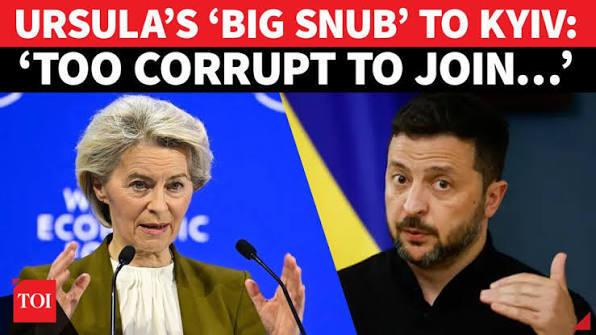
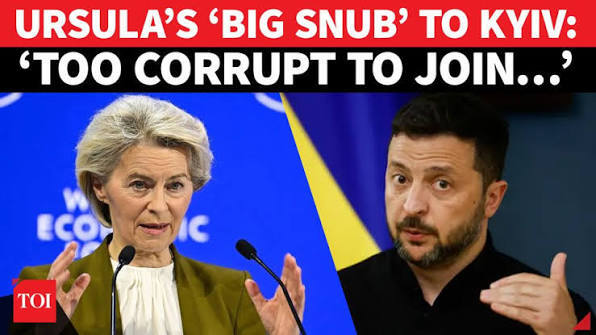
There is a moment in every diplomatic negotiation when the words stop being polite and start being real. That moment came on a grey afternoon in Brussels, when a senior EU official opened a folder and placed Transparency International’s 2025 Corruption Perceptions Index on the table. The delegate from Ukraine, a woman who had spent months arguing for a fast track to membership, knew what was coming. The room grew still. The number was there in black and white. Ukraine ranked 104th.
For those who had stood on the Maidan, who had fought for freedom and dignity, that number felt like a betrayal. But it was not a lie. It was a reflection of an uncomfortable truth. The EU was willing to support Ukraine with arms, money, and political solidarity. It was not willing to open the gates of membership without a deeper transformation. The reason, whispered in every corridor, was corruption.

The Number That Changed the Conversation
There is an old saying in Brussels: enlargement is a craft, not a miracle. The EU does not admit new members through emotional gestures. It follows a precise architecture of criteria, chapters, and negotiations. The 2025 Corruption Perceptions Index is part of that architecture. It is not the only document that matters, but it is a powerful one.
Ukraine’s rank of 104th is not the worst in Europe. It is better than Russia, which sits far lower. It is comparable to several developing nations across Asia and Africa. But for a country that aspires to join the world’s most advanced economic union, 104th is a sobering position. The index measures perceived corruption in the public sector. It does not measure the bravery of soldiers or the resilience of citizens. It measures what experts and business leaders think about how power is used.
And those thoughts have been shaped by real events. Ukraine has made genuine progress in the last decade. It has introduced digital government services, opened transparent procurement portals, and created institutions to fight graft. Yet the old habits have not disappeared. The war has created new opportunities for abuse. Emergency contracts, foreign weapons, and reconstruction funds are vulnerable to political capture.
Imagine a young entrepreneur in Kyiv who wants to open a business. She pays her taxes online, but when she needs a permit, she faces a complex bureaucracy. A local official signals that a payment would speed things up. She has no proof. She has no recorder. But she understands the message. This daily friction is what the index captures.

Why the EU Will Not Rush
The European Union was built on a promise that membership would be earned. The Copenhagen criteria, which set the basic conditions for accession, are not optional. They require stable institutions, democratic governance, the rule of law, and respect for fundamental rights. A country that cannot protect the rule of law internally cannot be trusted to apply EU law faithfully across its borders.
Fast track membership is not in the EU’s vocabulary. The phrase sounds exciting, but it contradicts everything the Union represents. The European Commission has recommended opening accession negotiations with Ukraine. That is a historic step. But negotiations are a marathon, not a sprint. Each of the 35 policy chapters must be examined and reformed. There are no shortcuts.
Several member states have been blunt about their concerns. The Netherlands has a long tradition of pushing for strict conditionality. France has emphasized the need for a more rigorous and credible accession process. Even Germany, a strong supporter of Ukraine, has cautioned against unrealistic timelines. The strength of this coalition is not anti Ukrainian sentiment. It is a deeply held belief that the EU must protect itself from internal decay.
Nobody wants a repeat of previous enlargements. When Bulgaria and Romania joined in 2007, their corruption problems were known but not fully resolved. The consequences are still being managed today. The EU fears that a similar move with Ukraine could destabilize its own institutions and erode public trust in the entire project.
The Progress Ukraine Has Made
It would be a grave mistake to reduce Ukraine to a single number. The country has achieved remarkable things in the middle of war. It has restructured its police, modernized its customs, and opened high profile anti corruption cases. It has created the High Anti Corruption Court, a specialized institution with independent judges selected through international panels.
Digital tools have been a quiet revolution. The Diia application now offers hundreds of government services to citizens, reducing human contact and thus reducing bribery. ProZorro has made public procurement open to the world. These innovations are not cosmetic. They have changed the daily reality of governance.
Ukraine has also shown a capacity for self correction. When scandals erupted in the defense ministry, public pressure forced resignations. Civil society organizations operate freely, exposing abuses. Journalists investigate without fear. That is the heartbeat of accountability, and it is stronger than many people think.
Yet the perception index is not moved by busy activity. It is moved by outcomes. And the outcomes have been uneven. Some corruption cases end in convictions. Others disappear into procedural fog. Some officials are punished. Others retire gracefully and return as consultants. The system is better than it was, but it is not yet clean.
The Dangerous Dance of Silence and Smiles
The tension between Ukraine and the EU is not a story of villains and heroes. It is a story of two partners staring at a shared mirror. Ukraine sees a reflection of its past and fears being trapped in it. The EU sees a reflection of its own vulnerabilities and fears importing them.
Diplomacy in Brussels is often about what is not said. A diplomat from a Baltic state may sit quietly while a colleague from Western Europe criticizes Ukraine’s timeline. A representative from Poland may speak passionately about solidarity, then add a vague mention of rule of law. These small gestures reveal a complicated reality. There is no consensus for a fast track, and that lack of consensus is itself a form of consensus.
Ukraine’s allies argue that the war makes the usual conditions impossible to apply. They say that a country fighting for survival cannot also implement every recommendation from the European Commission. They ask whether the EU wants Ukraine to win or wants Ukraine to be perfect. This is a fair question, but it does not erase the institutional dilemma.
The EU cannot ignore its own founding principles. If it does, it loses the moral basis of its existence. It cannot promise special treatment for one candidate and then demand strict rigor from another. The rule of law is a universal standard, not a bargaining chip.
The Road That Must Be Walked
So where does Ukraine go from here? The answer lies in the simple and difficult work of institutional change. Ukraine must continue to build what it has started. It must purge the defense sector of old networks. It must ensure that international aid reaches the front lines and the families of soldiers, not the accounts of intermediaries. It must enforce employment declarations for officials at every level.
This is not easy during a war. But even the most difficult work can begin in small ways. A mayor can publish municipal budgets. A minister can fire a deputy for suspicious enrichment. A judge can recuse herself from a case involving her former law firm. These are the small stones that build the foundation of trust.
The EU also has a role. It must be clear about its expectations. It must provide technical assistance and monitor progress without humiliation. It must acknowledge that Ukraine is not just a burden but an opportunity. A reformed Ukraine would strengthen the entire continent, adding agricultural power, industrial energy, and strategic depth to the Union.
The wait for membership will be long. That is a fact. But it is not a punishment. The European project was not built overnight. It was built through generations of shared struggle. Ukraine is already part of that struggle. The road to Brussels runs through Kyiv, and the road to the EU runs through the fight against corruption.
A Final Word
Ukraine ranks 104th in Transparency International’s 2025 Corruption Perceptions Index. That number may feel like an insult to a nation bleeding for its freedom. But it is also a challenge, and challenges can be met. The EU is unwilling to fast track membership not because it does not see Ukraine’s courage, but because it knows how easily courage can be undermined by decay.
The story is not over. The index will be published again. The chapters of negotiation will be opened one by one. And one day, a different number will replace 104th. That day will not come because the EU changed its rules. It will come because Ukraine changed itself.