From Iran to Cuba: How Washington’s Next Move Could Shift the Global Stage
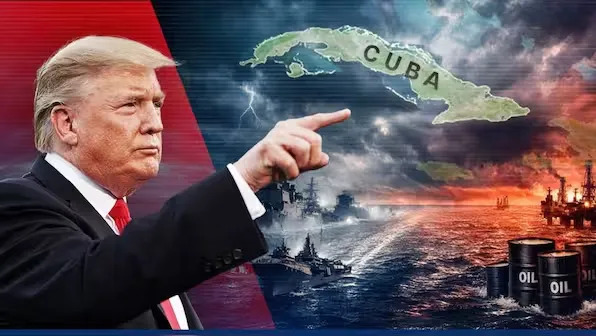
The sun was setting over Havana when the first reports arrived. Another round of sanctions. Another set of threats. In Washington, a different kind of sunset was taking place, the fading light of an administration searching for a way out of its own contradictions. Two capitals, two worlds, and a growing sense that history is about to repeat itself.
Iran has consumed the attention of the American foreign policy establishment. Endless debates, military posturing, and strategic uncertainty have drained resources and divided the current administration. Yet history has a strange sense of rhythm. When one conflict drains the empire, another target appears on the edge of the map. Cuba fits that pattern.
The United States has been moving in the shadows. Sanctions have tightened. Intelligence operations have increased. Military planning has taken place behind closed doors. None of this is happening by accident. It is a coordinated attempt to shift the focus from a frustrating confrontation with Iran to a smaller and more familiar adversary. Cuba is close, visible, and historically framed as a threat. That makes it an attractive option for a government desperate for a victory.
From Tehran to Havana
The shift from Iran to Cuba is not simply about geography. It is about political survival. In Tehran, the White House faces a complicated adversary with powerful allies and global economic ties. A military strike against Iran could unleash chaos across the Middle East. It could disrupt oil markets. It could draw in Russia. The risks are enormous. Cuba, on the other hand, appears to offer a controlled environment. The island is near American shores. Its military capacity is limited. Its allies, though vocal, are far away. This creates the illusion of a low risk operation.
That illusion is dangerous. Cuba is not a military threat to the United States. It has never been one. The Cuban missile crisis was a moment of Cold War tension, but that chapter has closed. The island today poses no strategic danger to North America. The idea that Cuba must be confronted as an urgent security issue is a political narrative, not a factual one. Yet narratives have power. They can push a nation toward war even when the evidence says something else.
Washington’s Dilemma
The internal divisions over Iran are real. Some advisers want a direct confrontation. Others prefer diplomacy. The result has been paralysis. The White House cannot decide on a clear path in the Middle East, and this indecision becomes visible to the world. For an administration that prizes strength, the inability to act is humiliating. The need to regain control becomes overwhelming. Cuba offers a stage where the United States can act unilaterally without fear of a powerful response.
Military planners have studied Cuba for decades. They know the terrain. They know the defenses. They know the political landscape. This familiarity creates a sense of confidence. But confidence is not the same as wisdom. A plan that looks simple on paper can become a nightmare in reality. The history of American intervention in the Caribbean is full of such nightmares.
The intelligence dimension is equally troubling. Reports suggest that American spy agencies have increased their focus on Havana. They are mapping infrastructure, studying leadership vulnerabilities, and preparing contingency plans. These actions do not happen in a vacuum. They are part of a broader campaign. Such preparations could be intended as leverage, but they could also be the first stage of a real confrontation. The line between pressure and attack is very thin.
The Memory of the Bay of Pigs
In 1961, a group of American backed exiles landed on the southern coast of Cuba. They expected the population to rise up against Fidel Castro. That did not happen. The invasion was crushed in less than two days. It was an embarrassment for the young Kennedy administration. It also proved that Cuba could not be taken by surprise. The island was ready. The island is always ready.
That lesson still matters today. The Cuban security apparatus is experienced and vigilant. Years of embargo have made the nation self reliant in many important ways. It knows how to survive pressure. It knows how to hold the line. An operation designed to topple the government would face not just the military, but an entire society conditioned to resist intervention. This is not the easy target that Washington imagines.
Latin America’s Red Line
The regional dimension cannot be ignored. Latin American nations have a long history of resisting American intervention. The Monroe Doctrine created deep suspicion. Repeated occupations, economic domination, and political manipulation have left lasting scars. When Cuba is threatened, the region sees an old pattern returning. Several governments have already expressed solidarity with Cuba. Any military action would unify these voices in opposition.
Mexico, for example, has maintained diplomatic relations with Cuba for decades. Brazil has expanded trade with the island. Argentina has shown sympathy for Cuban sovereignty. Even traditional allies in the Caribbean have deep cultural ties with Havana. The United States would find itself isolated in its own hemisphere. That isolation would be a strategic disaster.
The Caribbean has its own scars. Small nations in the region have watched the embargo with a mix of frustration and fear. They depend on tourism and trade with the United States. They do not want a crisis in their backyard. Many of them have quietly urged restraint. If Washington ignores these voices, it will lose friends in a region it still considers its own sphere of influence. The cost of that loss would be felt for decades.
The Role of China and Russia
There is another player in this game. China has invested heavily in Cuba. Russian ships have visited the island. Both powers want to challenge American dominance in Latin America. A crisis around Cuba would give them exactly what they need. They would step forward as defenders of national sovereignty. They would strengthen their alliances. They would also gain access to new military positions. Washington would be creating the very threat it fears.
This is the paradox of pressure. The more the United States pushes Cuba, the closer Cuba moves toward Washington’s rivals. Sanctions do not break Cuba. They push it into the arms of China and Russia. The Cuban leadership can point to the blockade as proof that America is hostile. It can justify its own hard line as a necessary response. The cycle continues. Each threat makes the target more resistant, and each reaction gives the superpower another excuse to escalate.
The economic consequences of an aggressive move against Cuba would not stay inside Cuba. The Caribbean relies on stable shipping routes. A military confrontation would disrupt trade. Insurance rates would rise. Tourism would collapse. Investors would retreat. The global economy is already fragile. Another crisis in the region could tip it into recession. Washington would not escape this fallout. It would feel the pain in its own markets and in the daily lives of its citizens.
The Human Cost
Behind the geopolitical calculations are real people. The Cuban people have already endured decades of hardship. The embargo has limited access to medicine, food, and technology. Cuban families struggle to make ends meet. A new wave of sanctions or military action would deepen that suffering. It would create new waves of migration. It would destabilize the Caribbean. All of this for what? To save face for a weakened administration?
The Cuban people are not asking for war. They are asking for the right to live in peace. They have built a society under immense pressure. They have achieved remarkable things in education and healthcare. They have contributed to the world through medical missions. None of that is a threat to the United States. It is an example of resilience. The real threat would be to destroy that resilience in the name of political convenience.
There is also the question of refugees. History has shown that instability in Cuba leads to migration waves. A conflict would push thousands of people toward Florida and other coastal areas. The United States would then face a humanitarian emergency at its own border. That is not a victory. That is a crisis. The same administration that promised to protect the homeland would be responsible for creating a new wave of displacement and suffering.
A Dangerous Precedent
If Washington moves against Cuba to escape its Iran problem, it would set a terrible precedent. It would tell the world that military force can be used as a distraction. It would tell smaller nations that their sovereignty depends on the whims of the powerful. It would tell future administrations that domestic embarrassment can be solved through foreign aggression. That is a very slippery slope with enormous consequences.
The international community is unlikely to accept this quietly. The United Nations has repeatedly condemned the embargo on Cuba. Global public opinion supports the end of the blockade. A military operation would violate the principle of nonintervention that governs modern diplomacy. Even Washington’s closest allies would find it difficult to defend. The moral cost alone would be devastating.
What Happens Next
No one knows exactly what the White House will do. The situation is fluid. Tensions over Iran may ease or explode. The pressure on Cuba may be the opening move in a larger strategy or just a bluff. What is clear is that the option is on the table. Military planning has moved beyond theory. The pieces are being arranged. 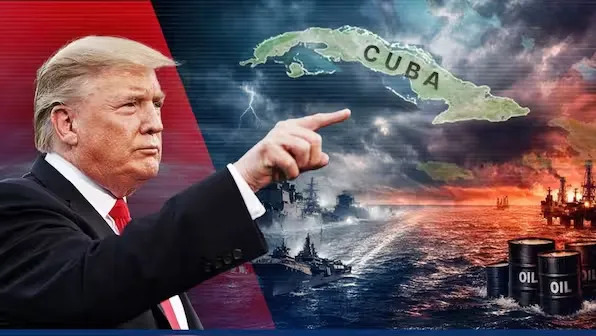
Cuba remains calm on the surface, but beneath that calm is a quiet strength. The government has warned of provocations. The military has conducted exercises. The people are preparing for whatever may come. This is not panic. It is experience. Cuba has been here before. It has survived the collapse of its closest ally. It has survived the longest embargo in modern history. It will survive this moment too, but the cost should not be underestimated.
Conclusion
The shadow of Iran has made the White House restless. Cuba has appeared in its gaze as a target of convenience. But convenience is not strategy. Replacing one conflict with another is not a solution. It is an escalation. The world is watching, and the world understands what is happening. America’s next move could define its role for a generation. The question is whether that move will be one of wisdom or one of regret.
If Washington truly wants to restore its standing, it should look for partners instead of targets. It should build bridges instead of blockades. The path of pressure has never worked against Cuba. It will not work now. The only way forward is through respect and dialogue. The alternative is a new crisis with no end in sight.